
Asclepias californica — California (round-hooded) milkweed
Asclepias californica, the California or round-hooded milkweed, is a native West Coast perennial adapted to dry slopes; noted for hooded pink flowers, milky sap, pollinia pollination, and value to pollinators and monarchs.
Asclepias californica, commonly called California milkweed or round-hooded milkweed, is a perennial plant in the milkweed group native to California and Baja California. It is placed in the subfamily Asclepiadoideae and recognized by its compact umbels of rounded, hooded flowers and the white, sticky latex produced when stems or leaves are broken. For taxonomic overviews see taxonomic resources and for general milkweed information consult a broader milkweed overview.
Image gallery
3 Images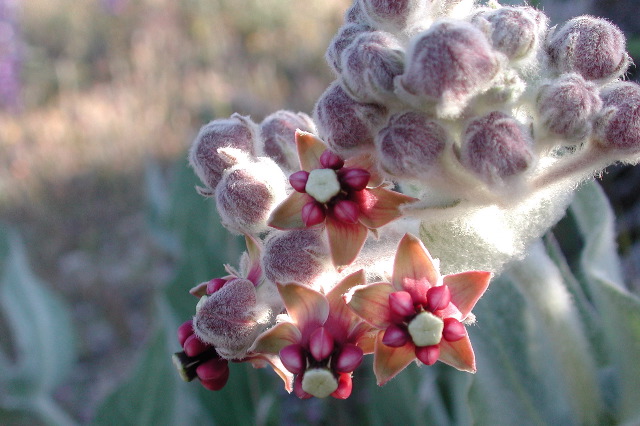


Description and identification
Flowers are produced in clusters and have a distinctive hood- and cup-like structure that lends the common name "round-hooded"; coloration is most often in shades of pink to purple. Leaves are opposite or paired, simple, and may be somewhat lance-shaped; stems and foliage exude milky sap when injured. As with other milkweeds, reproductive structures include pollinia (masses of pollen) that adhere to visiting insects and are transferred between flowers. Mature fruits are follicles (seedpods) that open to release seeds attached to silky hairs for wind dispersal.
Range, habitat and phenology
This species occurs naturally in California and on the Baja California peninsula, where it inhabits open, sunny slopes, grassy and brushy hillsides, and chaparral margins. It is adapted to seasonally dry climates and well-drained soils. Flowering is generally in the spring to early summer months, with many regional accounts noting blooms from April into July. For local distribution records and timing consult regional floras and plant databases: California flora, Baja California resources, and bloom timing references.
Ecology
Like other milkweeds, A. californica provides nectar for a variety of pollinators and serves as a larval host plant for monarchs and other specialized caterpillars that can tolerate milkweed toxins. Its flowers attract bees, butterflies, and other insects that move pollinia between blossoms. The plant's latex contains cardiac-active compounds that act as a chemical defense, which some insects sequester for their own protection. Seed release is by follicle dehiscence; seeds are equipped with silky hairs that aid wind dispersal.
Cultivation, uses and conservation
Asclepias californica is used in native plant gardens and restoration projects to support pollinators and local biodiversity. It prefers sunny, well-drained sites and is generally drought tolerant once established; propagation is commonly from seed or nursery-grown plants. Gardeners and restoration practitioners can find cultivation notes and propagation advice at regional sources and planting guides: cultivation notes and a general plant database.
- Conservation: The species contributes to native habitat networks important to pollinators. Local abundance may vary and habitat loss, invasive plants, and changing land use can affect populations; consult regional conservation pages and herbarium records for status: subfamily and taxonomic details.
- Human use and caution: While milkweeds support wildlife, their latex contains toxic compounds that can be harmful if ingested by humans, livestock, or pets; handle plants with care and avoid consumption. For safety guidance see safety information.
For detailed identification keys, specimen records, photographs, and up-to-date conservation information consult authoritative sources and local native plant societies: a regional plant database plant database, taxonomic pages taxonomic resources, and local flora guides California and Baja California.
Related articles
Author
AlegsaOnline.com Asclepias californica — California (round-hooded) milkweed Leandro Alegsa
URL: https://en.alegsaonline.com/art/6479