
Meteora — Monasteries of the Suspended Rocks (Greece)
Meteora is a group of Eastern Orthodox monasteries built atop towering sandstone pillars in central Greece, celebrated for its dramatic geology, medieval monastic heritage, and UNESCO World Heritage designation.
Meteora, whose name in Greek means "suspended in the air" or "in the heavens above", is an extraordinary landscape and monastic complex in central Greece. The monasteries are clustered near the towns of Kalambaka and Kastraki at the northwestern edge of the Plain of Thessaly. Perched on natural sandstone pillars, the religious communities developed a distinctive way of life adapted to the vertical terrain. The site remains one of the most significant centers of Eastern Orthodox monasticism, often compared in importance to Mount Athos within Orthodox tradition.
Image gallery
10 Images


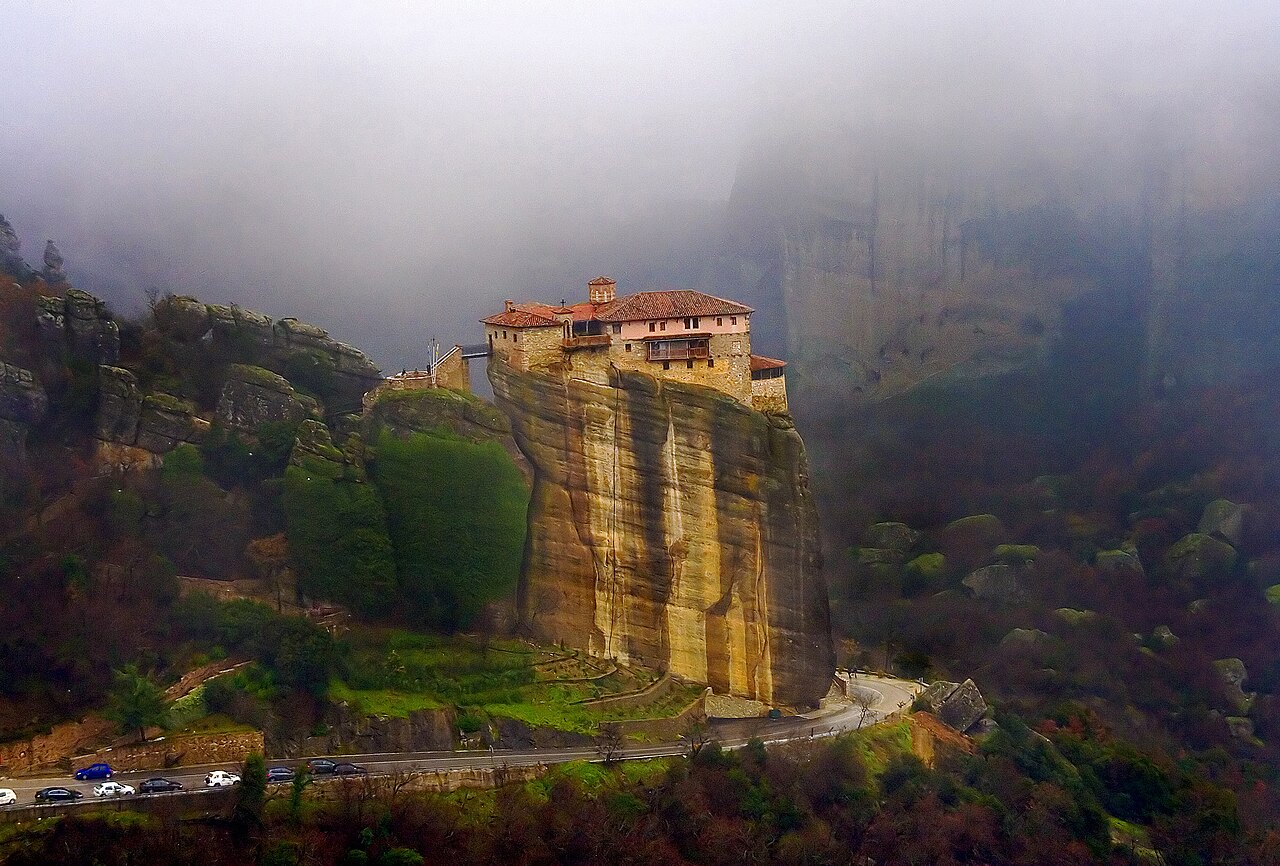


Geology and landscape
The pillars that define Meteora are weathered sandstone and conglomerate formations created over millions of years by river deposition, uplift and erosion. Layers of sediment compressed into rock were subsequently carved by wind, rain and temperature change into isolated towers and steep cliffs. These dramatic rock columns dominate the surrounding Plain of Thessaly and present a striking natural setting for human settlement and religious retreat.
History and monastic development
Monastic life at Meteora began when ascetics and hermits sought remote places for prayer and solitude. Beginning in the medieval period—most visibly from the 14th century onward—monks and nuns established communities by building chapels and monasteries on ledges and summits that were difficult to reach. For centuries access relied on ladders, ropes and woven nets hoisted by the occupants, methods that reinforced both seclusion and protection. Over time these foundations expanded into the more substantial monasteries visitors see today.
Monasteries and architecture
At its height there were many religious houses on the rocks; today six monasteries remain active and are noted for their churches, refectories, libraries and icon collections. Among the principal houses are the Great Meteoron, Varlaam, Rousanou, St. Nicholas Anapausas, the Holy Trinity, and St. Stephen. The communities preserved manuscripts, icons and liturgical art, reflecting Orthodox spirituality and local craftsmanship. Modern access is provided by stone steps and bridges in most places, though some monasteries still feel remote and austere.
Significance, visitors and protection
Meteora is both a living religious center and a major destination for tourists and pilgrims. It was inscribed on the UNESCO World Heritage List for its cultural and natural values, meeting criteria that recognize outstanding artistic, architectural and landscape qualities. Visitors are asked to respect monastic rules: modest dress, limited photography in sacred spaces, and observance of quiet in worship areas. The site balances conservation of fragile rock and heritage with education and controlled public access.
Notable facts and distinctions
- The name Meteora reflects the impression that the monasteries are suspended between earth and sky; the Greek term is often cited when describing their setting (Μετέωρα).
- The complex represents a unique fusion of natural geology and human religious architecture, distinguishing it from other monastic landscapes in Greece and beyond.
- Meteora is frequently discussed in studies of Byzantine and post-Byzantine art and spiritual practice; many original icons and manuscripts are associated with its houses (monasteries).
- Its inscription as a World Heritage Site emphasizes both the cultural importance of the monastic tradition and the outstanding universal value of the rock formations themselves (UNESCO).
Meteora continues to inspire interest from geologists, historians, pilgrims and travelers. Its combination of rugged natural forms and centuries of monastic devotion make it a distinctive landmark in the landscape of central Greece, and a place where human creativity adapted ingeniously to extraordinary terrain.
Related articles
Author
AlegsaOnline.com Meteora — Monasteries of the Suspended Rocks (Greece) Leandro Alegsa
URL: https://en.alegsaonline.com/art/64189
Sources
- whc.unesco.org : whc.unesco.org/en/criteria/
- whc.unesco.org : whc.unesco.org/en/list/455/documents/