
Aryabhata (satellite)
Aryabhata was India's first satellite, launched in 1975 and named after the ancient astronomer; it carried scientific experiments and marked the start of India's space programme.
Overview
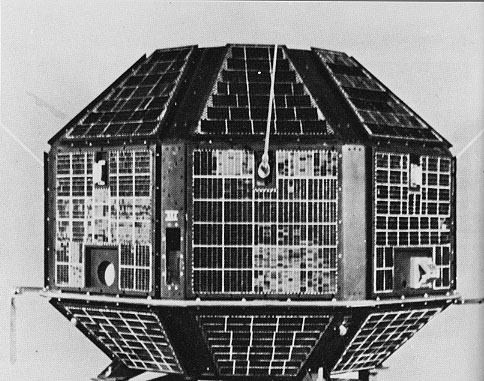
Aryabhata was the first satellite built by India and launched into low Earth orbit in 1975. Named for the classical Indian astronomer and mathematician Aryabhata, the spacecraft marked India's entry into satellite technology and space science. The project was an early achievement for the Indian space effort and involved collaboration with foreign partners for launch services. For background on its cultural namesake see Aryabhata (astronomer).
Image gallery
3 Images
Mission and design
The primary purpose of Aryabhata was scientific experimentation rather than communications or remote sensing. It carried instruments intended to study solar X-rays, cosmic rays, and the Earth's upper atmosphere (aeronomy and ionospheric physics). The satellite was a small, simple platform by later standards, designed and assembled by Indian engineers to test technologies and scientific payloads. Typical descriptions note it was a few hundred kilograms and used onboard power and telemetry systems appropriate to an experimental spacecraft.
Payloads and experiments
Aryabhata's scientific package included multiple instruments; among its goals were monitoring solar activity and detecting X-ray sources, measuring charged particles, and studying ionospheric parameters. Major experiment types included:
- X-ray astronomy detectors for transient and steady sources.
- Charged particle and cosmic ray sensors.
- Ionospheric and atmospheric sensors to measure density and composition.
Launch and operational history
The satellite was launched by a Soviet launch vehicle as part of international cooperation on 19 April 1975. Although the launch successfully placed Aryabhata into orbit, the mission's operational life was short; the spacecraft experienced power system problems and ground contact was lost after a limited period of activity. Despite that, Aryabhata returned useful engineering and scientific experience that informed later missions. For details on the launch and mission timeline consult contemporary mission summaries such as those provided by national space agencies and historical records (source).
Legacy and significance
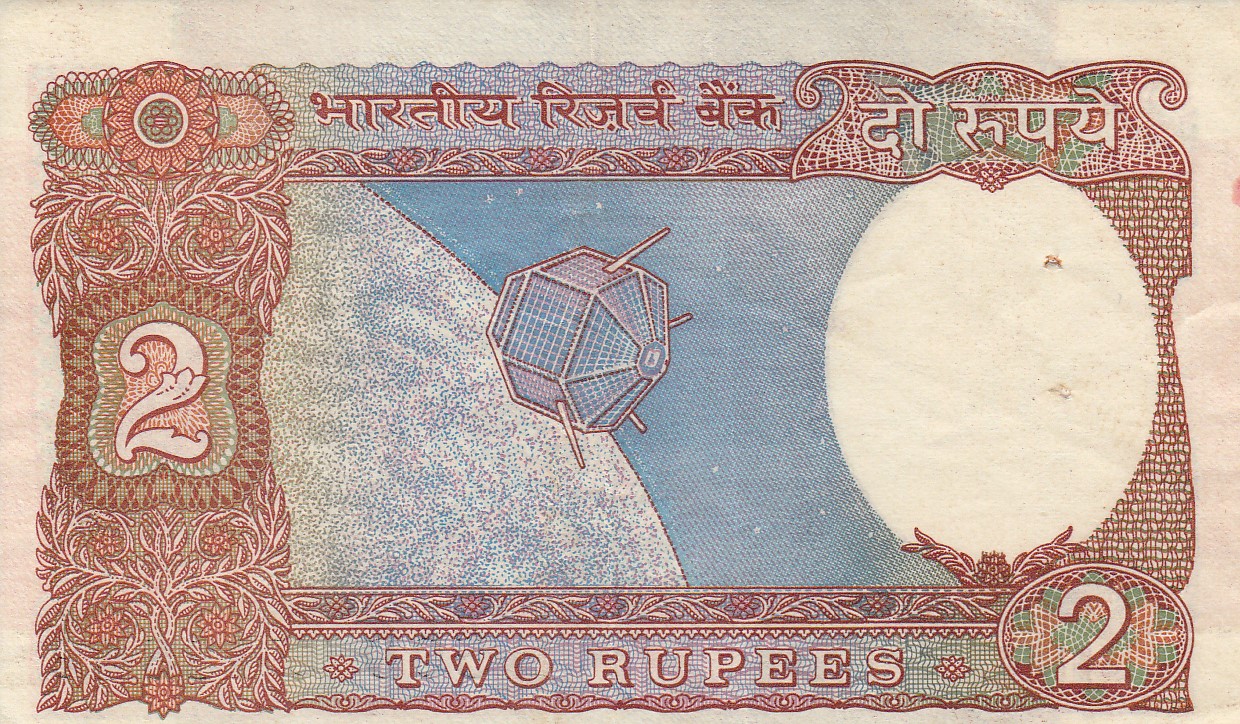
As India's first satellite, Aryabhata is often cited as a symbolic and practical milestone. It demonstrated the ability of Indian engineers to design and integrate a spaceborne scientific payload, and it helped justify further investment in space infrastructure. The experience gained contributed to subsequent Indian satellite programmes and to the development of indigenous launch capabilities in later years. For a general overview of India's early space programme and follow-on projects see materials from institutional histories (further reading).
While Aryabhata's operational life was brief, its historical importance lies in initiating a continuous programme of scientific, meteorological and communications satellites that followed. It remains a frequently referenced starting point in accounts of modern Indian space activities and educational discussions about space technology development.
Related articles
Author
AlegsaOnline.com Aryabhata (satellite) Leandro Alegsa
URL: https://en.alegsaonline.com/art/6416
Sources
- planet4589.org : "Launch Log"
- planet4589.org : "Satellite Catalog"
- isro.org : "Aryabhata - The first indigenously built satellite"