
Asteroid moon
A small natural satellite that orbits an asteroid. Usually much smaller than its primary, asteroid moons are uncommon and offer clues about asteroid formation and evolution.
An asteroid moon is a natural satellite that orbits an asteroid rather than a planet. By definition the satellite is smaller than the body it orbits; when two bodies are comparably sized they are usually described as a binary pair. The term applies across different populations of small Solar System bodies and helps distinguish a bound companion from other nearby objects such as Trojan co-orbitals.
Image gallery
10 Images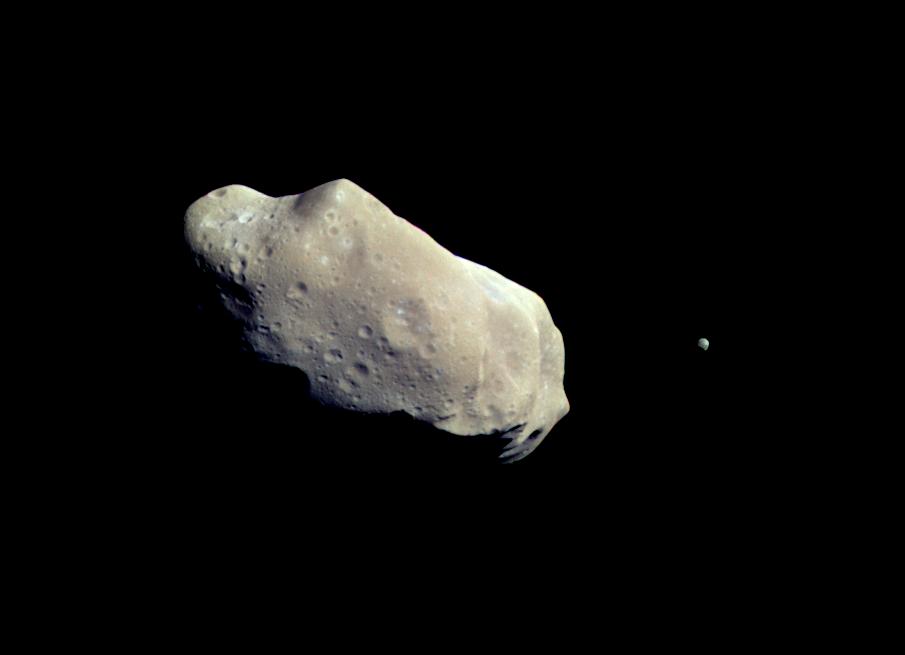




Characteristics and detection
Asteroid moons range from metre-scale fragments to bodies many kilometres across and can have very different orbital relationships with their primaries. Some follow close, rapid orbits that may be tidally locked, while others travel at greater distances on eccentric or inclined paths. Detecting these companions typically requires one of several techniques:
- Direct imaging with large telescopes or adaptive optics systems.
- Spacecraft flybys and rendezvous, which can reveal small satellites not visible from Earth.
- Lightcurve analysis, where periodic dips or changes in brightness indicate a companion.
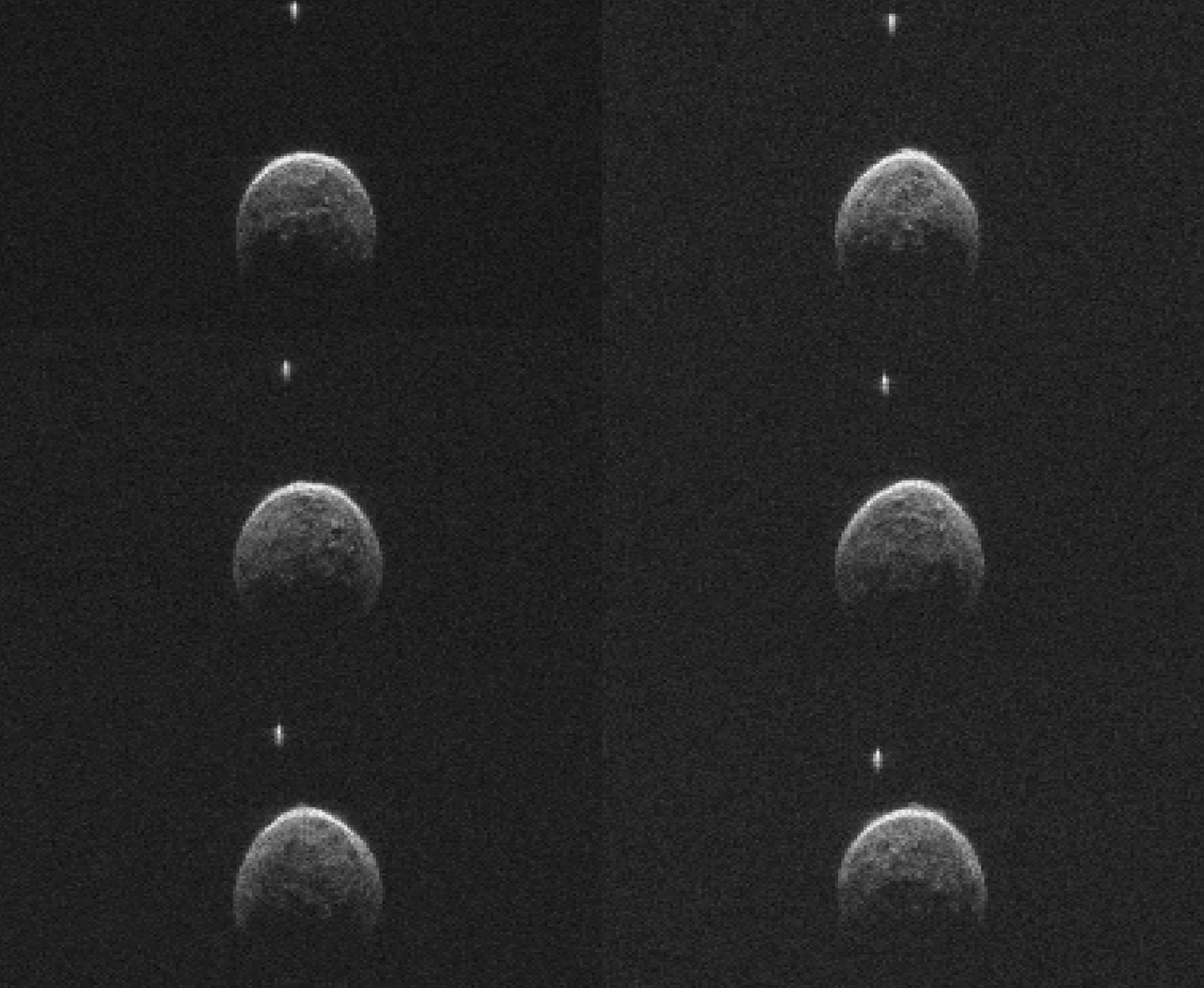
- Radar observations that can resolve separate objects or echoes from a secondary.
Origins and formation processes
Several processes can produce an asteroid moon. One common model invokes impact ejecta: a collision can throw debris into orbit around the larger remnant, which then coalesces into a satellite. Rotational fission, driven by gradual spin-up from sunlight-driven torques (the YORP effect), can cause a body to shed material that forms a companion. Less often, a passing small body can be captured into orbit under the right circumstances. The relative importance of these channels depends on the size, composition, and collisional history of the primary asteroid.
Examples, significance and prevalence
Well-known examples include Dactyl, the small moon found orbiting the asteroid Ida, and several more complex systems that possess multiple satellites. Studies of asteroid moons are scientifically valuable because measuring the satellite’s orbit yields the mass and bulk density of the primary, which constrains internal structure and composition. Such systems also inform models of asteroid evolution and are relevant to planetary defense and mission planning.
Observationally, only a small fraction of asteroids are known to host moons—estimates suggest a few percent—though detection biases mean the true occurrence may be higher. For further basic information about asteroids and their satellites see asteroid references and mission summaries.
Related articles
Author
AlegsaOnline.com Asteroid moon Leandro Alegsa
URL: https://en.alegsaonline.com/art/6797