
McDonaldland — McDonald’s fictional advertising universe
McDonaldland is the fictional setting used by McDonald's in advertising and merchandising, centered on Ronald McDonald and a cast of mascots like Grimace, the Hamburglar and Birdie the Early Bird.
Overview
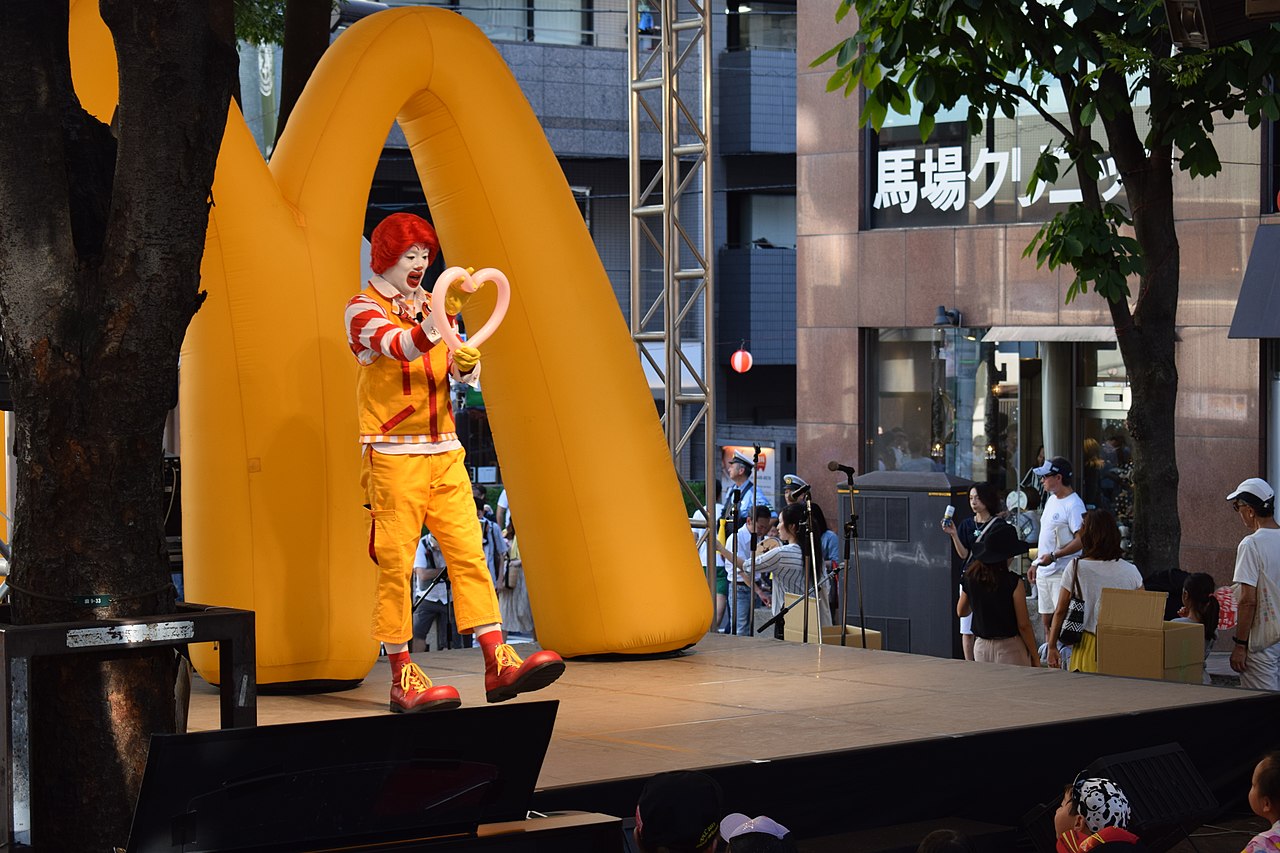
McDonaldland is a branded fictional world created to support McDonald's advertising and children's marketing. It centers on Ronald McDonald, a clown character who first appeared in 1963, and a rotating ensemble of companions and antagonists devised to promote menu items and Happy Meals. The setting functioned as a familiar backdrop for television commercials, print ads, in-store promotions and licensed merchandise, allowing characters to represent products and values associated with the company. For information tied to corporate materials see McDonald's and general descriptions at McDonaldland.
Image gallery
3 Images

Characters and setting
McDonaldland is populated by a mix of heroes, sidekicks and comic foil characters meant to appeal to children. Core figures include Ronald McDonald (the friendly host), Grimace (a large purple character), The Hamburglar (a mischievous thief of hamburgers) and Birdie the Early Bird (introduced to highlight breakfast offerings). Other recurring inhabitants include Mayor McCheese, Officer Big Mac, the McNugget Buddies and the Happy Meal Gang. These characters inhabited a whimsical landscape of oversized food props, play spaces and colorful set pieces designed to convey fun and familiarity.
Development, creative contributors and legal issues
The concept evolved through decades of advertising, with McDonald's working with in-house teams and outside creative studios to design characters, produce animation and stage appearances. At various times McDonald's enlisted external animation and design houses, including well-known studios, to refresh the visual style and scripting of McDonaldland stories; some sources note collaborations with studios such as Klasky Csupo and other creative vendors. In the 1970s and 1980s McDonald's also faced legal challenges and concerns over character similarity to existing children's shows; these disputes prompted redesigns and careful reworking of certain figures, notably Mayor McCheese and Officer Big Mac, to avoid infringement claims.
Uses, merchandise and public presence
McDonaldland characters were deployed across multiple marketing channels. They appeared in television commercials, print ads, in-store play areas and on product packaging. Tie-ins with the Happy Meal transformed characters into collectible toys and promotional gifts, helping the brand reach families and young consumers. Over time the frequency and prominence of the characters fluctuated as McDonald's adjusted its marketing priorities; however, the characters continued to appear in limited campaigns, nostalgia-driven releases and licensed collectibles. Recent years have seen official merchandise and collector items, including licensed figurines released by manufacturers; for example, some characters returned to collectible lines in 2019 and 2021.
Cultural impact and distinctions
As a piece of commercial worldbuilding, McDonaldland is notable for turning corporate mascots into an organized fictional universe. Its characters became culturally recognizable symbols associated with fast-food advertising and childhood memories for several generations. The world blended simple moral setups, slapstick humor and product-centered stories, which made it adaptable to short-form commercials and cross-promotional campaigns. McDonaldland is sometimes discussed alongside other advertising-created universes as an example of long-term mascot-driven branding.
Further reading and references
Those interested in primary advertising materials, corporate histories and deeper looks at mascot design can consult archival corporate sources and documentary coverage. Background on Ronald McDonald as an individual mascot can be found at Ronald McDonald, while broader corporate context and campaign histories are referenced at McDonaldland and McDonald's. Additional notes on creative partnerships and animation collaborators are available through material citing contributors such as Klasky Csupo.
Related articles
Author
AlegsaOnline.com McDonaldland — McDonald’s fictional advertising universe Leandro Alegsa
URL: https://en.alegsaonline.com/art/63226