
Matsya: the Fish Avatar of Vishnu
Matsya, the fish incarnation of Vishnu, is a foundational Hindu myth about recovery of sacred knowledge and preservation of life during a great flood; it appears in Puranic literature and art.
Overview
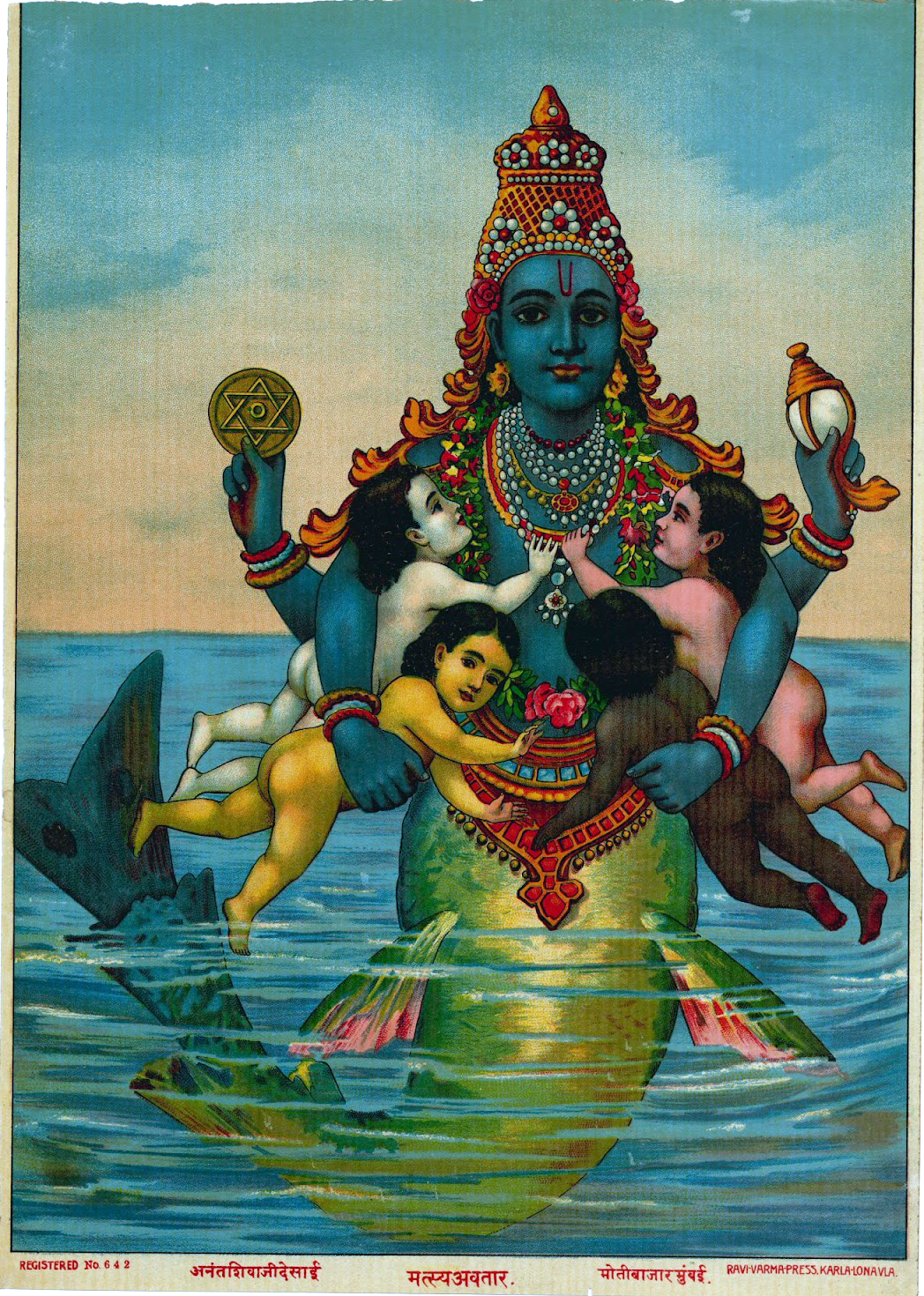
Matsya is traditionally regarded as the earliest significant avatar of the god Vishnu in Hindu mythology. In this role Vishnu appears as a gigantic fish or as a creature with a human torso and a fish's tail. The core narrative links divine intervention with the protection of sacred knowledge and the preservation of life through a catastrophic deluge. The episode is taught widely in Hindu religious education and appears in many devotional and narrative traditions.
Image gallery
10 Images


Myth and narrative variants
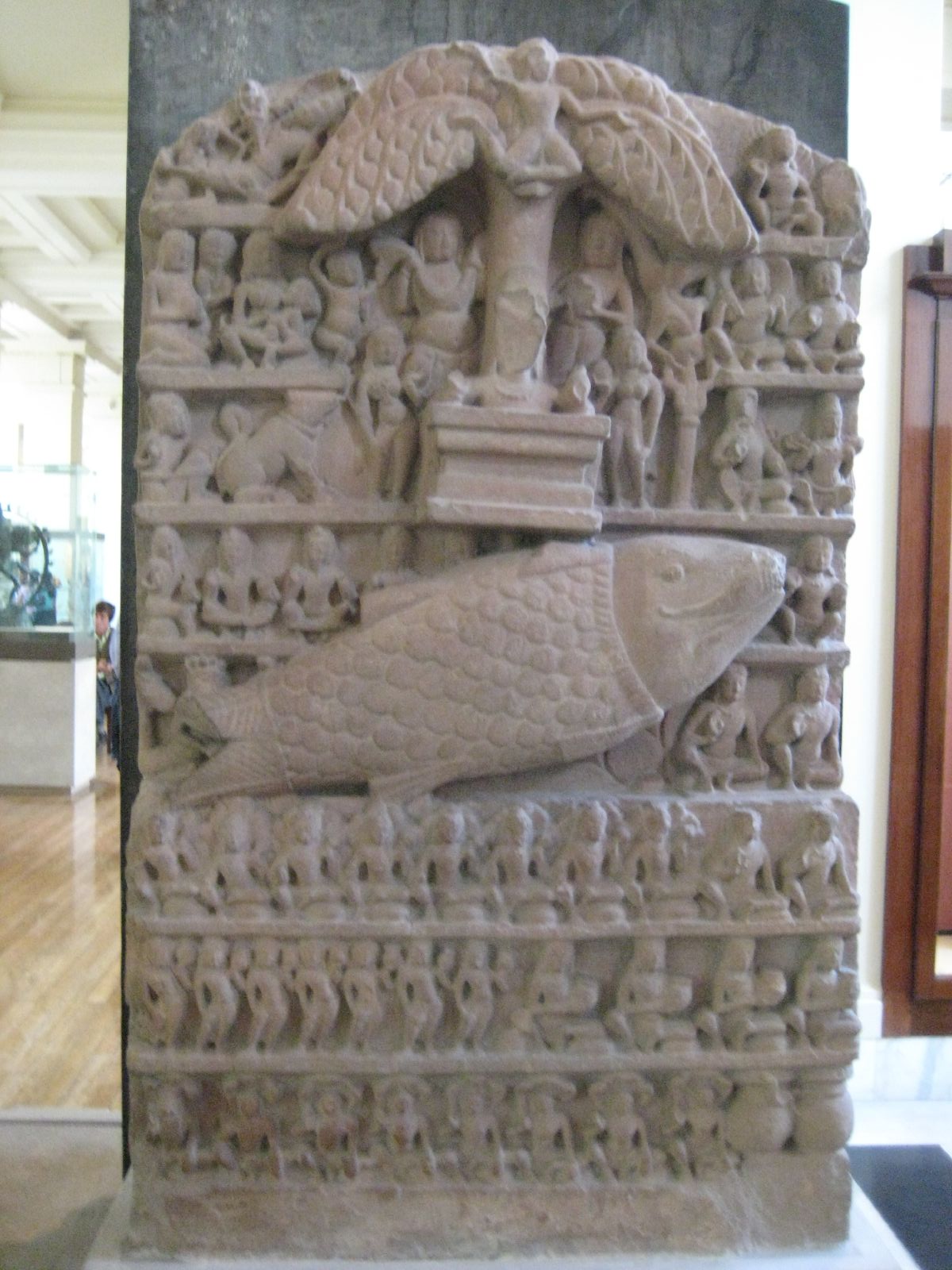
The best-known version recounts that a demonic being, described in some texts by name and in others simply as an asura, stole the Vedas and carried them into the depths of the sea. To recover the scriptures and restore order, Vishnu transformed into Matsya and dove into the waters, retrieved the texts, and returned them to the righteous progenitor Manu. In many retellings Matsya forewarns Manu of an imminent flood, instructs him to construct a boat, and guides or tows the vessel to safety so that seeds, sages, and animals may survive and repopulate the world.
Textual sources and dating
The Matsya narrative appears in several Puranic works, most prominently the Matsya Purana, and is also referenced in other classical Sanskrit texts. Because the Puranas were compiled over many centuries and contain multiple layers of tradition, the precise form of the episode and its details vary regionally and chronologically. Nonetheless the themes of rescue, recovery of sacred knowledge, and cosmic renewal remain consistent.
Symbolism and interpretation
Matsya symbolizes the preservation of dharma (cosmic and social order) and the safeguarding of scriptural knowledge against forces of disorder. The flood motif functions as both destruction and cleansing, enabling a fresh beginning. Interpreters emphasize Matsya as an exemplar of divine care for creation and as a metaphoric guarantor of continuity between cycles of cosmic dissolution and regeneration.
Iconography and worship
In sculpture and painting Matsya appears in two principal forms: a full fish of extraordinary size or an anthropomorphic being with a human upper body and a piscine lower half. When shown with human features, Matsya often holds Vishnu's attributes (for example the conch or discus) or is depicted alongside a boat carrying Manu. Matsya figures and reliefs appear in temples and manuscript illustrations across South Asia and form part of ritual storytelling, festival recitation, and performing arts.
Comparative notes and cultural reach
The flood-and-rescue motif invites comparison with other global flood narratives; commentators sometimes draw parallels with figures such as Noah or archetypal ancestors such as Adam, while also stressing distinctive theological meanings in the Hindu context. Rather than implying direct dependence, such comparisons highlight common human concerns about preservation of life and knowledge in the face of cosmic danger.
- Key motifs: divine transformation, recovery of scripture, flood survival, renewal.
- Primary textual source: Matsya Purana and other Puranic compilations.
- Visual forms: full fish and man-fish hybrid; often shown with Manu and a boat.
Related articles
Author
AlegsaOnline.com Matsya: the Fish Avatar of Vishnu Leandro Alegsa
URL: https://en.alegsaonline.com/art/62866