
Mazu — Chinese sea goddess and patron of sailors
Mazu (Matsu) is a Chinese sea goddess venerated across coastal China, Taiwan and Southeast Asia. Originating as Lin Moniang of Fujian, she became a protector of sailors, with temples, rituals and pilgrimages honoring her.
Overview
Mazu, also written Matsu, is a prominent goddess in Chinese popular religion who serves as a protector of seafarers, fishermen and coastal communities. Revered in both Taoist and folk-Buddhist contexts, she is commonly addressed by honorifics that translate to forms of "Heavenly Empress" or "Holy Mother." The cult of Mazu is concentrated in southeastern China and among overseas Chinese communities throughout Southeast Asia and Taiwan.
Image gallery
10 Images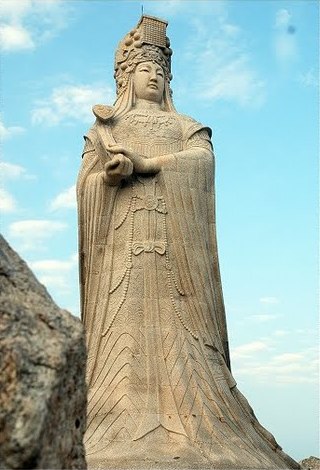



Origins and historical development
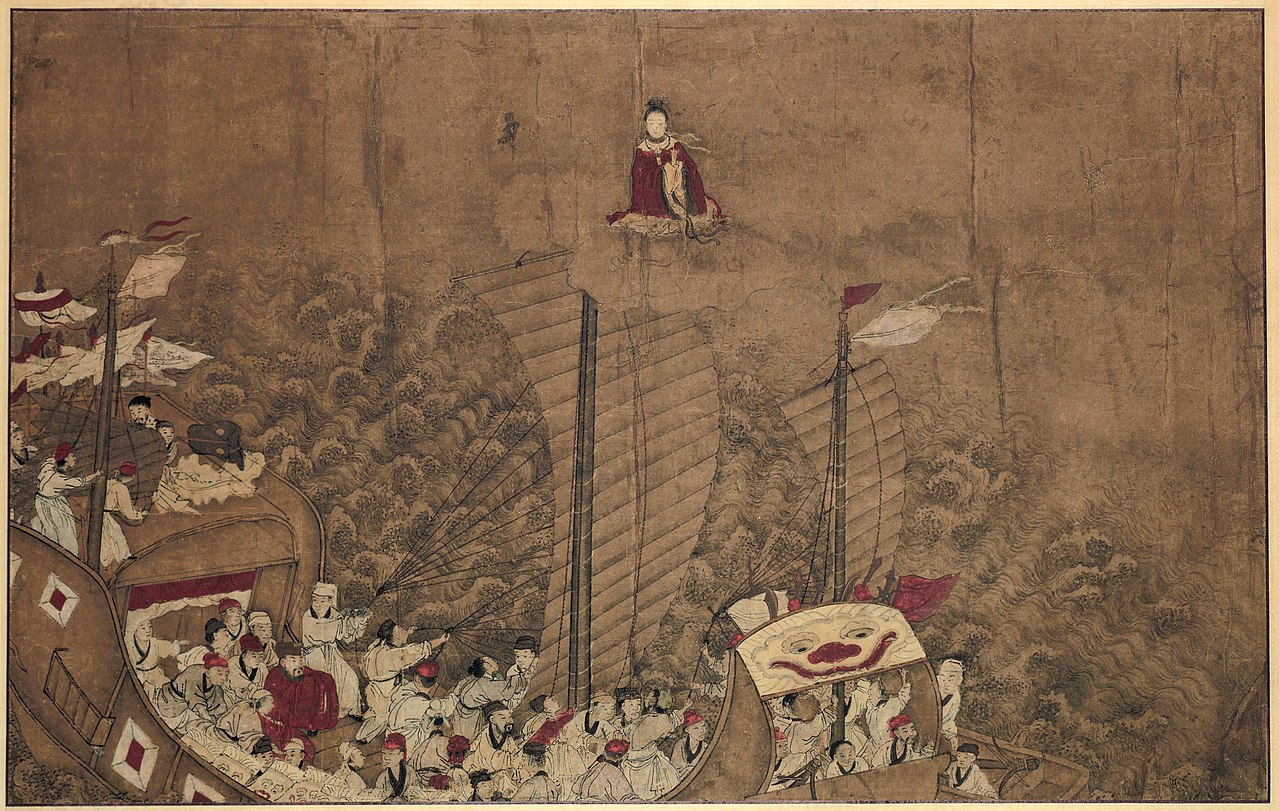
The figure behind the deity is traditionally identified as Lin Moniang, a young woman from Meizhou Island near Putian in Fujian province. Folk stories credit her with supernatural abilities to rescue people at sea and to foresee storms. Over centuries local devotion transformed into organized temple worship; successive dynasties and communities accorded her increasingly elevated titles, turning a regional heroine into an officially recognized protective deity.
Iconography and attendants
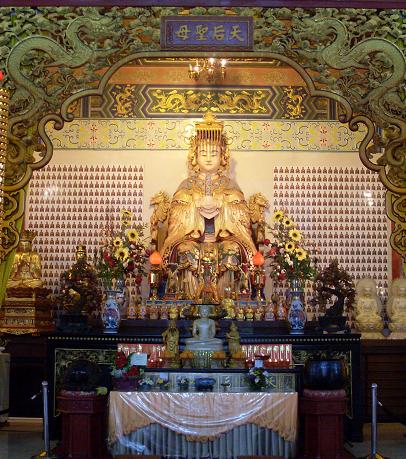
Mazu is typically depicted as a young woman in dignified robes and an imperial-style headdress, often shown standing or seated on clouds or waves. She is commonly flanked by two guardian figures: Qianliyan (Thousand-Mile Eye), who can see great distances, and Shunfeng'er (Wind-Favorable Ear), who can hear distant cries. Temple statues may vary from simple carved figures to richly dressed effigies used in processions.
Worship, temples and rituals
Temples dedicated to Mazu are frequently called Tianhou or Tianhougong (Palace of the Heavenly Empress). They serve as community centers for coastal towns and migrant networks. Common practices include offerings for safe passage, divination, and maritime blessing ceremonies. Key features of Mazu worship include:
- Annual observances around Mazu’s traditional birthday (often celebrated on the 23rd day of the third lunar month).
- Multi-day pilgrimages and statue processions that stop at villages and ports to confer protection.
- Boat parades, incense offerings, and theatrical performances tied to temple festivals.
Geographic spread and cultural role
The Mazu cult radiated from Fujian along maritime trade and migration routes, taking root in coastal Zhejiang, Guangdong, Hainan, Taiwan, and throughout Southeast Asia (Vietnam, Malaysia, Singapore, Indonesia and the Philippines). For many overseas Chinese, Mazu temples reinforce community bonds and cultural identity, providing social services and a ritual calendar for seasonal work and travel.
Distinctive aspects and contemporary relevance
Mazu illustrates the blend of popular religion, local myth, and state recognition common in Chinese spiritual life: a historic individual becomes a divine protector whose image and rituals adapt to local needs. Today her festivals continue to attract large numbers of devotees and tourists, and Mazu remains an enduring symbol of maritime safety and the cultural continuity of coastal communities.
Questions and answers
Q: Who is Mazu?
A: Mazu is a goddess and patroness of the sea who is widely worshiped in southern China, Vietnam, Taiwan, Zhejiang, Fuijian, Guangdong, and Hainan.
Q: What is Mazu's significance in Chinese culture?
A: Mazu is highly significant in Chinese culture as she is believed to protect fisherman and sailors, and is widely revered in areas in and around the sea.
Q: What are some of Mazu's other popular titles?
A: Mazu is known as Empress of Heaven and Holy Mother Empress of Heaven. Her other popular titles include Holy Mother Empress of the Heavens above, Heavenly Imperial Concubine, Lady Mazu, Heavenly Princess consort and Heavenly Holy Mother.
Q: What is the association between Mazu and Taoism?
A: Mazu is a popular Taoist goddess who is widely worshipped in southern China, Vietnam, Taiwan, Zhejiang, Fuijian, Guangdong, and Hainan.
Q: Who are some of Mazu's worshippers?
A: Fishermen, sailors, and people who work in or live near the sea are some of Mazu's most devout worshippers.
Q: What is the role of Mazu in protecting fishermen and sailors?
A: Mazu is believed to protect fishermen and sailors from harm and danger while they are in the sea.
Q: In which parts of the world is Mazu widely worshipped?
A: Mazu is worshipped in many parts of southern China, Vietnam, Taiwan, Zhejiang, Fuijian, Guangdong, and Hainan.
Related articles
Author
AlegsaOnline.com Mazu — Chinese sea goddess and patron of sailors Leandro Alegsa
URL: https://en.alegsaonline.com/art/63179