
Marquesas Islands (French Polynesia)
Remote volcanic archipelago in French Polynesia, known for rugged peaks, rich Polynesian culture, archaeological sites, and limited tourism; located about 1,600 km northeast of Tahiti.
Overview
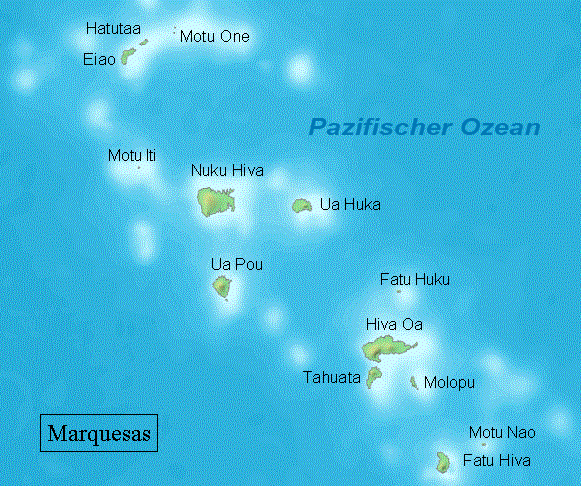
The Marquesas Islands are a remote group of volcanic islands in the central South Pacific that form one of the five administrative divisions of French Polynesia. They lie south of the Equator and roughly 1,600 km northeast of Tahiti. The total land area is about 1,274 km² and the islands had a population of roughly 9,264 people at the 2012 census. Their isolation has helped preserve distinct Marquesan languages, art forms and archaeological sites while also making modern services and transport more limited than on larger Pacific islands. For a map and basic facts see Marquesas location.
Image gallery
10 Images




Geography and Major Islands
The archipelago consists of fourteen larger islands and several small islets, commonly divided into a northern and a southern subgroup. Northern islands are generally higher and more rugged; southern islands are somewhat lower but still steep and dissected by deep valleys. Principal islands include:
- Nuku Hiva — the largest island and administrative centre of the northern group (administrative details).
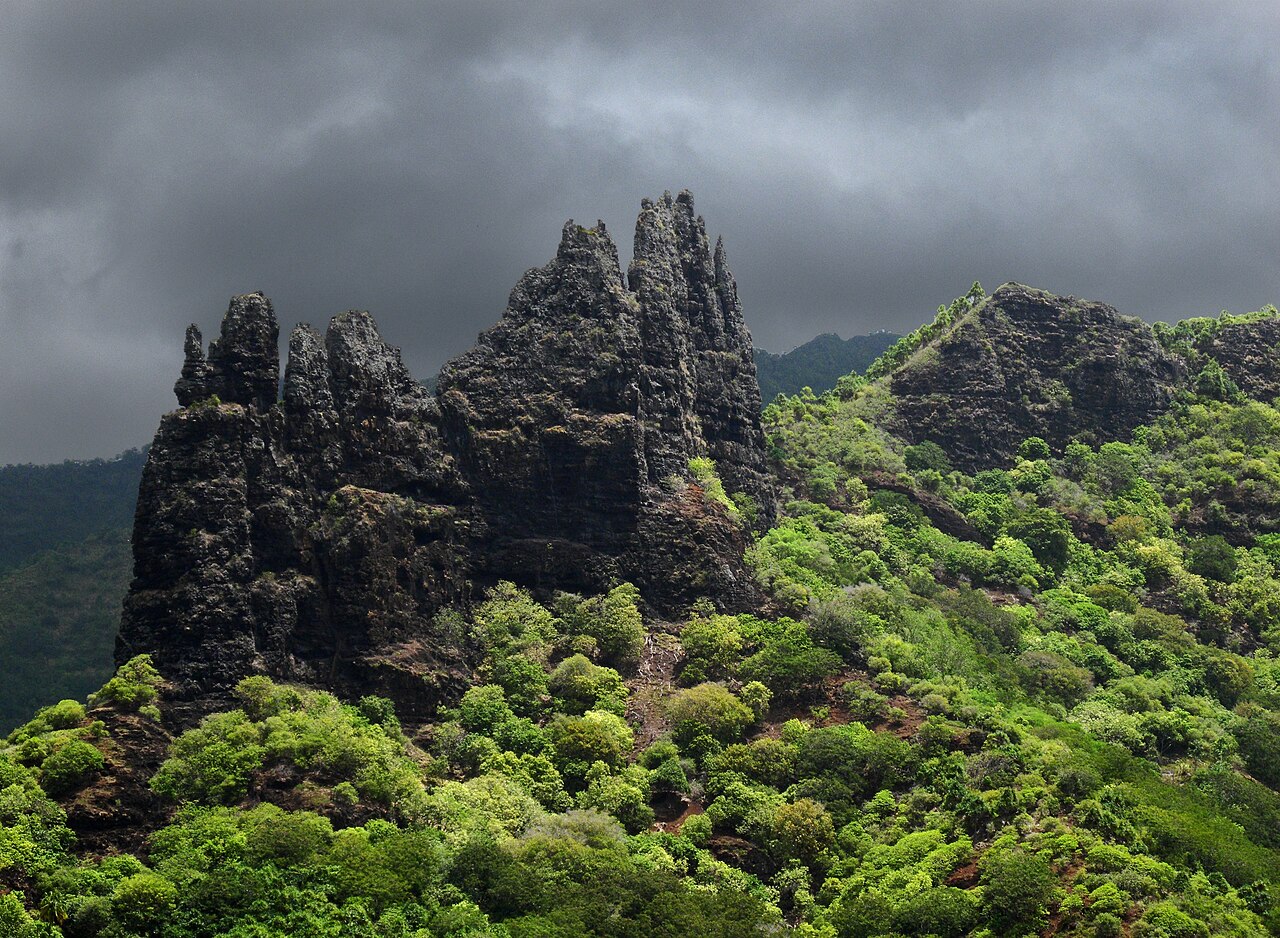
- Ua Pou and Ua Huka — notable for dramatic spires and cliffs.
- Hiva Oa, Tahuata and Fatu Hiva — the main southern islands, renowned for traditional villages and fertile valleys (southern group).
Geology and Climate
The islands are volcanic in origin, created by volcanic activity over a hotspot. This geology produces steep mountains, deep valleys and high sea cliffs rather than broad coastal plains. Soils are often fertile where not eroded, allowing tropical rainforests to grow in many valleys. The climate is tropical and humid, with average temperatures commonly in the high 20s °C and substantial seasonal rainfall; microclimates vary with elevation and exposure. For geological context and volcanic history see volcanic origin.
People, Language and Culture
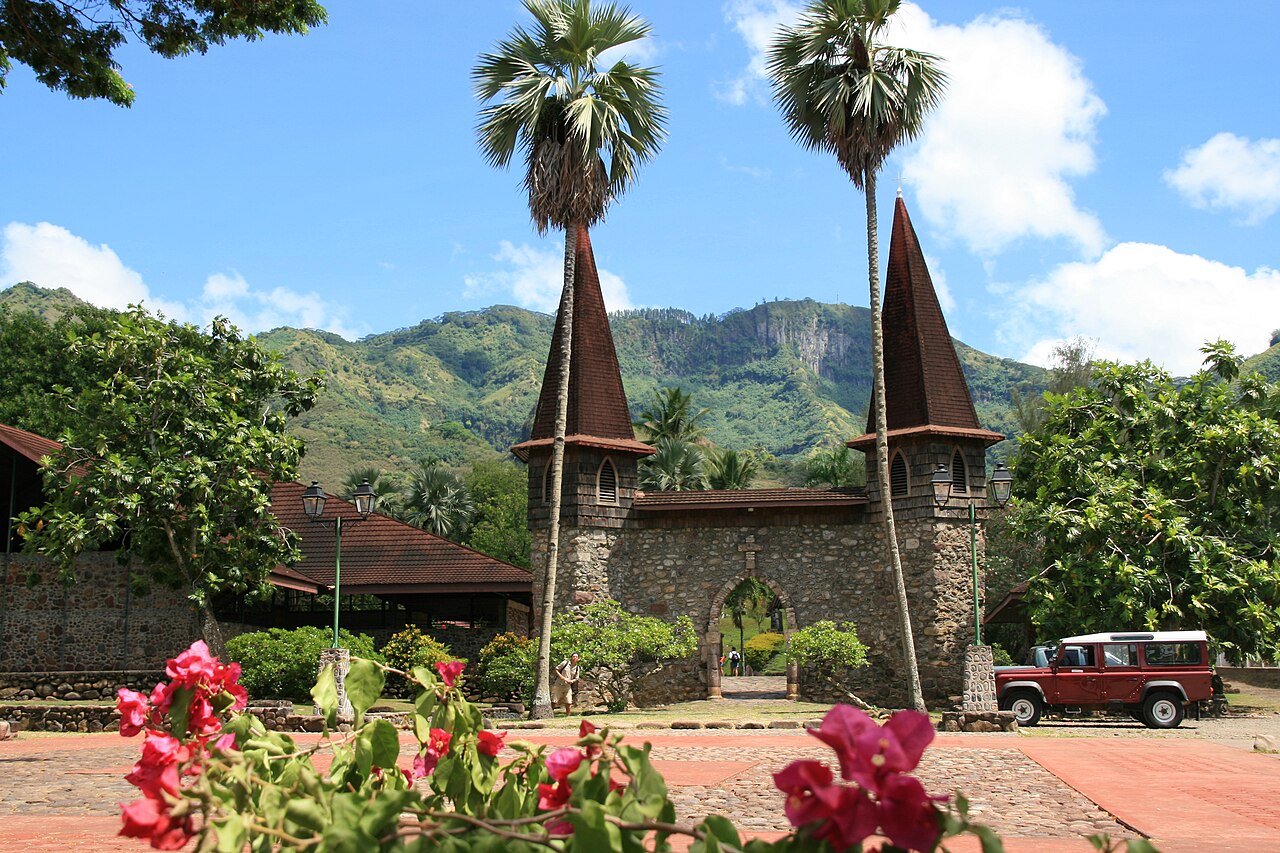
The Marquesan people descend from early Polynesian voyagers and maintain strong cultural traditions in carving, tattooing, navigation and oral history. Marquesan languages belong to the Eastern Polynesian subgroup and remain in use alongside French. Catholic missions established a strong religious presence from the 19th century onward; today many communities combine Christian and customary practices. The islands are famous for their stone statues, petroglyphs and ceremonial sites (marae), which attract researchers and visitors interested in Polynesian prehistory. More on cultural heritage is available at Marquesan culture.
History and Notable Visitors
European contact began in the late 16th and 18th centuries, and the islands were later incorporated into the French colonial domain that became French Polynesia. The Marquesas have attracted artists and writers seeking remote inspiration; notably, the painter Paul Gauguin spent his final years on Hiva Oa, where his grave and that of singer Jacques Brel are now points of interest. For historical timelines and biographies connected with the islands see historical notes.
Economy, Transport and Conservation
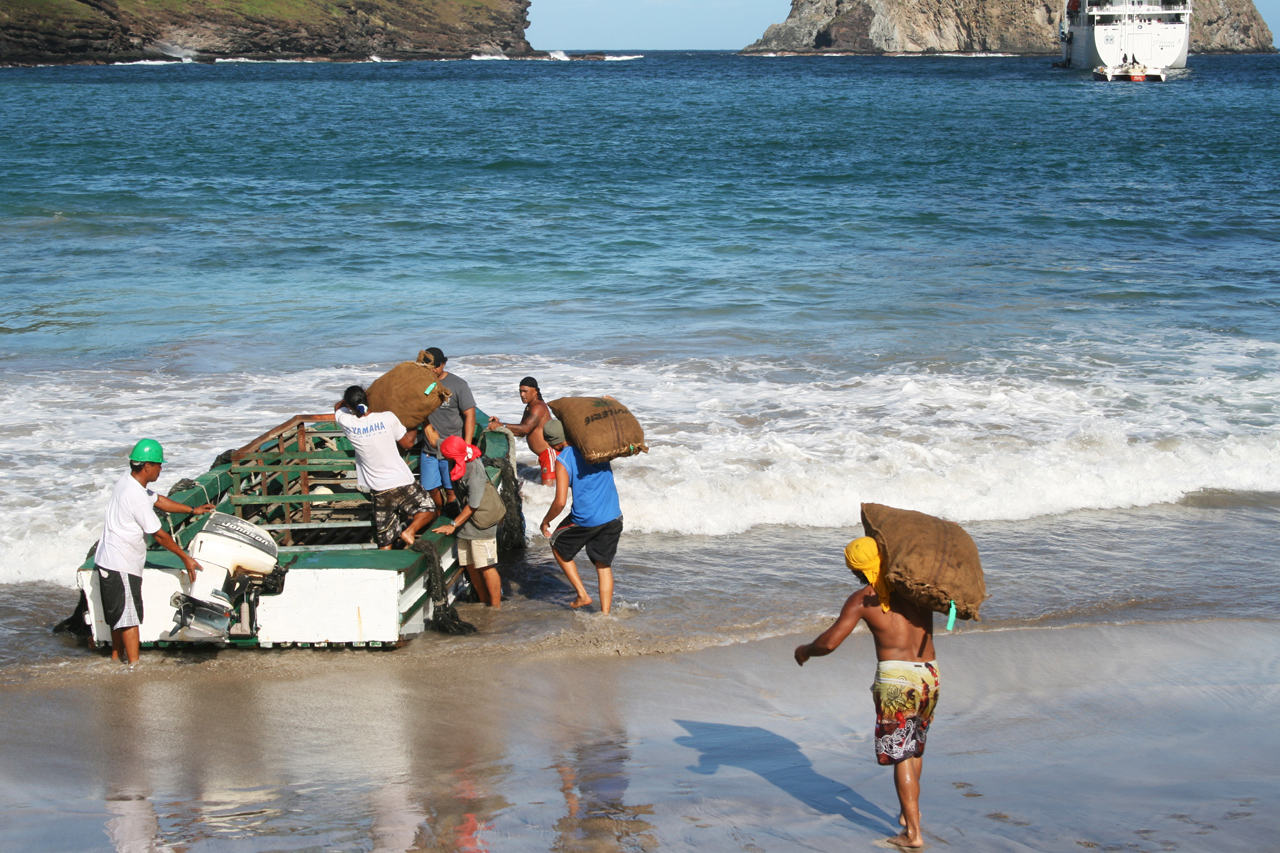
The local economy is based largely on subsistence agriculture, small-scale copra production, handicrafts and modest tourism. Accessibility is limited: inter-island travel is mostly by small aircraft and occasional ships, and long-distance connections to Tahiti are infrequent. Conservation is a significant concern because of habitat loss, invasive species and pressure on native plants and birds; efforts to protect endemic species and archaeological sites are ongoing. Practical travel and conservation information is provided at visitor and conservation resources.
Distinguishing Features and Importance
The Marquesas stand out for their dramatic volcanic landscapes, well-preserved pre-European archaeological remains, and distinctive cultural expressions of Polynesian heritage. Their remoteness has shaped a way of life that balances traditional practices with modern administration as part of French Polynesia. Scholars, travelers and cultural enthusiasts value the islands for both natural beauty and their insight into Polynesian history.
Questions and answers
Q: Where are the Marquesas Islands located?
A: The Marquesas Islands are located south of the Equator, about 1.600 km northeast of Tahiti in the Pacific Ocean.
Q: How many people lived on the Marquesas Islands in 2012?
A: 9264 people lived on the Marquesas Islands in 2012.
Q: How many islands make up the Marquesas?
A: The Marquesas consist of fourteen bigger islands and a number of smaller ones.
Q: Into what two groups are the Marquesas commonly split?
A: The Marquesas are commonly split into two groups: a northern one with the main islands Nuku Hiva, Ua Pou and Ua Huka, and a southern one, made of Hiva Oa, Tahuata and Fatu Hiva.
Q: What is the climate like on the Marquesas Islands?
A: The climate is hot, with an average temperature of 28 degrees centigrade, and there is a lot of rainfall.
Q: What kind of vegetation grows on many islands in the Marquesas?
A: Tropical rainforest grows on many islands in the Marquesas.
Q: What is the total land area of the Marquesas Islands?
A: The total land area of the Marquesas Islands is 1274 km².
Related articles
Author
AlegsaOnline.com Marquesas Islands (French Polynesia) Leandro Alegsa
URL: https://en.alegsaonline.com/art/62212