
Margrave (Markgraf): Frontier Noble of the Holy Roman Empire
Margrave (German: Markgraf) was a medieval title for nobles charged with defending frontier provinces called marches; holders combined military, administrative and dynastic roles and later became hereditary rulers.
Overview
A margrave (German: Markgraf) was a medieval noble entrusted with the rule and defence of a border territory known as a march or mark. The title emerged in early medieval Europe as rulers needed strong local commanders to protect vulnerable frontier zones from raids, invasion and lawlessness. Margraves combined military responsibility with civil authority and often exercised greater autonomy than interior counts because of the strategic importance of their provinces.
Image gallery
1 Image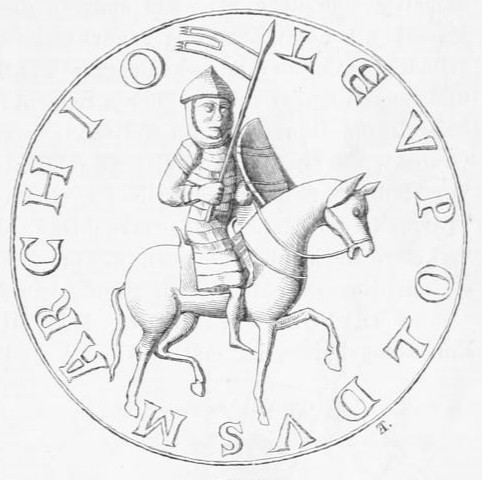
Role, duties and status
Margraves were typically appointed by the sovereign — in much of central Europe by the Holy Roman Emperor — and were expected to organize garrisons, maintain fortifications, raise troops and administer justice in their marches. Their practical duties commonly included:
- Border defence and military command;
- Local administration, taxation and law enforcement;
- Settlement and colonization of sparsely populated borderlands;
- Acting as the imperial representative in regions distant from the capital.
In terms of rank, a margrave traditionally stood above a count (Graf) but below a duke. Contemporary sources and later historians often compare these ranks; for a simple hierarchy see: duke and count/mark distinctions.
History and notable examples
The institution of the march has roots in the Carolingian and post-Carolingian periods, when frontier management became a priority for emerging medieval states. Over time some marches and their margraves grew powerful and hereditary. A prominent example are the Margraves of Brandenburg, whose territory and influence expanded so much that they acquired the electoral dignity as Prince-electors of the Empire. The rulers of Brandenburg later acquired lands outside imperial boundaries and adopted the style of King in Prussia while retaining their margravial titulature.
Development and decline
As European borders stabilized and central authority consolidated in the late Middle Ages and the early modern period, the purely military function of margraves diminished. Many marches became integrated into larger principalities or transformed into duchies and electorates. By the dissolution of the imperial monarchy and the end of the German monarchies in 1918, traditional margraves no longer ruled as independent frontier commanders, although the title survived in compound noble styles and family histories.
Legacy and distinctions
Margraves occupy an intermediate place in medieval rank systems: stronger than ordinary counts but not always as prestigious as dukes. Their origins in pragmatic frontier defence explain why several margravial houses later rose to greater prominence. For context about the broader setting see general treatments of the Middle Ages, the political geography of Europe and institutions of the Holy Roman Empire. The social and legal changes of the 19th and early 20th centuries, including the end of the German Empire, closed the chapter on margraves as active sovereigns, leaving the term chiefly as a historical and honorific designation.
For further reading and illustrative genealogies consult specialized histories and archival sources: many modern overviews use the term Markgraf in German-language scholarship and link margraves to the wider evolution of medieval frontier governance.
Questions and answers
Q: Who is a Margrave?
A: A Margrave is a German nobleman.
Q: What was the role of a Margrave?
A: Originally, the Holy Roman Emperor would give a Markgraf an area of the borders (the Marches or German: Mark) to look after. The Margrave would have to protect the people in the area from invaders, and at the same time protect the empire.
Q: How did the Margrave rank in nobility hierarchy?
A: A Markgraf ranked higher than a graf, but lower than a duke.
Q: What was the highest honor in the Imperial Parliament of the Holy Roman Empire?
A: The Margraves of Brandenburg were made Electors of the Holy Roman Empire, which was the highest honour in the Imperial Parliament.
Q: Why did the Margraves of Brandenburg call themselves "King in Prussia"?
A: When the Margraves of Brandenburg took control of some territory outside the empire as well, there were no Kings in the Empire, so they could call themselves King in Prussia.
Q: What happened to the military importance of the Margraves?
A: As the Middle Ages ended and Europe and the Holy Roman Empire became more secure, the military importance of the Margraves became less.
Q: Were there any Markgrafs left at the end of the German Empire in 1918?
A: At the end of the German Empire in 1918, there were no Markgrafs left. All had been given higher titles, but may have kept the Markgraf title as an extra. The Kings of Prussia, for example, always kept the lower title Margraves of Brandenburg.
Related articles
Author
AlegsaOnline.com Margrave (Markgraf): Frontier Noble of the Holy Roman Empire Leandro Alegsa
URL: https://en.alegsaonline.com/art/61788