
Marathon Man (1976) — overview, cast, production and legacy
1976 American crime thriller directed by John Schlesinger, adapted from William Goldman’s novel. Stars Dustin Hoffman, Laurence Olivier and Roy Scheider; set in New York City and noted for its tense suspense.
Marathon Man is a 1976 American crime thriller film directed by John Schlesinger and adapted from the novel by William Goldman. The movie transposes Goldman's tense, paranoid story into an urban setting and follows a young graduate student caught up in a web of espionage, crime and the lingering shadows of World War II. It achieved strong critical attention and commercial success on release.
Image gallery
2 Images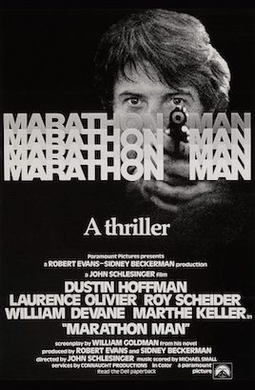

Plot and themes
The film centres on Thomas "Babe" Levy, a graduate student whose ordinary life is disrupted by a chain of violent events and secrets. Themes include mistrust, the aftermath of historical atrocities, and the vulnerability of an everyman protagonist thrust into dangerous conspiracies. The screenplay, written by Goldman, keeps the narrative brisk and claustrophobic while shifting among suspense, action and psychological horror.
Principal cast and characters
- Dustin Hoffman as the protagonist, Thomas "Babe" Levy.
- Laurence Olivier as the film's antagonist, a character linked to wartime crimes.
- Roy Scheider as Babe's older brother, a figure with government ties.
The performances—particularly Olivier's unsettling turn—were widely discussed by critics and contributed to the film's lasting profile. The movie is also remembered for a few intensely staged set pieces that emphasize dread rather than explicit explanation.
Production, setting and reception
Adapted from the novel of the same name, the production was shot primarily in New York City locations to capture a realistic urban atmosphere. John Schlesinger's direction, Goldman's adaptation, and the principal performances combined to produce a thriller that drew both popular audiences and critical appraisal upon release. Over time it has remained a reference point for films exploring paranoia and moral ambiguity.
Though rooted in the conventions of 1970s suspense cinema, the picture's moral questions and character-driven tension keep it relevant for contemporary viewers. For readers and viewers interested in how novels translate to tight cinematic thrillers, Marathon Man presents a clear example of adaptation, performance and atmosphere working together to sustain suspense.
Related articles
Author
AlegsaOnline.com Marathon Man (1976) — overview, cast, production and legacy Leandro Alegsa
URL: https://en.alegsaonline.com/art/61552