
Marnie (1964 film)
Alfred Hitchcock's 1964 psychological drama starring Tippi Hedren and Sean Connery, adapted from Winston Graham's novel. A study of trauma, identity, and secrecy framed as a suspenseful character piece.
Marnie is a 1964 American psychological drama directed by Alfred Hitchcock and adapted from the novel by Winston Graham. Starring Tippi Hedren and Sean Connery, the film examines the troubled life of a woman who conceals a history of theft, deception and emotional damage. Hitchcock frames the story less as a conventional whodunit and more as a character study that mixes suspense with intimate psychological inquiry.
Image gallery
2 Images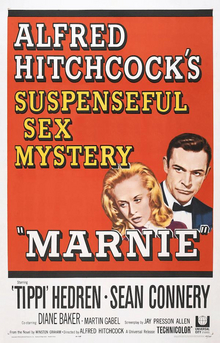

Overview and plot
The central figure, Marnie, presents a composed exterior while repeatedly stealing from employers and reinventing herself to avoid discovery. After being exposed, she is pursued by a wealthy employer, Mark Rutland, who persuades her to marry him. The marriage becomes vehicle for uncovering Marnie’s repressed memories and the traumatic events of her past. The narrative focuses on memory, identity and the uneasy relationship between secrecy and intimacy.
Themes and style
The film explores recurring motifs common in Hitchcock’s work: the unreliable female protagonist, voyeurism, and the interplay of sexual and psychological power. Cinematically, Hitchcock uses close framing and controlled pacing to sustain tension while prioritizing character psychology over plot mechanics. The story raises questions about compulsion, the legacy of childhood trauma, and the ethics of confrontation and care.
Cast, production and reception
- Main cast: Tippi Hedren as Marnie; Sean Connery as Mark Rutland.
- Source material: based on Winston Graham’s novel; Hitchcock’s adaptation focuses on interior conflict.
- Reception: initial reviews were mixed, with critics divided over tone and moral ambiguities; over time the film has been reassessed for its psychological depth and visual craft.
Legacy and notable facts
Marnie occupies a distinctive place among Hitchcock’s later works as a study of a damaged protagonist rather than a straightforward mystery. It remains discussed for its performances, its treatment of difficult material, and its contribution to 1960s cinema that probes personal crisis within a suspense framework. The film continues to be analyzed by scholars and viewers interested in film psychology, gender dynamics, and Hitchcock’s evolving style.
For further reading on the director and the principal actors, see links to the director and stars above. The film is often referenced in studies of mid-20th-century psychological dramas and adaptations.
Related articles
Author
AlegsaOnline.com Marnie (1964 film) Leandro Alegsa
URL: https://en.alegsaonline.com/art/62191
Sources
- imdb.com : Marnie