
Malmö
Coastal city in southern Sweden, the country's third-largest, noted for its historical links to Denmark, the Öresund Bridge to Copenhagen, multicultural population and contemporary urban renewal.
Malmö is a coastal city in southern Sweden and the country's third-largest urban centre. Located in the historic province of Skåne, it forms the western anchor of the Öresund Region and lies directly across the sound from Copenhagen. Its Swedish name is referenced here as Malmö, and the Danish historical form as Malmø. As part of Sweden today, the city nevertheless has long cultural and political connections with neighbouring Denmark.
Image gallery
10 Images


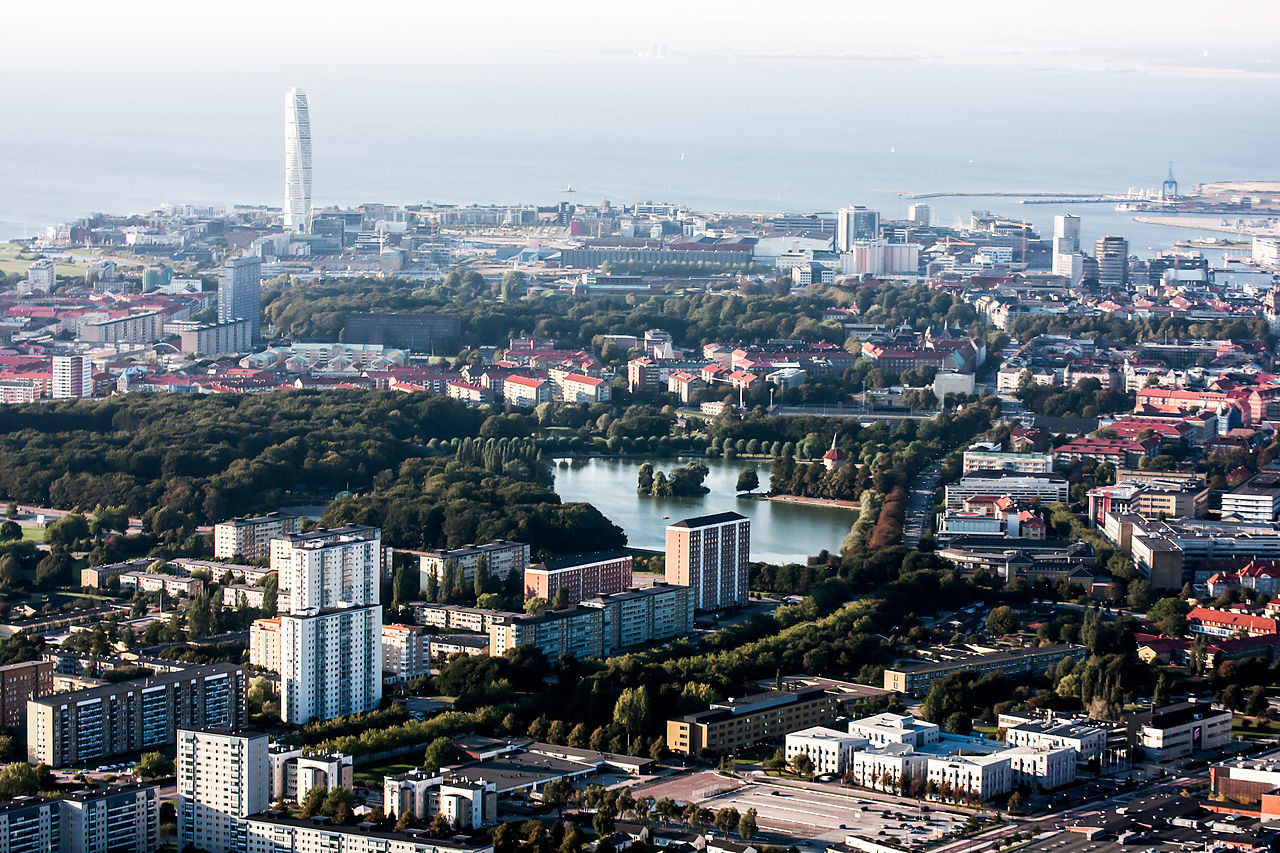


Overview and population
Malmö has a population in the several hundreds of thousands (around 330,000 in 2017) and serves as a regional hub for commerce, education and transport. It is commonly described as the third-largest city in Sweden after Stockholm and Gothenburg. The city's coastal position gives it a maritime climate, with relatively mild winters and warm summers compared with northern parts of the country.
History and development
Founded in the Middle Ages, Malmö grew as a trading and shipbuilding town. During the late medieval period it was one of the larger towns in the Danish realm before Skåne became part of Sweden in the 17th century. The city expanded industrially in the 19th and 20th centuries and later underwent economic transformation as heavy industry declined. In recent decades, large-scale waterfront regeneration projects have converted former shipyards and docks into residential, recreational and commercial districts.
Culture, demographics and institutions
Malmö is noted for its multicultural population and immigrant communities, including a significant Middle Eastern presence. This diversity is reflected in its restaurants, shops and cultural festivals. The city also hosts higher education institutions such as Malmö University, founded in the late 20th century, and a range of museums, theatres and contemporary arts venues.
Architecture, landmarks and transport
- Modern architecture: the twisting skyscraper Turning Torso by Santiago Calatrava is a recognizable skyline marker.
- Urban renewal: the Västra Hamnen (Western Harbour) area exemplifies sustainable redevelopment and waterfront housing.
- Transport links: Malmö is connected to Copenhagen by the Öresund Bridge, a combined road–rail link that transformed cross-border commuting and commerce; the bridge provides direct access to Copenhagen.
Economy and significance
Today Malmö's economy centres on services, information technology, education, and logistics. The city's location on the Öresund corridor gives it strategic importance for businesses operating across southern Sweden and eastern Denmark. Malmö also plays a role in regional planning and sustainability initiatives, often cited as an example of post-industrial urban regeneration.
Visitors and residents alike encounter a mix of medieval streets, 19th-century industrial buildings, contemporary design and green public spaces. For further reading on Malmö's language forms, demographics and regional role see local resources and regional guides linked from official portals and cultural institutions (Swedish name, Danish name, regional data rankings, national context Sweden, historical ties Denmark, cross-border links Copenhagen, and community topics immigration).
Related articles
Author
AlegsaOnline.com Malmö Leandro Alegsa
URL: https://en.alegsaonline.com/art/61059
Sources
- scb.se : "Kommunarealer den 1 January 2012 ('''excel-file, in Swedish''') Municipalities in Sweden and their areas, as of 1 January 2012 - (Statistics Sweden)"
- scb.se : "Localities 2010, area, population and density in localities 2005 and 2010 and change in area and population"
- scb.se : "Kvartal 1 2012 - Statistiska centralbyrån"