
Manx language (Manx Gaelic)
Manx (Gaelg/Gailck) is a Goidelic Celtic language of the Isle of Man. Once declined to near extinction, it has been revived through education, media and official protection and remains a living cultural language.
Overview
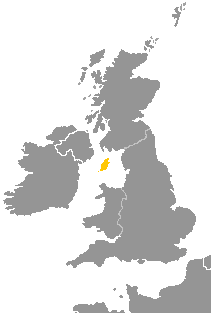
Manx, often called Manx Gaelic and known on the island as Gaelg or Gailck, is the native Celtic language of the Isle of Man. It belongs to the Goidelic branch of Celtic languages, closely related to Irish and Scottish Gaelic. The language is tightly bound to Manx identity: it appears in traditional music, place‑names, literature and cultural ceremonies on the island. The Isle of Man itself is often mentioned in accounts of Manx language history; see Isle of Man.
Image gallery
9 Images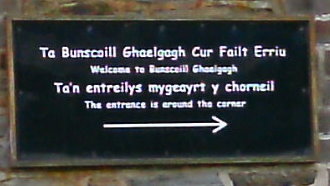




Characteristics
Manx shares many grammatical and phonological features with its Goidelic cousins. Typical traits include initial consonant mutations, a tendency toward VSO (verb–subject–object) word order in older registers, and a vowel and consonant system that shows Norse and English influences. Its writing system has been shaped by historical Irish orthography but was later modified under English influence, producing a distinct spelling tradition.
History and decline
Derived from Old Irish, Manx developed on an island that experienced strong Norse settlement in the early medieval period; Norse vocabulary and place‑name elements remain visible. Over centuries, economic, social and political pressures reduced the number of native speakers. By the 19th and 20th centuries English became dominant in everyday life, and Manx ceased to function as an uninterrupted community language. It is commonly noted that the last native speaker of the traditional community died in 1974; the language had effectively died out in daily family transmission by the mid‑20th century (decline and near‑extinction).
Revival and modern status
From the latter half of the 20th century a dedicated revival movement grew. Enthusiasts established evening classes, created learning materials, recorded native informants, and promoted Manx in schools and media. Today the language appears in bilingual signs, radio broadcasts, new literature, music and public ceremonies. Some children now learn Manx through immersion or bilingual education, and a small number are raised with Manx as a community or household language by second‑language speakers.
Uses, recognition and notable facts
- Manx is used symbolically and practically for cultural events, teaching and tourism.
- The language receives protection and support under instruments such as the European Charter for Regional or Minority Languages, and through local government policy.
- Manx literature includes folklore collections, religious texts, songs and modern compositions written by revivalist authors.
- Though closely related to Irish and Scottish Gaelic, Manx preserves distinctive pronunciations, vocabulary and orthographic forms reflecting the island’s history.
Overall, Manx is a prominent example of language decline followed by active community revival. Its recovery illustrates how documentation, education and official recognition can support the return of a language to cultural life and everyday use.
Questions and answers
Q: What is Manx language?
A: Manx language is a Celtic language of the Gaelic language family spoken on the Isle of Man.
Q: What is Manx known as in Manx language?
A: In Manx, Manx language is known as "Gaelg" or "Gailck."
Q: What other Gaelic languages does Manx share a family with?
A: Manx shares a family with Scottish Gaelic and Irish Gaelic.
Q: Who speaks Manx mainly?
A: Manx is spoken mainly by people who learn it through interest.
Q: When did the Manx language die out as a natural community language?
A: The Manx language died out as a natural community language in the 20th century.
Q: When did the last of the old native speakers of the Manx language die?
A: The last of the old native speakers of the Manx language died in 1974.
Q: What protects Manx language?
A: Manx language is protected under the European Charter for Regional or Minority Languages.
Related articles
Author
AlegsaOnline.com Manx language (Manx Gaelic) Leandro Alegsa
URL: https://en.alegsaonline.com/art/61485
Sources
- independent.co.uk : Anyone here speak Jersey?
- iomtoday.co.im : Fockle ny ghaa: schoolchildren take charge
- sil.org : Documentation for ISO 639 identifier: glv
- gov.im : Isle of Man Census Report 2011