
Maithili language
Maithili is an Indo‑Aryan language of the Mithila region, spoken by roughly 34 million people across northern India and Nepal; it has a long literary tradition and was historically written in Tirhuta.
Overview
Maithili (Maithilī) is an Indo‑Aryan language of the eastern subcontinent. It belongs to the broader Indo‑Aryan family and shares many grammatical and lexical features with nearby languages while preserving distinctive local forms. Today Maithili is used in everyday conversation, radio and television programs, regional literature, and increasingly in education and digital media. For classification information see language classification and the Indo‑Aryan family entry at Indo‑Aryan.
Image gallery
10 Images




History and script
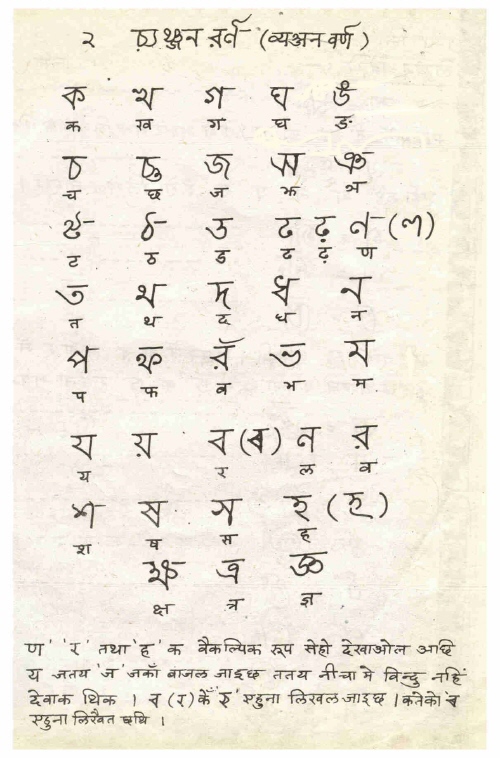
The language developed in the historic Mithila region and evolved from Middle Indo‑Aryan varieties. Maithili has a long literary history: medieval poets such as Vidyapati composed in Maithili and helped shape its classical registers. Historically Maithili was commonly written in the Mithilakshar or Tirhuta script, a distinct regional script still preserved in manuscripts. In modern times Devanagari has become the predominant writing system; see Devanagari for the script used today.
Geographic distribution and status
Maithili is concentrated in the Mithila region, which spans parts of northern India and the southern plains of Nepal. It is spoken widely in several Indian states and in Nepal’s southern provinces. Estimates place the number of speakers at around 34 million, including roughly 2.8 million in Nepal. Maithili is recognized as one of India’s scheduled languages and holds official or national recognition within Nepal; for regional details see sources on northern India and Nepal.
Characteristics and dialects
Maithili forms part of a dialect continuum with neighboring languages. It exhibits typical Indo‑Aryan grammatical structures such as gender, case marking, and a rich verbal morphology, but also preserves local phonological and lexical features. Major varieties are often grouped by local names; scholars sometimes distinguish Maithili proper from related lects such as Bajjika and others.
Uses, literature, and cultural importance
Maithili has a vibrant oral and written tradition: devotional and romantic poetry, folk songs, dramas, and modern fiction are important cultural expressions. The Tirhuta writing tradition survives in religious and archival contexts, and there are contemporary efforts to teach and revive the script alongside Devanagari. Maithili continues to play a central role in the cultural identity of the Mithila region and its diaspora.
Notable facts
- The language combines ancient literary roots with active modern use in media and education.
- Its historic script (Tirhuta/Mithilakshar) is distinct from—but now less common than—Devanagari.
- For broad comparative and linguistic resources consult general overviews at classification and family surveys at Indo‑Aryan.
Author
AlegsaOnline.com Maithili language Leandro Alegsa
URL: https://en.alegsaonline.com/art/60834
Sources
- ethnologue.org : Maithili
- glottolog.org : "Maithili"
- oed.com : Maithili
- archive.ethnologue.com : Maithili