
Mahmud-i-Raqi
Mahmud-i-Raqi is the provincial capital of Kapisa in Afghanistan, serving as an administrative, commercial, and regional service center with a multiethnic population and a history as a local market town.
Overview
Mahmud-i-Raqi (also written Mahmud Raqi or Mahmood-e Raqi) is a city in Afghanistan. It functions as the capital of Kapisa Province and is the administrative center of Mahmud Raqi District. As a provincial seat, the city hosts government offices, public services and local courts that serve the surrounding rural areas.
Image gallery
1 Image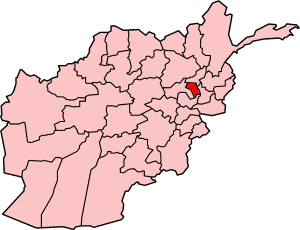
Geography and population
The city occupies a small urban footprint within a largely rural province of valleys and hills. Its climate and landscape reflect the semi-arid conditions common to much of central Afghanistan. The population is compact and multiethnic; Dari and Pashto are widely spoken and local communities maintain traditional village ties to nearby agricultural land.
History and administration
Mahmud-i-Raqi developed historically as a local market and administrative center. Its name reflects Persian linguistic influence common in the region. Over the 20th and early 21st centuries the town grew in importance as provincial government institutions and basic municipal services—such as a governor's office and administrative departments—concentrated there.
Economy and infrastructure
The local economy is based on small-scale commerce, bazaars, public employment and services that support surrounding farming communities. Markets trade agricultural produce and daily necessities. Road links and transport services provide connections to neighboring districts and to larger urban centers, while infrastructure and utilities remain limited compared with larger cities.
Culture and society
Community life centers on markets, mosques and family networks. Traditional crafts, seasonal markets and local food staples are part of daily life. Educational and health facilities exist but often operate with constrained resources; non-governmental and development organizations have been active in supporting local services.
Contemporary significance and notable facts
As a provincial capital, Mahmud-i-Raqi is significant for governance, delivery of public services and regional commerce. Its size and profile are modest compared with Afghanistan's major cities, but its administrative role makes it a focal point for provincial planning and aid programs. The place name has several common spellings in English, which leads to variant transcriptions in written sources.
Related articles
Author
AlegsaOnline.com Mahmud-i-Raqi Leandro Alegsa
URL: https://en.alegsaonline.com/art/60727