
Madama Butterfly (Puccini)
Madama Butterfly is Giacomo Puccini’s three-act opera (1904) about Cio-Cio-San, an arranged marriage, cultural collision and tragic consequences. Revised after its premiere, it is now a repertory staple.
Overview
Madama Butterfly is an Italian opera in three acts by Giacomo Puccini. Written at the turn of the 20th century, it tells the story of Cio-Cio-San (commonly called Butterfly), a young Japanese woman who marries an American naval officer, Lieutenant B. F. Pinkerton. The drama explores love, faith, cultural misunderstanding and the human cost of imperial contact. Puccini’s score is noted for its melodic lyricism and evocative orchestral coloring, which support an intimate but intense stage tragedy.
Image gallery
7 Images
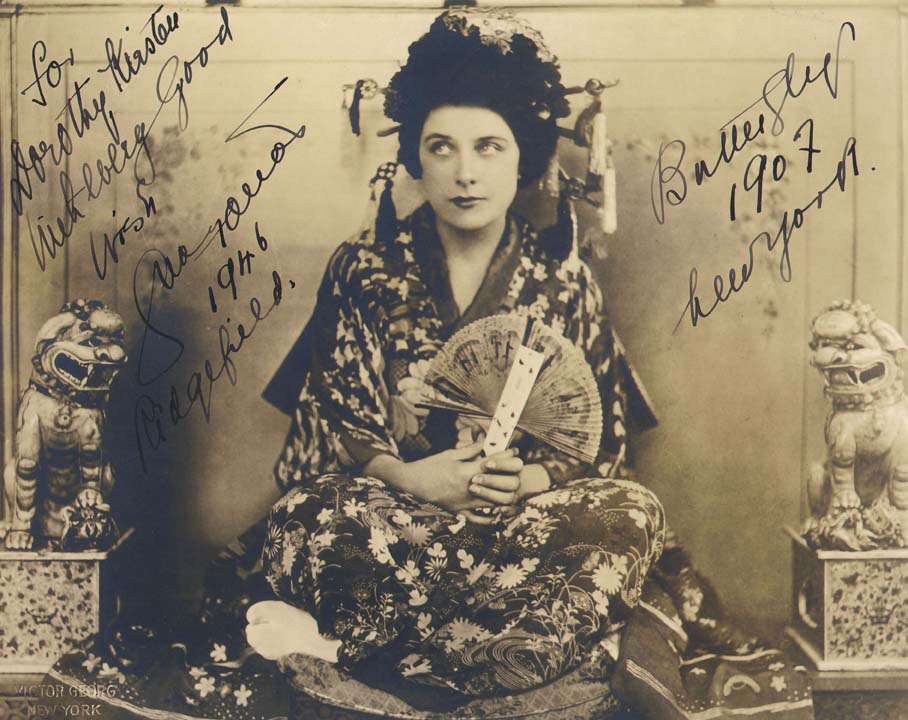


Creators and structure
The libretto was prepared by Giuseppe Giacosa and Luigi Illica, based on a short play by the American dramatist David Belasco. The work is cast for a compact ensemble centered on Cio-Cio-San, Pinkerton, Suzuki (her attendant) and Sharpless, the American consul. The opera unfolds in three acts and includes several well-known numbers, notably Cio-Cio-San’s aria often sung in English as "One Fine Day" ("Un bel dì vedremo").
Synopsis (brief)
Set in Nagasaki, the plot follows Butterfly’s hope and loyalty after her marriage to Pinkerton, who treats the union as temporary. When Pinkerton leaves and returns years later with an American wife, the collision of expectations produces a tragic outcome. The story centers on personal devotion, betrayal and the endurance of a mother’s love, themes that drive both the emotional content and musical development.
Premiere and revision
The opera was first performed in Milan on February 17 (17 February) 1904, where the premiere met with a poor reception. Puccini revised the work extensively, tightening the score and altering dramatic pacing and orchestration. The revised version was staged in Brescia on May 28, 1904, and thereafter the work gained rapid popularity and secured its place in the international repertory.
Music and themes
Puccini’s musical language in Madama Butterfly blends verismo immediacy with lyrical arioso writing. He uses recurring motives and local color to unify the score and to reflect Butterfly’s inner life. The opera raises questions about orientalism, the effects of colonial presence, and gendered power relations; modern productions often engage these issues in staging and interpretation.
Performance and reception
Despite early controversy, the opera became a showcase for leading sopranos and an enduring favorite with audiences. Critical discussion has balanced admiration for the score and its central role for a dramatic soprano against critiques of stereotyped representation. Directors and companies continue to reinterpret the work to address historical context and contemporary sensibilities.
Legacy and adaptations
Madama Butterfly has inspired many recordings, film and theatre adaptations, and has influenced popular culture beyond opera. Its best-known arias and orchestral passages remain staples of concerts and compilations, and the title character remains a touchstone role in the operatic canon.
Further reading and resources
Related articles
Author
AlegsaOnline.com Madama Butterfly (Puccini) Leandro Alegsa
URL: https://en.alegsaonline.com/art/60430