
Lycoris — genus of bulbous flowering plants
Lycoris is a small genus of bulbous perennials in the Amaryllidaceae, native to East Asia. Known for leafless flowering stems and spider‑like blooms, they are grown ornamentally and figure in regional folklore.
Lycoris is a compact genus of showy, bulbous flowering plants in the family Amaryllidaceae. Comprising roughly a dozen to two dozen species, these perennials are native to eastern Asia (China, Japan, Korea and nearby regions) and are prized in gardens for their dramatic, often spidery flowers that appear on leafless stems.
Image gallery
9 Images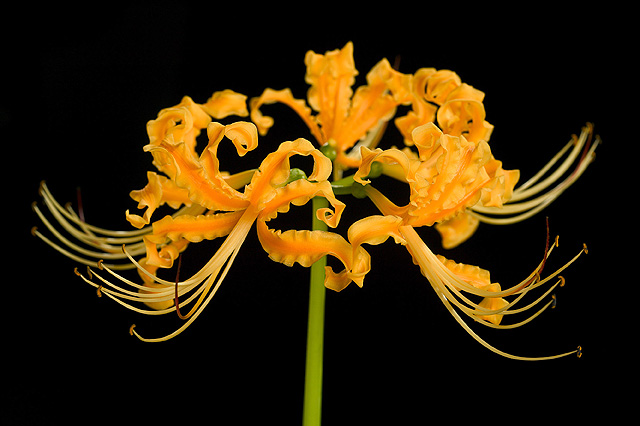


Key characteristics
Lycoris species produce underground bulbs and typically display a seasonal separation of leaves and flowers: the strap‑shaped leaves often emerge in one season while the scape bearing flowers appears later with little or no foliage present (a habit called hysteranthy). Flowers vary in color from red and pink to yellow and white, with long, recurved tepals and prominent stamens that give some species a “spider” appearance.
Notable species and distinction
- Lycoris radiata — the red spider lily, widely cultivated and naturalized in parts of the world.
- Lycoris squamigera — often called the resurrection or surprise lily for its sudden summer blooms.
- Lycoris aurea — a golden‑flowered species used in ornamental plantings.
Although sometimes called cluster amaryllises or hurricane lily, Lycoris is distinct from true amaryllis (Hippeastrum) and other plants also labeled "spider lily"; common names overlap across unrelated genera.
History, cultivation and uses
These plants have been cultivated in East Asia for centuries, appearing in temple gardens, rural hedgerows and ornamental borders. They are propagated by dividing bulbs or by seed and prefer well‑drained soil and partial sun. Many gardeners value Lycoris for late‑season color and for mass plantings that produce striking displays when bulbs bloom simultaneously.
Ecology, toxicity and cultural notes
Lycoris bulbs contain alkaloids (notably lycorine), which are toxic if ingested and can deter herbivores. Cultural associations are strong in parts of Asia: the red spider lily is linked to funeral rites and autumnal memorial traditions in Japan and China. Several species and hybrids have been developed for landscape use, and some, such as L. radiata, have become naturalized beyond their native range.
For further botanical details and horticultural guidance consult specialist references and regional plant databases: Lycoris overview, family treatments in Amaryllidaceae resources, and cultivation notes under the common name hurricane lily.
Related articles
Author
AlegsaOnline.com Lycoris — genus of bulbous flowering plants Leandro Alegsa
URL: https://en.alegsaonline.com/art/60081