
Luminescence: Non‑thermal Light Emission, Mechanisms and Uses
Luminescence is light produced without high temperatures. This article summarizes mechanisms (fluorescence, phosphorescence, chemiluminescence, electroluminescence), measurement, applications, history and safety.
Overview
Luminescence is the emission of light by a material, molecule or organism that is not primarily the result of high temperature. It contrasts with incandescence, in which thermal excitation causes emission. In luminescent processes, electronic or chemical excitation produces photons when excited states relax. The phenomenon covers a wide range of behaviours in color, intensity and duration and is observed in physics, chemistry, biology and engineering. For introductory material and general distinctions see further reading.
Image gallery
2 Images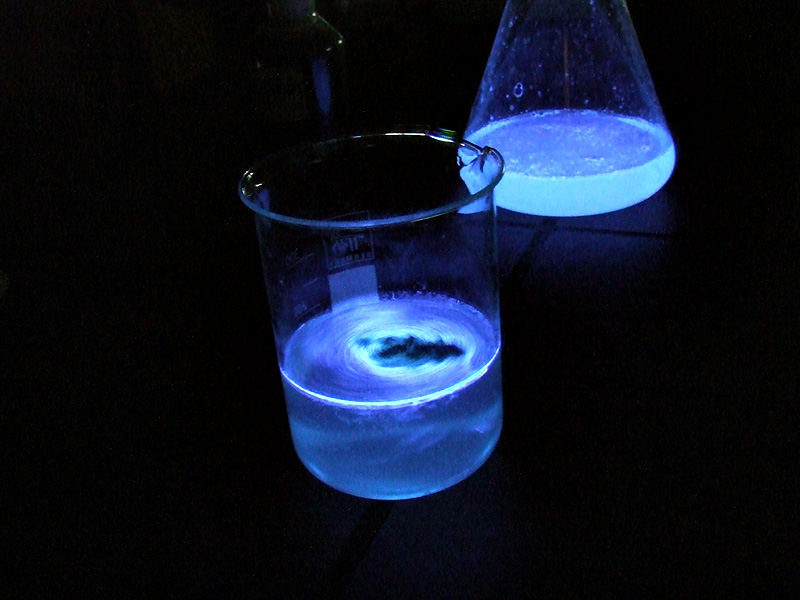

Mechanisms
At the microscopic level, luminescence usually involves promotion of electrons to higher energy states followed by radiative decay. The main categories are:
- Photoluminescence — excitation by light. This includes fluorescence, which decays rapidly after excitation, and phosphorescence, which involves longer‑lived trapped states and delayed emission. Practical introductions are available at photoluminescence resources.
- Chemiluminescence — light from a chemical reaction. Bioluminescence, the form used by fireflies and many marine organisms, is a biological subset of chemiluminescence; see general chemistry notes at chemiluminescence notes.
- Electroluminescence — light produced when electrical energy excites a material, exploited in LEDs and some thin‑film displays; technical summaries are provided at electroluminescence guides.
- Radioluminescence — excitation by ionizing radiation, historically used in instrument dials.
- Mechanoluminescence and triboluminescence — emission caused by mechanical action, stress or fracture of crystals; related effects include piezoluminescence when piezoelectric stress is involved. Experimental notes on mechanical effects are linked at mechanical luminescence.
- Other less common forms include thermoluminescence (release of stored energy on heating) and sonoluminescence (light from collapsing bubbles under acoustic excitation).
Properties and measurement
Important measurable properties of luminescent systems include the emission spectrum (color), lifetime (from nanoseconds to hours for persistent phosphors), and quantum yield (efficiency of photon emission per excitation event). Instruments used in laboratory studies include spectrometers, time‑resolved detectors and integrating spheres. Laboratory methods and standard practices can be found in technical summaries and measurement guides at measurement resources.
Applications
Luminescent materials and processes have many practical uses. Common applications include safety signage and emergency markings, instrument dials and navigational aids (often coated in a process known as "luminising"), display technologies, lighting phosphors, biological assays and molecular tags, forensic detection methods, scintillators for radiation detection, and artistic or decorative effects. Choice of material balances brightness, color, lifetime, stability and safety considerations; further application notes are available at overview sources.
History and safety
The term "luminescence" was adopted in the late 19th century to distinguish non‑thermal light emission. Early practical uses included radium‑based radioluminescent paints; those were later discontinued because of radiation hazards. Safer alternatives include non‑radioactive phosphorescent pigments and sealed tritium devices in regulated applications. Contemporary safety guidance and regulatory information can be consulted at regulatory sources, and historical perspectives are summarized in surveys at historical accounts.
Practical considerations
For demonstrations and safe hands‑on experiments, simple examples include observing fluorescence with UV light or activating chemiluminescent sticks. Many practical demonstrations and classroom protocols emphasize eye and skin safety, proper handling of reactive chemicals, and avoidance of hazardous historic materials; experimental guidance and safety checklists appear in educational resources at experimental notes and measurement resources.
Summary
Luminescence encompasses a broad set of mechanisms that produce light without high temperature. It is central to natural phenomena such as bioluminescence and to many technologies from displays to sensors. Understanding the excitation process, emission lifetime and safety implications is essential for both research and practical applications; introductory and specialist information can be found at the cited resources above, including electroluminescence guides.
Related articles
Author
AlegsaOnline.com Luminescence: Non‑thermal Light Emission, Mechanisms and Uses Leandro Alegsa
URL: https://en.alegsaonline.com/art/59899
Sources
- books.google.com : "Über Fluorescenz und Phosphorescenz, I. Abhandlung"
- dx.doi.org : 10.1021/ed100182h