
Luminiferous aether: historical concept and its role in the development of modern physics
Luminiferous aether was a 19th‑century hypothesis proposing a medium for light propagation. Experiments and theoretical advances replaced it with field and relativistic descriptions of light and the vacuum.

The luminiferous aether (often simply called the aether) was a hypothesised, all‑pervading medium proposed in the 19th century to carry light waves through space. At a time when waves known to science—such as sound and water waves—required a material medium, many physicists reasoned that light too, as a wave, must propagate in a substance filling the cosmos. This idea influenced experiment and theory for decades and shaped attempts to reconcile electromagnetic theory with observed motion of bodies through space.
Image gallery
2 Images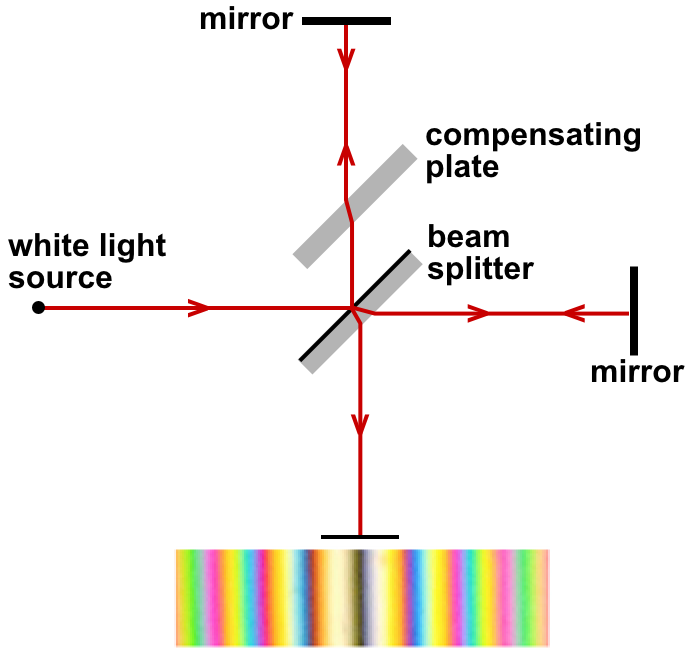

Proposed characteristics
To account for optical phenomena and planetary motion, the aether had to possess a peculiar combination of properties. It was imagined to be extremely rigid to support the very short wavelengths and high frequencies of light, yet effectively non‑viscous so that planets and bodies could move through it without detectable drag. Proponents also assumed it to be transparent and non‑interacting with ordinary matter in ordinary mechanical ways, while still allowing interactions that produced electromagnetic effects. These ad hoc properties were an attempt to reconcile wave behaviour with the apparent free motion of celestial bodies.
Key experiments and theoretical responses
Throughout the 19th century, a sequence of experiments and theoretical developments tested the aether idea. Attempts to measure the Earth's motion relative to the aether—an "aether wind" produced by the planet's travel through the medium—were central to the debate. The most famous null result came from the Michelson–Morley experiment, which failed to detect the expected variation in the speed of light due to Earth's motion. Other investigations studied partial dragging effects and optical aberration.
- To preserve the aether hypothesis in light of null results, some physicists proposed mechanical adjustments such as contraction of bodies moving through the aether (the Lorentz–FitzGerald contraction).
- Mathematical advances in electromagnetism showed light as oscillations of electric and magnetic fields, shifting the discussion from a mechanical medium toward field descriptions.
Transition to relativity and field concepts
The conceptual turning point came with the development of special relativity. Work by Albert Einstein and others removed the need for an absolute rest frame and made the constancy of the speed of light a postulate. Special relativity explained why observers in relative motion measure the same light speed—an outcome inconsistent with a simple moving‑through‑aether picture and illustrated by thought experiments in which moving observers find light's speed unchanged. After relativity became widely accepted, the luminiferous aether lost its role as a physical medium in mainstream physics.
Modern perspective and legacy
Today, the historical aether is regarded as an obsolete scientific hypothesis, replaced by the concepts of electromagnetic fields and the quantum vacuum. Modern physics still uses language such as "vacuum fluctuations" or "field permeating space," but these notions are not mechanical media in the classical aether sense. The term aether survives in historical discussions and occasionally in non‑scientific or fringe contexts; mainstream science distinguishes the discarded mechanical aether from precise, testable field theories that describe interactions without positing a drag‑producing substance.
Further reading and context
For a concise background on early motivations and physical analogies, see discussions of waves and mediums such as the Universe of classical wave phenomena. For related mechanical properties mentioned in 19th‑century debates, sources on the speed of sound in different materials and the concept of viscosity illuminate why scientists expected a medium. Historical summaries and experimental descriptions are available in introductions to the Michelson–Morley experiment and accounts of early electromagnetic theory and the transition to special relativity.
Although the luminiferous aether no longer figures in accepted physical theory, its story is important: it exemplifies how experiment and theory interact, how conceptual assumptions are challenged by observation, and how new frameworks—such as field theory and relativity—can replace older metaphors while preserving predictive power.
Questions and answers
Q: What is luminiferous aether?
A: Luminiferous aether is a substance once believed to fill the Universe and explain how the transmission of waves of light can happen. People believed that light was a kind of wave, and that it must travel through some sort of medium in order for its speed to be consistent.
Q: What did people believe about this substance?
A: People believed that this substance had to have a very low viscosity so that it would not slow down the movements of planets and cause them to eventually fall into their suns. They also thought it could be used to explain why light travels at such high speeds.
Q: How did physicists attempt to make this question clear?
A: Physicists conducted experiments, such as the Michelson-Morley Experiment, in order to try and determine whether or not there was actually an invisible medium through which light travelled.
Q: What did the Michelson-Morley Experiment show?
A: The Michelson-Morley Experiment showed that there was no medium through which light travelled, indicating that there is no Luminiferous aether.
Q: How can we imagine what happens when an observer travels on a boat moving through an ocean current?
A: If an observer were to travel on a boat moving through an ocean current, then they could observe changes in the rate at which waves appeared to travel depending on their relationship with the current.
Q: What does imagining a spaceship travelling from one star to another tell us about relative speeds?
A: Imagining a very fast spaceship travelling at one half the speed of light from one star to another shows us that both photons are measured at 300,000 km/sec regardless of movement or direction - thereby indicating that speeds do not change relative to the movement of the spaceship.
Related articles
Author
AlegsaOnline.com Luminiferous aether: historical concept and its role in the development of modern physics Leandro Alegsa
URL: https://en.alegsaonline.com/art/59900
Sources
- physicsworld.com : physicsworld.com