
Lugano, Switzerland: City on Lake Lugano in Canton Ticino
Lugano is an Italian-speaking Swiss city on Lake Lugano in Canton Ticino. A regional cultural and economic center, it grew through a series of municipal incorporations and blends lakeside tourism with finance and alpine access.
Overview
Lugano is a city in the district of Lugano, located in the canton of Ticino in Switzerland. It sits on the northern shore of Lake Lugano and serves as a regional hub for administration, commerce and tourism. The local language and culture are predominantly Italian-speaking, and the city's setting between lake and mountains gives it a distinctive Mediterranean-alpine character.

Image gallery
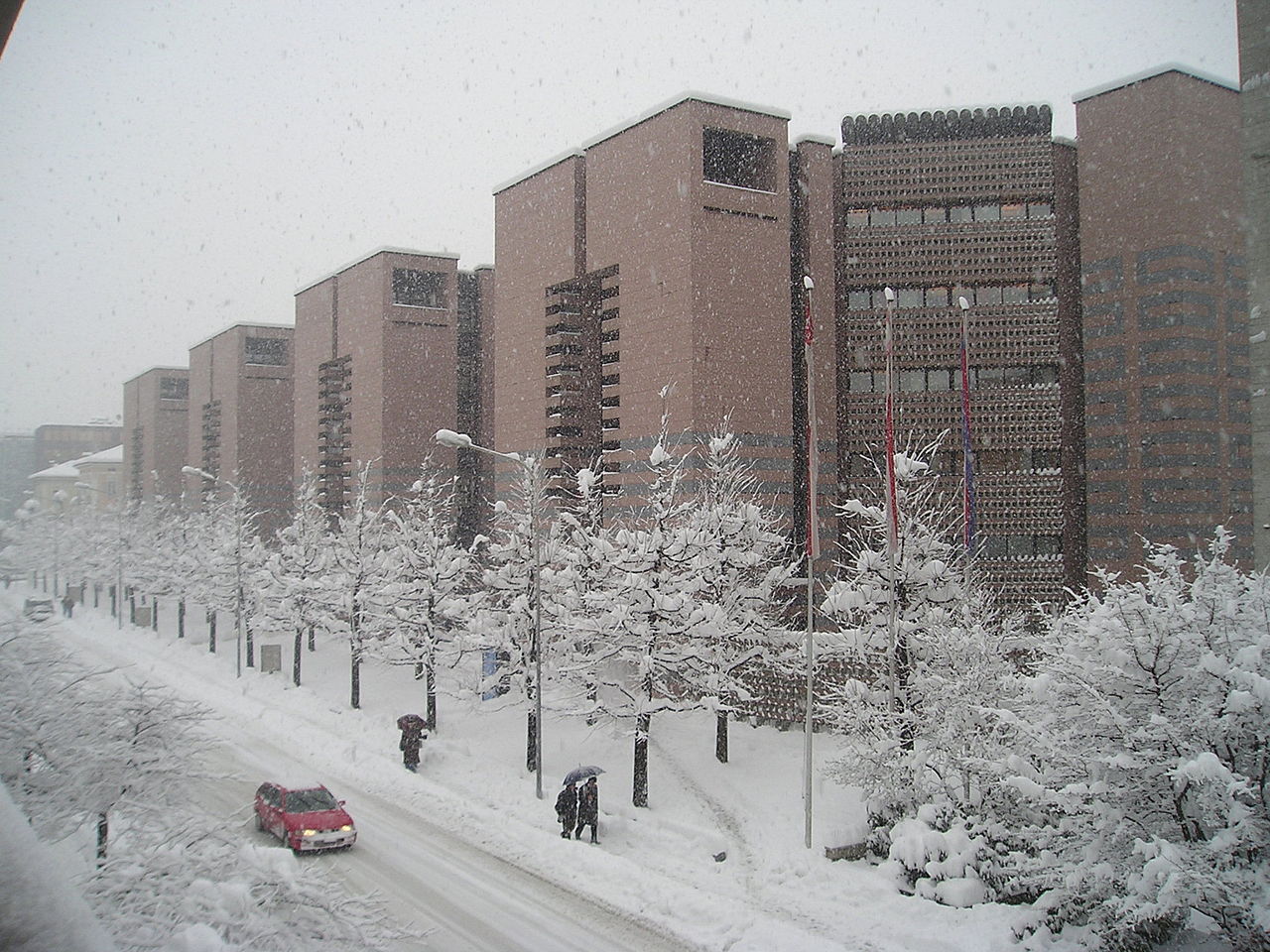
10 Images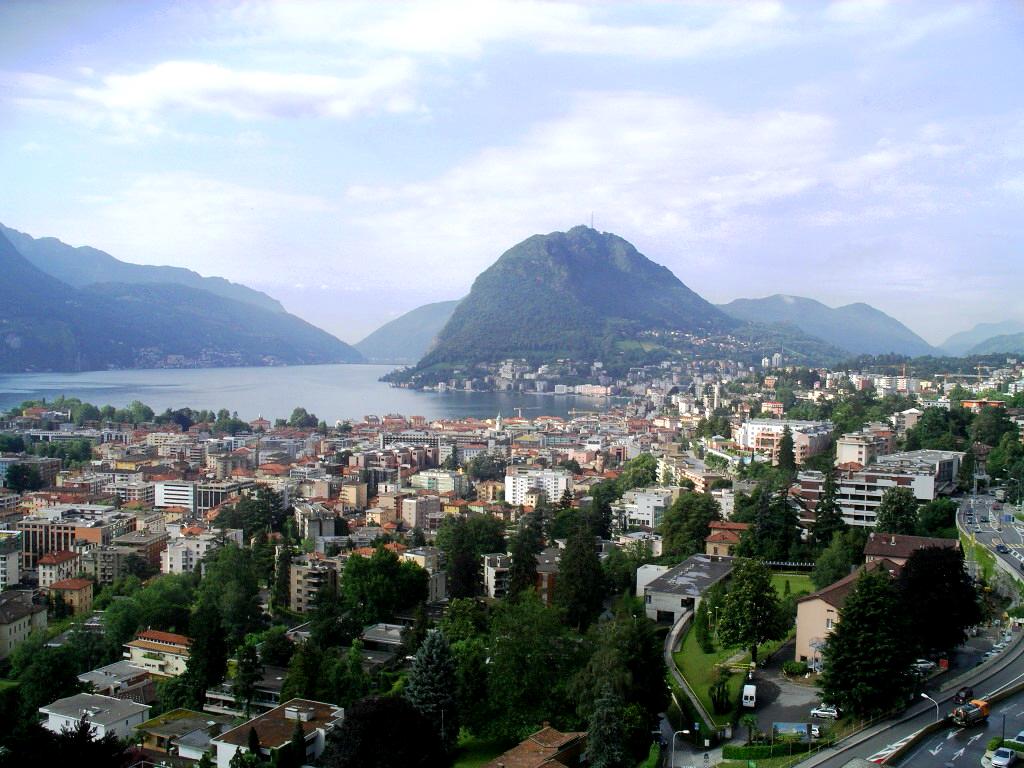




Geography and character
Lugano combines an urban core with steep surrounding hills and wooded ridges. Prominent natural landmarks include Monte Brè and Monte San Salvatore, which overlook the lake and offer panoramic views. The city blends lakeside promenades, historic neighborhoods and modern commercial districts. Parks, waterfront promenades and viewpoints define much of the public landscape, while narrow streets in older quarters reflect Lugano's long urban development.

Administrative structure and municipal mergers
During the 21st century Lugano expanded by incorporating several neighbouring municipalities. In 2004 the city absorbed former municipalities such as Breganzona, Cureggia, Davesco-Soragno, Gandria (Gandria), Pambio-Noranco (Pambio-Noranco), Pazzallo, Pregassona (Pregassona) and Viganello (Viganello). A second wave in 2008 added Barbengo (Barbengo), Carabbia (Carabbia) and Villa Luganese (Villa Luganese). A later merger in 2013 incorporated several mountain and suburban communities, including Bogno (Bogno), Cadro (Cadro), Carona, Certara (Certara), Cimadera (Cimadera), Sonvico (Sonvico) and Valcolla (Valcolla). These changes broadened Lugano's municipal territory and brought together urban, suburban and alpine communities under a single city administration.
History and culture
The area around Lake Lugano has been inhabited since antiquity and the modern city grew from medieval market and religious centers. Over centuries Lugano developed cultural ties with northern Italy while also becoming integrated into the Swiss confederation's political structures. Today the city hosts museums, classical and contemporary art venues, music festivals and a culinary scene influenced by Ticinese and Italian traditions. Architectural highlights range from civic buildings and elaborated churches to lakeside villas and 19th-century promenades.
Economy, tourism and transport
Lugano functions as a regional financial and service center: banking, professional services and conference tourism are important economic pillars. The lakeside location attracts visitors for boating, hiking and scenic leisure, while nearby alpine terrain supports outdoor recreation year-round. Transport links include rail connections to Swiss and cross-border destinations, regional roads and local public transit that serve both residential neighborhoods and tourist sites. The city’s mix of international visitors and local commerce gives it a cosmopolitan yet distinctly Ticinese atmosphere.
Notable aspects and distinctions
- Language and culture: predominantly Italian-speaking within a Swiss federal context.
- Landscape: immediate access to lakefront amenities and mountainous trails.
- Municipal growth: significant expansion through mergers in 2004, 2008 and 2013 (see detailed list above).
- Civic role: acts as a regional center for finance, culture and tourism in southern Switzerland.
For more information about administrative divisions, historical archives or visitor services consult official local sources and regional guides represented here by the city district and canton links above (district, canton) and national resources (country).
Location
The town lies in the south of the district of Lugano and the canton at the mouth of the River Cassarate in Lake Lugano. Lugano, as a university, congress and cultural city (especially between spring and autumn), attracts numerous visitors from Italy and from beyond the Alps.
In the statistical spatial category defined by the Swiss Federal Statistical Office, Lugano was assigned to the metropolitan region of Ticino, which was newly downgraded to the multipolar agglomeration system. This comprises several agglomerations in Ticino and Lombardy with a total population of over 500,000. Together with Como-Chiasso-Mendrisio, it is a neighbouring agglomeration of the metropolitan region of Milan (Grande Milano) with around 7.5 million inhabitants. The centre of Milan can be reached by car and train in about an hour.
Geography
Lugano lies on Lake Lugano (Italian: Lago di Lugano, in Italy: Lago Ceresio) and is surrounded by the three panoramic mountains Monte Brè (925 m) to the east, Monte San Salvatore (912 m) to the west and Sighignola (1314 m) (on the opposite shore of the lake), whose peak Balcone d'Italia is already on Italian soil.
The neighbouring municipalities are Arogno, Melide, Morcote, Vico Morcote, Grancia, Collina d'Oro, Sorengo, Muzzano, Bioggio, Massagno, Savosa, Porza, Vezia, Canobbio, Capriasca and Ponte Capriasca, and on Italian territory Valsolda, Campione d'Italia, Alta Valle Intelvi and Brusimpiano.
Climate table
With an annual mean of 12.4 °C for the period 1981-2010, Lugano, together with Locarno and Grono, is one of the warmest places in Switzerland.
| Lugano | ||||||||||||||||||||||||||||||||||||||||||||||||
| Climate diagram | ||||||||||||||||||||||||||||||||||||||||||||||||
| ||||||||||||||||||||||||||||||||||||||||||||||||
| Monthly average temperatures and precipitation for Lugano
Source : www.meteoschweiz.admin.ch | |||||||||||||||||||||||||||||||||||||||||||||||||||||||||||||||||||||||||||||||||||||||||||||||||||||||||||||||||||||||||||||||||||||||||||||||||||||||||||||||||||||||||||||||||||||||||||||||||||||||||||||||||||||||||||||||||||||||||||||||||||||||||||||||||||||||||||
Urban quarters
Quarters 1-9 are the old city quarters that already belonged to the city before the large incorporation of 2004. Quarters 11-18 are the areas of the municipalities that merged with Lugano in 2004. The quarters 19-21 were added by the incorporation of 2008, the quarters 22-25 by the incorporation of 2013.
| Quartier | No. | BFS code | Population31 | Incorporation | |
| Aldesago | 1 | 5192001 | 504 | 1972 | |
| Besso | 2 | 5192002 | 4964 | - – | |
| Brè | 3 | 5192003 | 351 | 1972 | |
| Caprino | 4 | 5192004 | 1972 | ||
| Cassarate | 5 | 5192005 | 3425 | 1972 | |
| Castagnola | 6 | 5192006 | 2044 | 1972 | |
| Centro | 7 | 5192007 | 5017 | - – | |
| Loreto | 8 | 5192008 | 2932 | - – | |
| Molino Nuovo | 9 | 5192009 | 9058 | - – | |
| Breganzona | 11 | 5192011 | 5240 | 2004 | |
| Cureggia | 12 | 5192012 | 170 | 2004 | |
| Davesco-Soragno | 13 | 5192013 | 1605 | 2004 | |
| 14 | 5192014 | 224 | 2004 | ||
| 15 | 5192015 | 732 | 2004 | ||
| Pazzallo | 16 | 5192016 | 1552 | 2004 | |
| 17 | 5192017 | 9268 | 2004 | ||
| 18 | 5192018 | 6990 | 2004 | ||
| 19 | 5192021 | 1970 | 2008 | ||
| 20 | 5192022 | 599 | 2008 | ||
| 21 | 5192023 | 556 | 2008 | ||
| 22 | 5192024 | 2312 | 2013 | ||
| 23 | 5192025 | 865 | 2013 | ||
| 24 | 5192026 | 1945 | 2013 | ||
| Val Colla | 25 | 5192027 | 682 | 2013 |
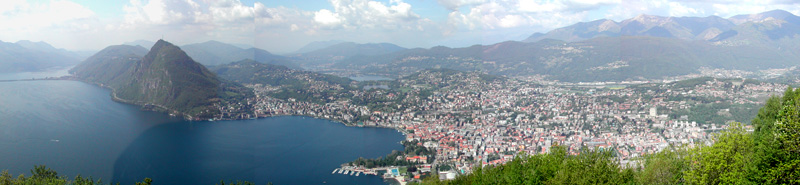
enlarge and show information about the picture

Lugano seen from Monte Brè


Related articles
Author
AlegsaOnline.com Lugano, Switzerland: City on Lake Lugano in Canton Ticino Leandro Alegsa
URL: https://en.alegsaonline.com/art/59808
Sources
- bfs.admin.ch : "Arealstatistik Standard - Gemeinden nach 4 Hauptbereichen"
- bfs.admin.ch : "Ständige Wohnbevölkerung nach Staatsangehörigkeitskategorie Geschlecht und Gemeinde; Provisorische Jahresergebnisse; 2018"
- lugano.ch : "Quartieri"
- map.geo.admin.ch : map.geo.admin.ch
- bfs.admin.ch : "Amtliches Gemeindeverzeichnis der Schweiz"