
Lucas County, Ohio — overview, history, geography, and significance
Lucas County in northwestern Ohio on Lake Erie, with county seat Toledo at the Maumee River mouth. Summary of geography, history, economy, institutions and notable facts.

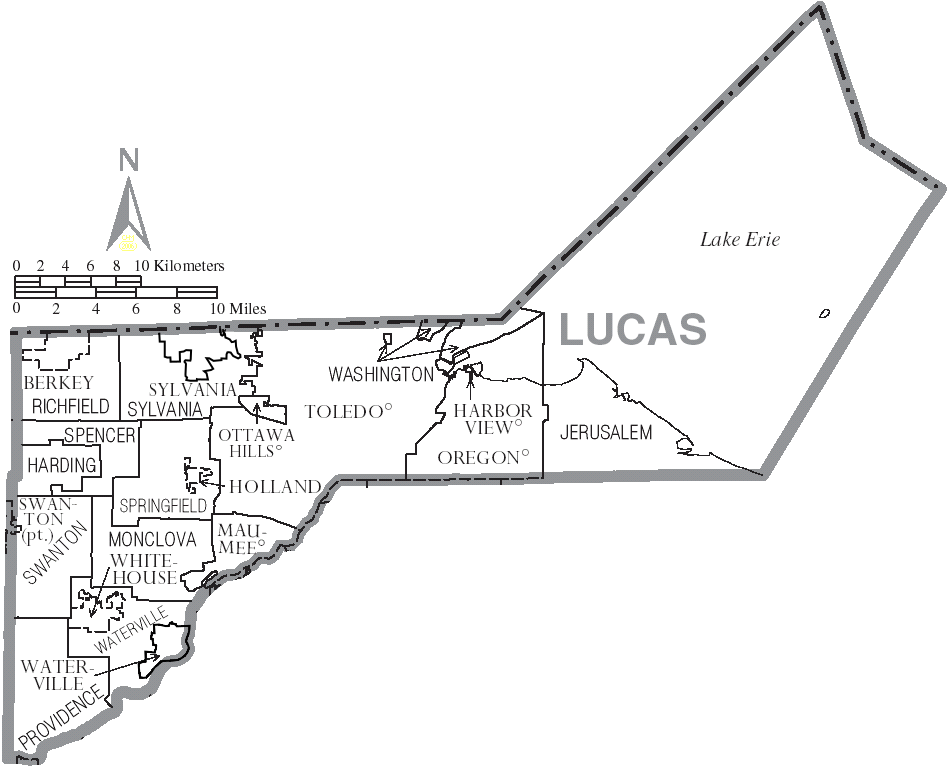
Overview. Lucas County is a county in the U.S. state of Ohio. It occupies a lakeshore position along Lake Erie and is bisected by the Maumee River, which flows into the lake at the county seat, Toledo. The county was created in 1835 and had a population of 441,815 at the 2010 census. The administrative county seat and largest city serves as the region's commercial and cultural center.
Image gallery
6 Images



Geography and environment
Lucas County's shoreline, river mouth and inland lowlands shape its ecology and land use. The proximity to the lake moderates seasonal temperatures and has historically supported shipping, fishing and waterfront industry. Wetlands and river channels near the Maumee are important for migratory birds and local conservation efforts, while urban, suburban and industrial zones occupy much of the county's interior.
History and development
The county grew rapidly during the 19th century as transportation links—first canals and later railroads—connected the Maumee and Lake Erie corridor to inland markets. These connections encouraged manufacturing, warehousing and port activity in Toledo and nearby communities. Lucas County takes its name from a 19th-century political leader; its growth reflected broader Midwestern trends of industrialization and Great Lakes commerce.
Government, communities and institutions
Like other Ohio counties, Lucas County has a board of commissioners and elected officials who oversee local services, courts and infrastructure. Major population centers include the city of Toledo and surrounding suburbs. Important regional institutions include public and private universities, museums and cultural organizations that serve northwest Ohio and the lakefront.
Economy and cultural significance
The county economy historically emphasized manufacturing, glass and automotive-related industries, supported by a working port at the Maumee River mouth and rail connections. In recent decades the economy has diversified to include education, healthcare, logistics and cultural tourism. Toledo's museums, performing arts and a well-known zoo draw visitors from the region.
Notable facts and distinctions
- Lucas County's seat, Toledo, is often described as a Great Lakes port city with a strong industrial legacy.
- Its location where the Maumee River meets Lake Erie has made it strategically important for shipping and transport.
- The county's formation in 1835 and its population recorded in the 2010 census mark historical reference points for researchers and planners.

For further local details, administration pages, maps and statistics see county resources and state guides on Ohio-level portals and municipal websites. Community histories and regional planning documents provide additional context about Lucas County's evolving role within northwest Ohio.
Related articles
Author
AlegsaOnline.com Lucas County, Ohio — overview, history, geography, and significance Leandro Alegsa
URL: https://en.alegsaonline.com/art/59673
Sources
- quickfacts.census.gov : "State & County QuickFacts"
- naco.org : "Find a County" · web.archive.org