
Maumee River
River in northeastern Indiana and northwestern Ohio that drains to Lake Erie at Toledo; culturally important waterway with the largest Great Lakes-feeding watershed and notable ecological challenges.
Overview
The Maumee River (Shawnee: Hotaawathiipi; Miami-Illinois: Taawaawa siipiiwi) runs from northeastern Indiana through northwestern Ohio to Lake Erie at the city of Toledo. Located in the United States, it is a prominent regional waterway known for its historical role in transportation, its cultural significance to Indigenous peoples, and its influence on Lake Erie’s western basin.
Image gallery
10 Images


Physical characteristics
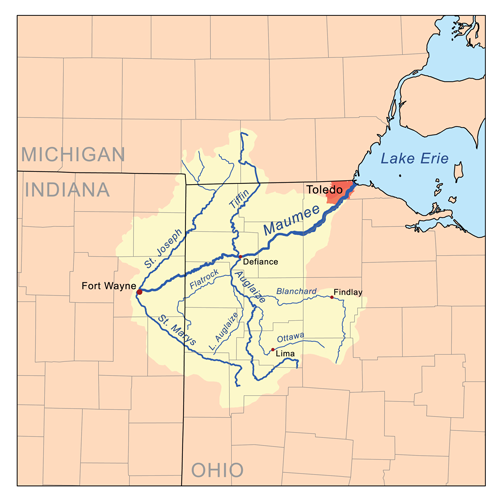
The river is formed by the meeting of the St. Joseph and St. Marys rivers near Fort Wayne, Indiana, and flows northeast to Maumee Bay. It drains a large agricultural and urban watershed — the largest of any river entering the Great Lakes — and contributes a sizable portion of freshwater to the western end of Lake Erie.
History and cultural significance
The Maumee corridor was long used by Native American peoples for travel, fishing and trade, reflected in Indigenous place names still in use. During European-American settlement, the valley became a route for goods and settlers; 19th-century canals and later rail and road links reinforced the river’s role in regional development, helping to establish towns such as Toledo at its mouth.
Ecology and environmental issues
Much of the Maumee watershed is farmland, and runoff from fields and urban areas carries nutrients and sediments downstream. Phosphorus and other pollutants have been associated with seasonal harmful algal blooms in western Lake Erie, prompting monitoring, research and restoration efforts by local, state and federal agencies and watershed organizations.
Uses and recreation
The Maumee supports commercial navigation in its lower reaches, recreational boating, sport fishing and riverside parks. Communities along its banks rely on the river for economic, cultural and recreational activities while balancing water quality and habitat protection.
Notable facts and management
As a cross-state watershed, the Maumee requires cooperative management among multiple jurisdictions and stakeholders. Ongoing initiatives focus on reducing nutrient loads, restoring wetlands and improving stream habitat to benefit both the river and Lake Erie downstream.
Related articles
Author
AlegsaOnline.com Maumee River Leandro Alegsa
URL: https://en.alegsaonline.com/art/62937
Sources
- merriam-webster.com : "Maumee – Definition and More from the Free Merriam-Webster Dictionary"
- reocities.com : "Shawnees Webpage"
- myaamiadictionary.org : Myaamiaatawaakani | Myaamia Dictionary