
Lophophore: the ciliated tentacle feeding organ of lophophorate animals
A ciliated, tentacular feeding structure found in several aquatic invertebrate phyla (brachiopods, bryozoans, entoprocts, phoronids). It functions in suspension feeding and sometimes respiration; shapes vary by group.
Overview
The lophophore is a specialized feeding apparatus formed by a crown or ring of ciliated tentacles surrounding the mouth. It occurs in several groups of exclusively aquatic invertebrates and is best known from brachiopods, colonial Bryozoa, solitary or colonial Phoronida, and the less closely related Entoprocta. The structure creates water currents and traps suspended food particles, playing a central role in how these animals feed.
Image gallery
3 Images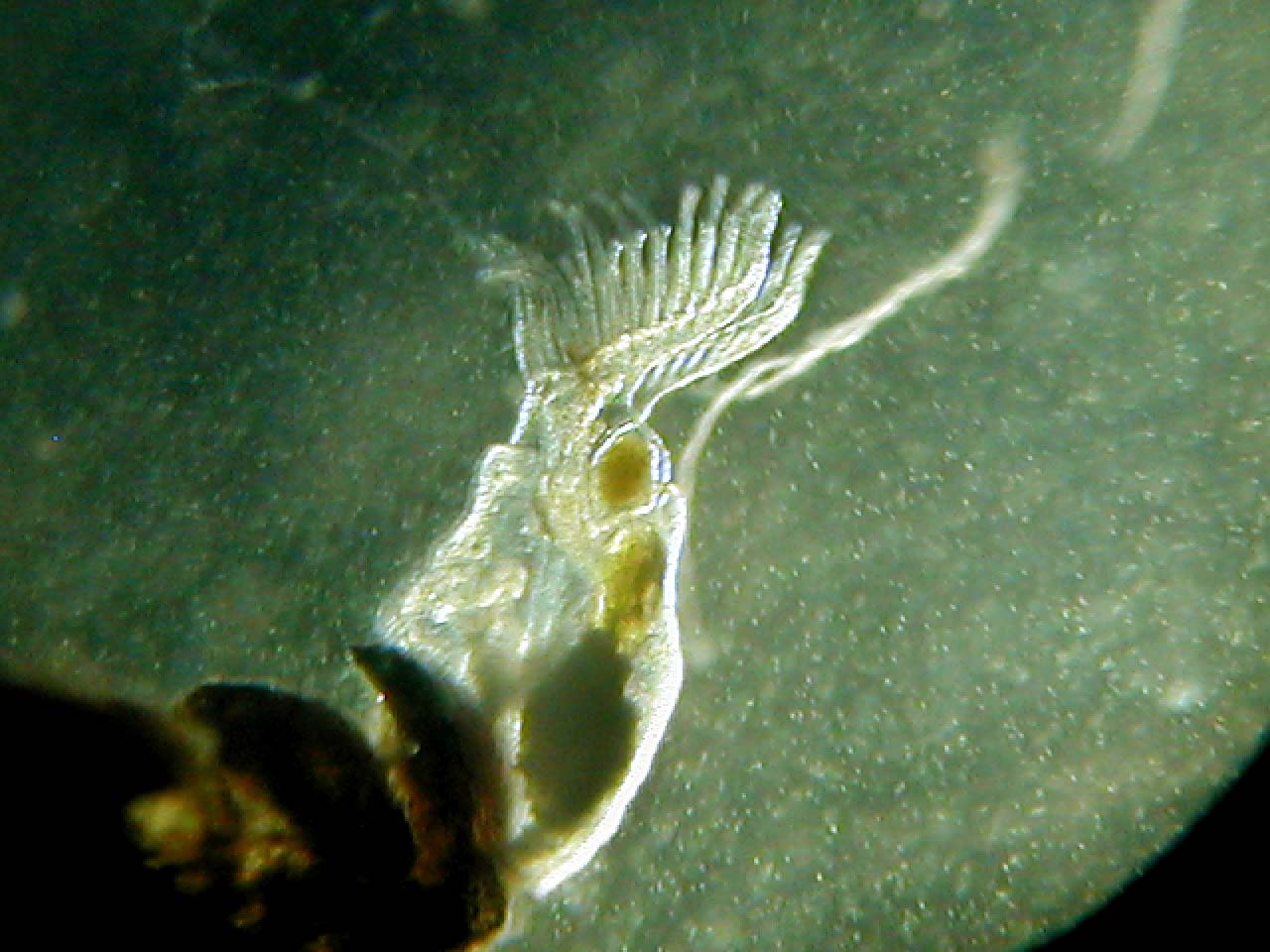


Structure and function
Lophophores vary in shape from simple rings to horseshoe or coiled forms. Each tentacle bears bands of cilia: beat patterns produce currents that bring microscopic organic particles toward the mouth, while other cilia or mucus help capture and transport food. In many taxa the tentacles are extensions of the body cavity and contain nerves and circulatory elements, so the lophophore can also assist gas exchange.
Key characteristics
- Arrangement: ring, horseshoe, or spiral of tentacles around the mouth.
- Ciliation: ciliated bands that generate feeding currents and remove particles.
- Support and innervation: tentacles often contain coelomic extensions and a nerve ring.
- Dual role: primarily suspension feeding, sometimes involved in respiration.
Variations among groups
Although similar in function, lophophores differ in details among phyla. In brachiopods the lophophore may be supported by skeletal brachial supports and is a central feeding organ for the single individual. In bryozoans the lophophore forms the feeding crown of each zooid in a colony. Phoronids typically show a horseshoe-shaped lophophore borne on a soft-bodied, tube-dwelling animal. Entoprocts possess a tentacular crown whose arrangement places both mouth and anus within the ring—an important distinction from other lophophore-bearing groups.
History and evolutionary context
The lophophore was long treated as a defining feature uniting "lophophorate" phyla. Modern molecular and morphological studies have shown the relationships among these groups are more complex, and the presence of a lophophore may reflect shared ancestry in some cases and convergent adaptations in others. As a morphological trait, it remains important for functional and comparative studies of feeding in marine and freshwater invertebrates.
Importance and examples
As an efficient filter-feeding device, the lophophore allows organisms to exploit plankton and suspended detritus. It underpins the ecology of many benthic communities: colonial bryozoans can filter large water volumes, brachiopods persist on soft or hard substrates, and phoronids live in U-shaped tubes using their lophophore to sweep food to the mouth. The diversity of lophophore shapes illustrates how a common functional need—suspension feeding—can be met by different morphological solutions.
Notable distinctions
One practical distinction is the position of the anus relative to the tentacular crown. In most lophophore-bearing animals the anus lies outside the crown, whereas in entoprocts it is located inside the tentacular ring. Such differences have taxonomic and developmental significance and help researchers trace how feeding structures evolve across invertebrate lineages.
Related articles
Author
AlegsaOnline.com Lophophore: the ciliated tentacle feeding organ of lophophorate animals Leandro Alegsa
URL: https://en.alegsaonline.com/art/59191
Sources
- ucmp.berkeley.edu : Introduction to the Lophotrochozoa