
Lonesome George — last known Pinta Island tortoise
Lonesome George (c.1910–2012) was the last known Pinta Island tortoise, a global symbol of Galápagos conservation and the challenges of preventing extinction.
Overview
Lonesome George (circa 1910 – June 24, 2012) was the final known individual of the Pinta Island tortoise subspecies (Chelonoidis nigra abingdonii). Discovered in the 20th century and brought into human care, he became widely recognized as a living emblem of species loss and the broader conservation challenges facing the Galápagos Islands. During his life he attracted international attention from scientists, conservationists and the general public.
Image gallery
6 Images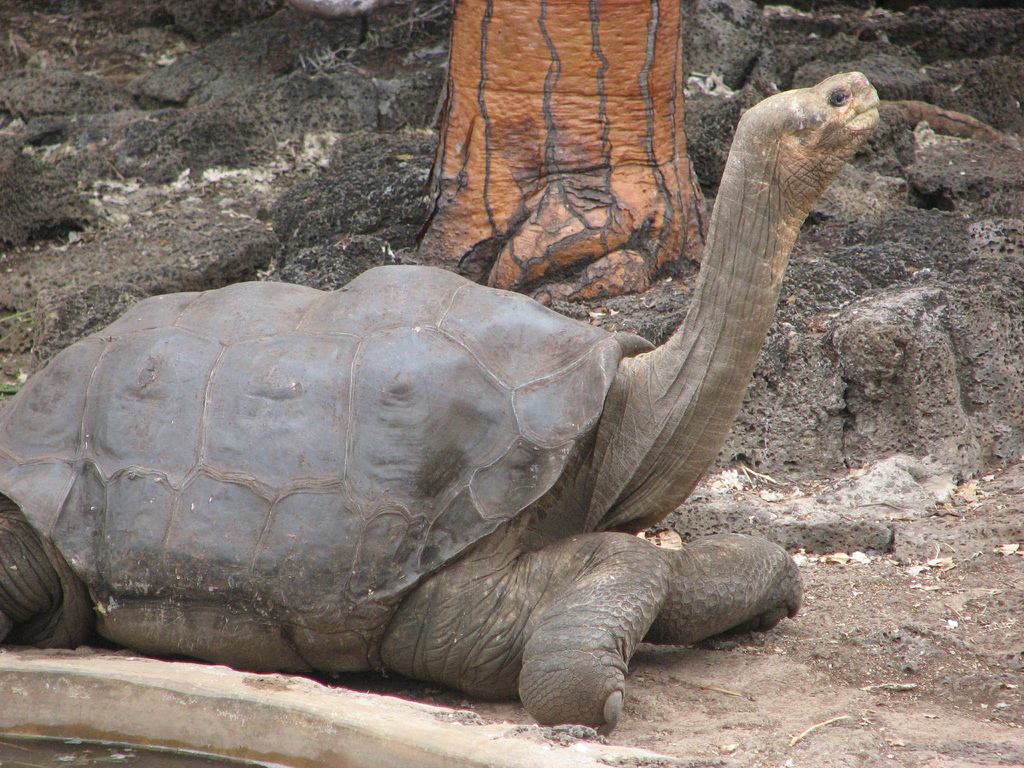


Taxonomy and characteristics
Pinta Island tortoises belonged to a group commonly called Galápagos tortoises, large, long-lived reptiles adapted to island environments. Like related forms, they had a domed shell, columnar legs and slow metabolism. Galápagos tortoises can live for many decades, often exceeding a century in favorable conditions. The Pinta Island population was one of several island-specific lineages that evolved distinct traits in isolation.
Discovery, captive life and breeding attempts
George was located during field surveys and subsequently housed at a research facility on Santa Cruz Island where scientists attempted to secure the survival of his subspecies. Because no known female purebreds were available, researchers tried to breed him with females of related tortoise subspecies in hopes of producing purebred offspring through careful backcrossing or finding genetic matches. Multiple mating attempts and assisted breeding programs took place, and while some eggs were produced, no confirmed purebred Pinta offspring were ever established.
Conservation significance and legacy
George’s status as the last known representative of his lineage made him a potent symbol for conservation worldwide. His case highlighted how invasive species, habitat degradation and historical exploitation can drive island populations to extinction. The attention he drew helped focus resources on eradication of invasive goats and restoration of habitats in the Galápagos, and it stimulated discussion about captive breeding, genetic rescue and the ethical dimensions of intervention.
Notable facts
- He was widely described in the media as the "rarest creature in the world," a label that underscored public concern for biodiversity loss.
- His scientific and cultural prominence helped raise awareness and funding for conservation work in the Galápagos and beyond; see Galápagos conservation for broader context.
- After his death in 2012, his remains and biological samples were retained for research to improve understanding of tortoise genetics and to inform restoration strategies.
Lessons and continuing work
While George’s passing marked the extinction of a distinct island lineage, it also reinforced several enduring lessons: the urgency of preventing extinctions before a population is reduced to a single individual, the importance of invasive-species control and habitat restoration on islands, and the value of long-term monitoring. Conservation efforts in the Galápagos continue to draw on the public and scientific awareness his story fostered as managers pursue recovery and protection of other threatened species.
Related articles
Author
AlegsaOnline.com Lonesome George — last known Pinta Island tortoise Leandro Alegsa
URL: https://en.alegsaonline.com/art/59078
Sources
- planetark.com : "Lonesome George faces own Galapagos tortoise curse"
- galapagospark.org : "El mundo pierde al solitario George"
- timesofindia.indiatimes.com : "Lonesome George, last-of-his-kind Galapagos tortoise, dies"
- worldnews.msnbc.msn.com : "Lonesome George, last-of-its-kind Galapagos tortoise, dies"