
Loon: aquatic diving bird of northern lakes and coasts
Comprehensive overview of loons (order Gaviiformes): appearance, diving adaptations, vocalizations, breeding, diet, migration, conservation issues and comparison with similar waterbirds.
Overview
The loon is a distinctive aquatic bird of the order Gaviiformes, widely recognized for powerful diving, striking breeding plumage, and characteristic calls. Loons are primarily freshwater breeders in northern regions and many species migrate to marine habitats in winter. They are roughly comparable in size to a large duck or a small goose. The common loon is the state bird of Minnesota and loons occur across much of North America and northern Eurasia.
Image gallery
10 Images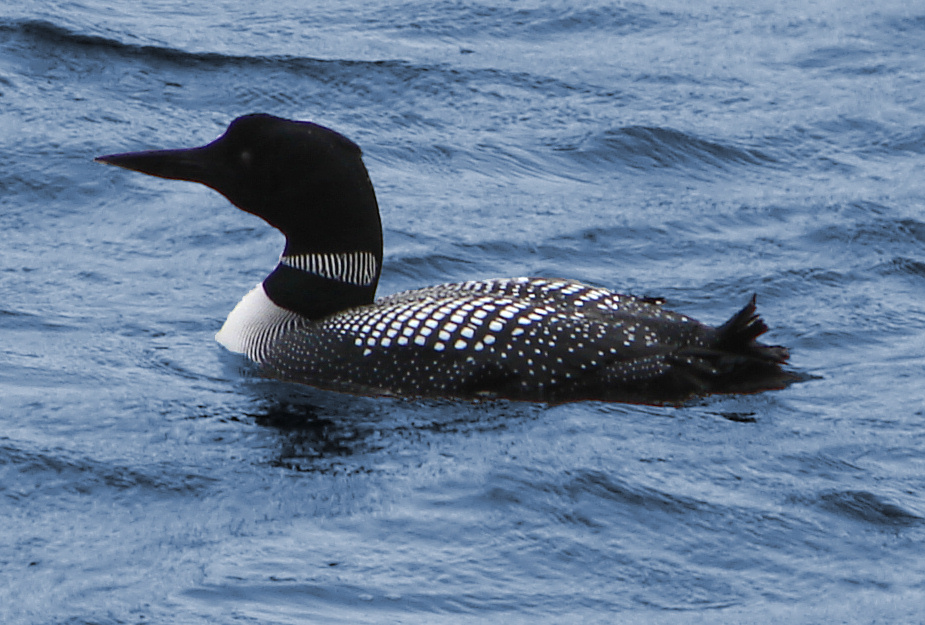





Taxonomy and species
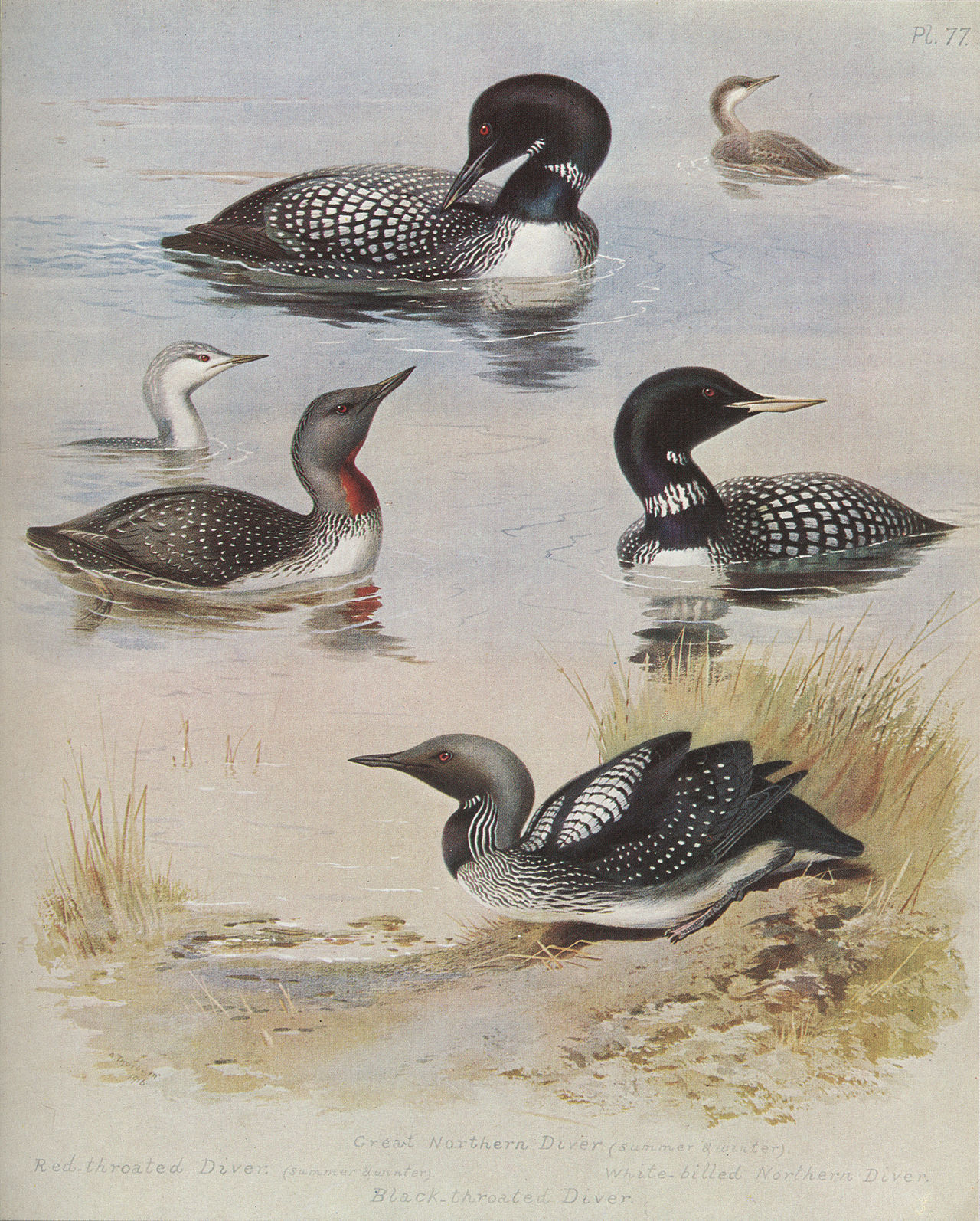
The living members of the order Gaviiformes belong to the genus Gavia. There are a few closely related extinct forms known from the fossil record, but five living species are commonly recognized worldwide. These species differ in size, plumage details and winter distribution, yet share the same overall body plan adapted to an aquatic, diving way of life.
Physical characteristics and adaptations
Loons have a compact, streamlined body with a pointed bill and legs set far back on the body. These features optimize underwater propulsion but make loons awkward on land. Unlike most birds, they have relatively dense bones that reduce buoyancy and help them submerge. The feet are webbed and placed well toward the rear of the body, giving loons powerful thrust when swimming and diving.
- Plumage: Breeding adults typically show bold black, white and gray patterns; non-breeding birds are more muted.
- Size: Overall proportions are comparable to familiar waterfowl, though loons are specialized for diving rather than walking.
- Feeding anatomy: Bills are pointed for catching fish; the throat and esophagus can expand to swallow prey whole.
Behavior and vocalizations
Loons are often secretive and wary of humans. They are highly aquatic, spending much time on the water surface or underwater. Their vocal repertoire includes long wails, tremolos, and species-specific yodels that carry across open water. These calls serve multiple functions: maintaining pair bonds, advertising territory, and signaling alarm. Loons also use visual displays—head tossing, wing flicks and surface dashes—to communicate with mates and rivals.
Reproduction and life cycle
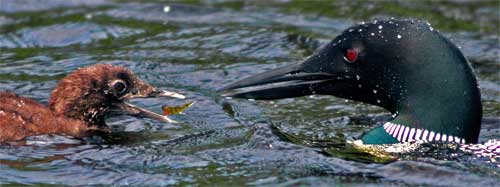
Loons typically nest at the water's edge on small islands or protected shorelines. Pairs usually lay one or two eggs, and both parents share incubation and parental care. Chicks are relatively precocial: they leave the nest soon after hatching and swim well, often riding on a parent's back to conserve heat and avoid predators. Juveniles remain dependent for an extended period and many individuals do not breed until they are several years old.
Feeding and diving
Loons feed mainly on fish such as sunfish, perch and other small-bodied freshwater species, though they will take crustaceans, insects and marine fish where available. They are expert pursuit-divers and may chase prey to notable depths. To eat, loons typically swallow prey whole; their throat can expand to accommodate fish, which reduces the risk of choking.
Habitat and migration
Breeding habitat is usually clear, well-vegetated lakes and ponds in boreal and temperate zones. In winter many loons migrate to coastal marine areas, including rocky and sheltered ocean coasts, estuaries and larger unfrozen waters. Seasonal movements vary by species and population; some travel long distances between breeding and wintering grounds.
Conservation, threats and research
Loons are sensitive indicators of freshwater ecosystem health. Threats include loss and alteration of shoreline nesting habitat, pollution (notably lead from fishing tackle), disturbance by recreational boats, oil contamination, and nest predation by mammals and gulls. Conservation efforts emphasize protecting breeding lakeshores, reducing the use of lead tackle, and public education to minimize disturbance during the breeding season. Researchers study loons using banding and modern telemetry to document movements, survival and threats.
Identification and similar species
Loons are readily identified by their size, silhouette, patterned breeding plumage and characteristic calls. In the field, they can be confused with grebes in general habit and ecology, but grebes are a separate group with different foot placement and morphology. For further comparison see resources on grebes. For basic background on loons as water-associated birds, consult a general note on waterbirds.
Cultural significance and human interactions
Loons feature prominently in the culture and folklore of northern lake regions and are often valued as symbols of wilderness. They attract wildlife watchers and contribute to local conservation awareness. At the same time, human activities can pose risks, and effective coexistence depends on shoreline protection, responsible boating, and measures to reduce pollution and discarded fishing gear.
Throughout their range loons remain subjects of active scientific study and public interest. Continued monitoring and targeted conservation actions are important to maintain healthy populations and the freshwater ecosystems on which they depend.
waterbird | Gaviiformes | large duck | small goose | Minnesota | North America | northern Eurasia | ocean coasts | grebes
Questions and answers
Q: What is a loon?
A: A loon is a bird that lives on water and belongs to the order Gaviiformes, which is an order of aquatic birds.
Q: How big are loons?
A: Loons are about the size of a large duck or small goose.
Q: Where can loons be found?
A: Loons can be found in most parts of North America and northern Eurasia. They enjoy cool climates in the summer and migrate to ocean coasts in the winter.
Q: What do loons look like?
A: Loons have black (or grey)-and-white heads, pale breasts, and striped back feathers. The females are brownish in color which helps them blend into their surroundings.
Q: How do loons communicate with each other?
A: Loons communicate with each other through their loud, trumpeting call as well as melodic wailing or laughing sounds. They also communicate with humans and other animals through dance by warning others to stay away from their nests by dancing on the water.
Q: What do loons eat?
A: Loons eat fish like sunfish, perch, and bullheads - they swallow their food whole without chewing it due to having elastic throats that expand to accommodate for larger prey items such as fish they may consume.
Q: How do scientists study loons?
A: Scientists band or tag loons so they can better understand more about them and their life style which is similar to grebes but different group of birds overall.
Related articles
Author
AlegsaOnline.com Loon: aquatic diving bird of northern lakes and coasts Leandro Alegsa
URL: https://en.alegsaonline.com/art/59176