
Loriini: lories and lorikeets, nectar‑feeding parrots of Australasia
Loriini (lories and lorikeets) are a group of small to medium arboreal parrots with brush-tipped tongues for feeding on nectar, pollen and soft fruit; many are brightly coloured and important pollinators.
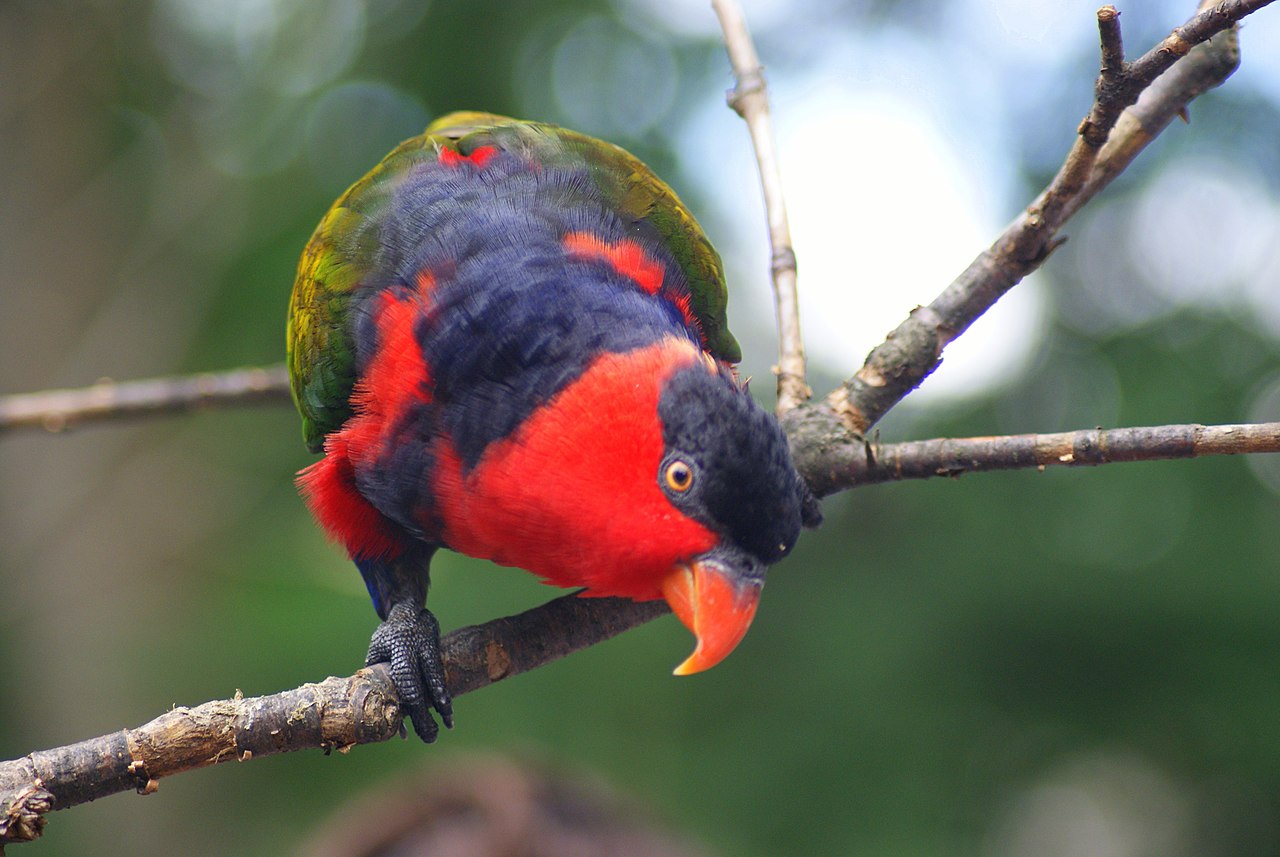
Lories and lorikeets form the tribe Loriini, a distinct assemblage of small to medium-sized, tree‑dwelling parrots. They are best known for their specialized brush‑tipped tongues that allow them to feed efficiently on nectar and pollen, as well as on soft fruits and occasionally insects. Most species have vivid plumage in combinations of red, green, blue and yellow, and many are highly active and vocal.
Image gallery
10 Images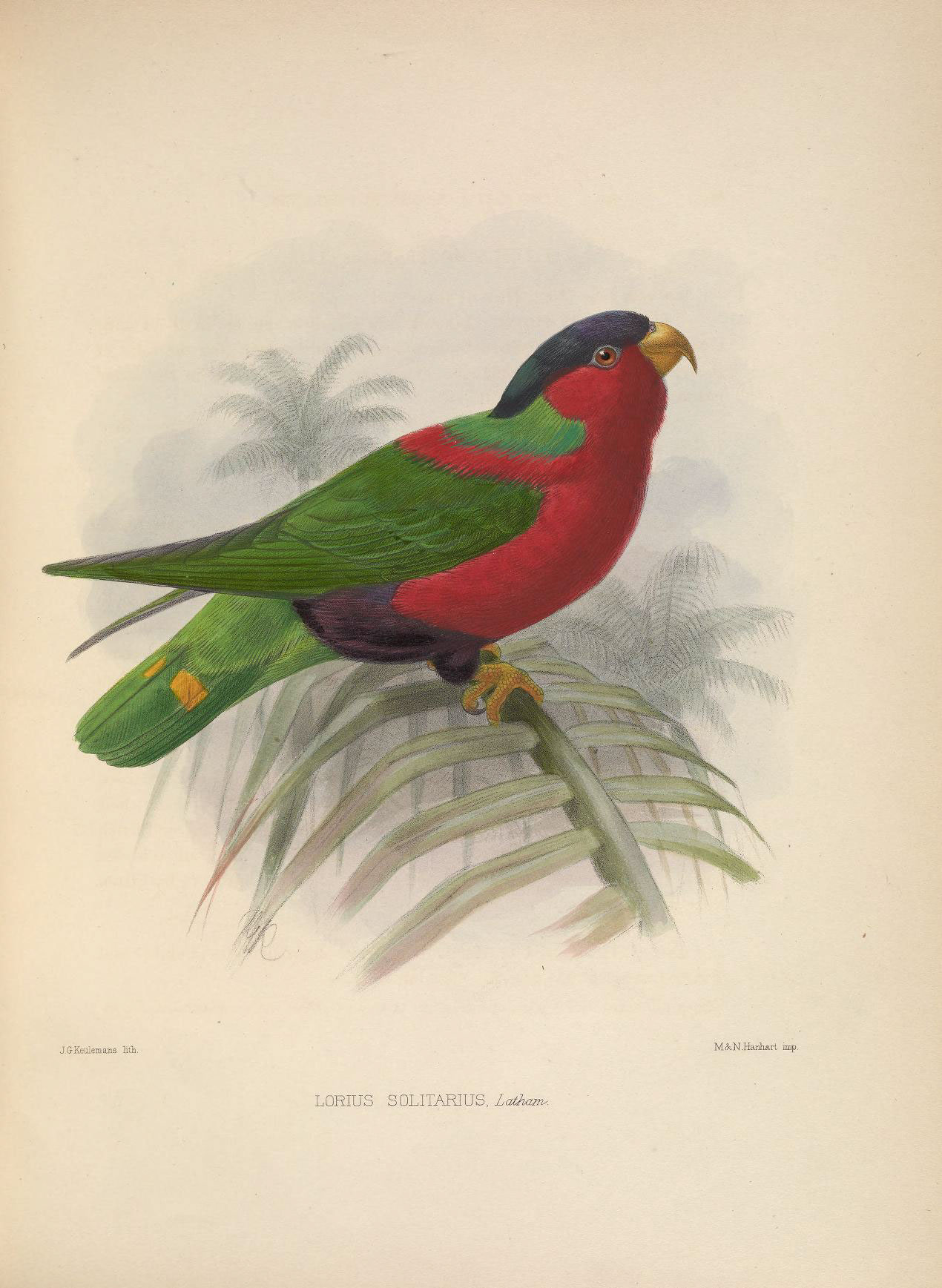




Key characteristics
- Feeding adaptations: a long, slender tongue with a dense brush of papillae for gathering nectar and pollen.
- Size and form: typically small to medium parrots, agile in the canopy and often seen clinging to flowers while feeding.
- Plumage and display: bright coloration common; some species show sexual dimorphism while others do not.
- Behavior: generally arboreal, social outside the breeding season, and sometimes nomadic in search of flowering trees.
Distribution and habitat
Loriini occur across the broader Australasian region, with populations reaching into southeastern Asia, many Pacific island groups in Polynesia, the island of Papua New Guinea, parts of Timor‑Leste, and extensive ranges in Australia. Habitats vary from coastal and lowland forests to montane woodlands and island scrub. Some species tolerate disturbed landscapes and gardens, especially where nectar‑bearing plants are abundant.
Taxonomy and evolutionary relationships
The group is treated as a monophyletic tribe, Loriini, within the parrots. Molecular and morphological analyses (molecular studies) support their common ancestry and clarify relationships among genera. Those analyses indicate that lories and lorikeets form a natural group closely allied with other nectar‑specialist and small parrot lineages; some studies find affinities to the budgerigar and to fig‑parrot groups. While classifications have shifted as new data appear, the brush‑tongue feeding apparatus remains a defining ecological and functional trait.
Ecology, breeding and role as pollinators
Lories and lorikeets are important pollinators in many island and continental ecosystems because they transfer pollen while moving among flowers. Their diet centers on nectar and pollen, supplemented by soft fruits, seeds and invertebrates. Breeding typically occurs in tree hollows or rock crevices; parents feed nestlings a regurgitated, pollen‑rich paste produced from their nectar diet. Social structure varies by species — some form large flocks outside breeding season, others remain in small groups or pairs.
Human interactions and conservation
Many species are popular in aviculture due to their bright colours and lively behaviour, but they can be noisy and demand specialized diets. Conservation concerns include habitat loss, capture for the pet trade, competition from introduced species and vulnerability of island endemics to predators and disease. Conservation measures focus on habitat protection, regulation of trade and, for the most threatened species, captive breeding and reintroduction efforts.
For further reading on classification and regional overviews see resources on arboreal bird ecology, specialist feeding in parrots (molecular studies), and regional bird faunas of southeastern Asia, Polynesia and Papua New Guinea. Examples of familiar species include the rainbow lorikeet and several species within the genera commonly kept in bird collections; comparative notes with the budgerigar and other small parrots help place Loriini in a wider evolutionary context.
Research on Loriini continues to refine their taxonomy and to clarify how floral resources, island biogeography and human activities shape their diversity. For general introductions and conservation status consult specialist bird guides and regional conservation agencies (Loriini overview, parrot families).
Questions and answers
Q: What are lories and lorikeets?
A: Lories and lorikeets are small to medium-sized arboreal parrots.
Q: What kind of tongues do lories and lorikeets have?
A: Lories and lorikeets have special brush-tipped tongues to feed on nectar of blossoms and soft fruits, preferably berries.
Q: Are lories and lorikeets a monophyletic group?
A: Yes, lories and lorikeets are a monophyletic group in the parrot family Psittacidae.
Q: Where are lories and lorikeets distributed?
A: Lories and lorikeets are widely distributed throughout the Australasian region, including south-eastern Asia, Polynesia, Papua New Guinea, Timor Leste and Australia.
Q: Do lories and lorikeets have brightly coloured plumage?
A: Yes, the majority of lories and lorikeets have very brightly coloured plumage.
Q: What other groups are lories and lorikeets closely related to?
A: Studies show that lories and lorikeets form a single group, closely related to the budgerigar and the fig parrots.
Q: What does the sequence analysis and morphology show about lories and lorikeets?
A: The sequence analysis and morphology show that the lories and lorikeets group is in the middle of other groups.
Related articles
Author
AlegsaOnline.com Loriini: lories and lorikeets, nectar‑feeding parrots of Australasia Leandro Alegsa
URL: https://en.alegsaonline.com/art/59256
Sources
- ncbi.nlm.nih.gov : "A multilocus molecular phylogeny of the parrots (Psittaciformes): support for a Gondwanan origin during the Cretaceous"
- doi.org : 10.1093/molbev/msn160
- pubmed.ncbi.nlm.nih.gov : 18653733
- doi.org : 10.2108/zsj.23.191
- pubmed.ncbi.nlm.nih.gov : 16603811
- doi.org : 10.1016/j.ympev.2005.03.013
- pubmed.ncbi.nlm.nih.gov : 16099384
- www3.interscience.wiley.com : "Evolution of craniofacial novelty in parrots through developmental modularity and heterochrony"
- doi.org : 10.1111/j.1525-142X.2007.00199.x
- pubmed.ncbi.nlm.nih.gov : 17976055
- doi.org : 10.2307/1368946