
London Underground rolling stock: overview, types, history and operations
Survey of the trains used on the London Underground: their design, history from steam to electric multiple units, distinctions between sub-surface and deep-level stock, maintenance and operational roles.
The trains that operate on the London Underground form a varied collection of rolling stock adapted to the network's two main tunnel types and long operational history. For a general summary and line-by-line lists, see the main rolling stock overview page. Vehicles in service today are designed to meet the specific constraints of tube tunnels, platforms and depots while providing frequent, high-capacity service for millions of passengers.
Image gallery
10 Images


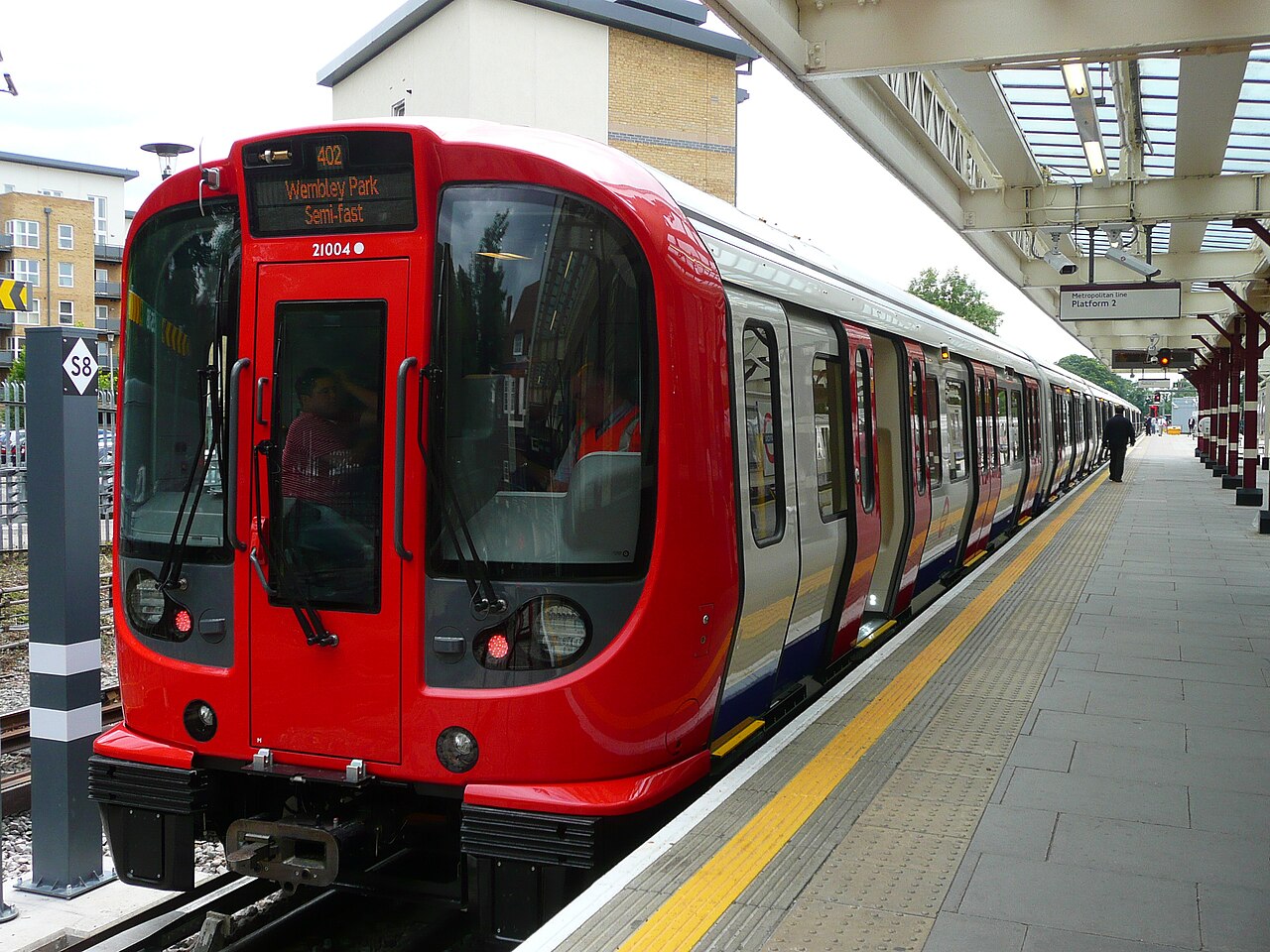


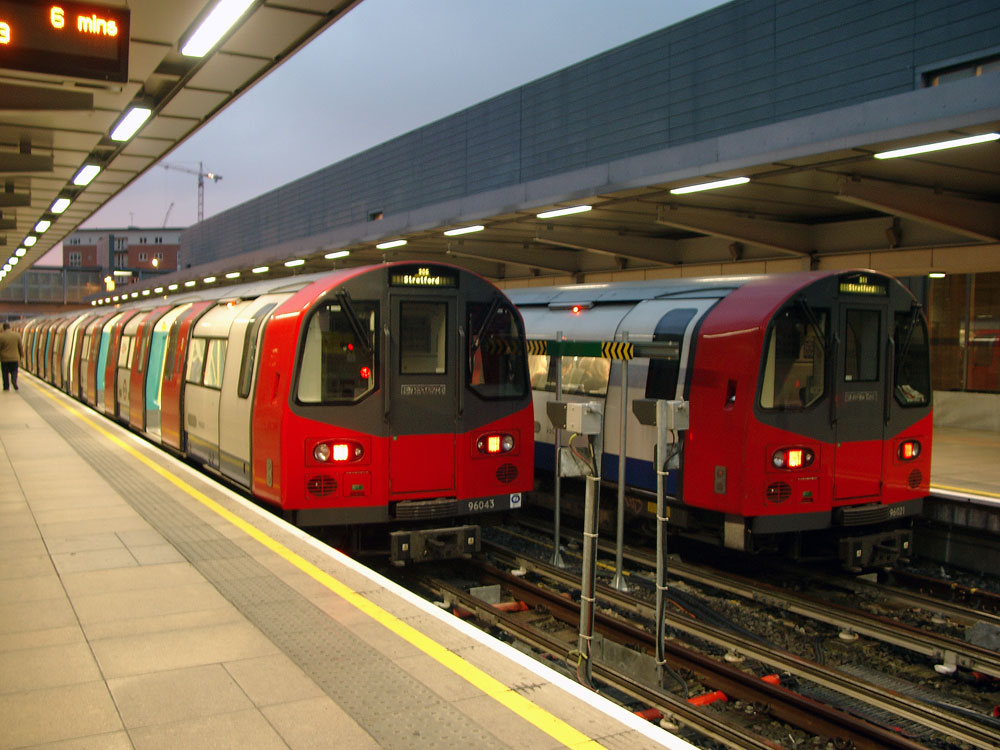
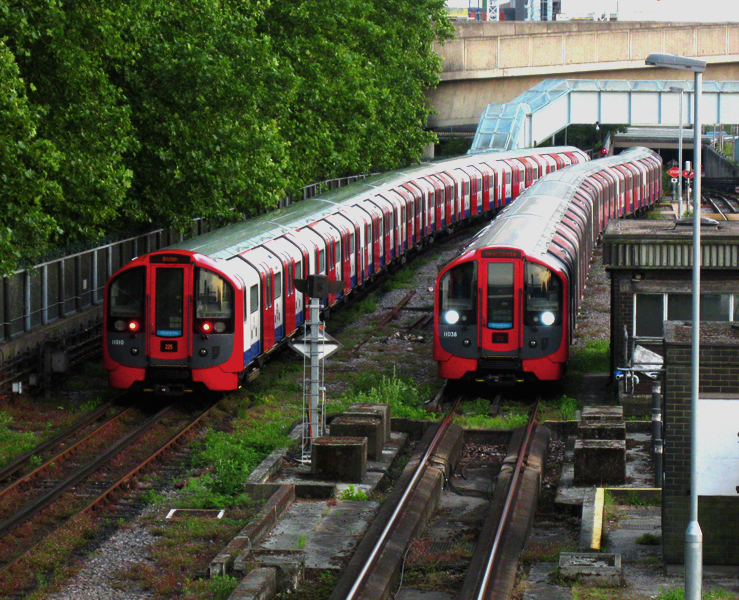
Characteristics and design
Modern Underground trains are typically electric multiple units (EMUs) with distributed traction motors beneath the car body. They must balance compact dimensions with passenger capacity: deep-level 'tube' trains are narrower and have a circular outer profile, while sub-surface trains are larger and closer in size to mainline suburban stock. Common features include sliding doors, longitudinal seating in central cars for peak loading, and systems for train control and passenger information.
Components and systems
- Propulsion: electric traction motors fed from a conductor rail or, on some subsurface sections, via alternative arrangements.
- Braking: air brakes combined with regenerative or rheostatic braking to recover energy and reduce wear.
- Controls: on many lines automatic train operation (ATO) assists drivers; signalling integration is essential for headway and safety.
- Passenger systems: lighting, public-address, CCTV, and information displays adapted for tunnel environments.
The Underground's stock also differs in materials and modifications to cope with tunnel heat and restricted ventilation; for example, full air conditioning is challenging in deep tunnels, so some trains use improved ventilation and heat-management strategies instead.
History and development
The network began in the 19th century using steam locomotives and conventional carriages on early cut-and-cover lines; examples of early motive power and coaches are discussed in historical resources such as those on steam locomotives and carriages. The shift to electric traction in the late 19th and early 20th centuries enabled the construction of deep-level tube lines and the wide adoption of electric multiple units (EMUs) that remain the backbone of operation.
Over time, rolling stock has been rebuilt or replaced in cycles to improve reliability, accessibility and energy efficiency. Refurbishments frequently update interiors, install modern passenger information systems and extend the service life of vehicles. New procurements reflect changes in regulatory standards, accessibility requirements and the introduction of new signalling systems.
Operations, maintenance and notable distinctions
Trains are maintained at purpose-built depots where heavy overhauls, bogie work and electrical repairs are performed. Operational differences—such as train length, door configuration and signal compatibility—mean that stock is assigned to lines according to physical clearances and timetable needs. Notable distinctions include the smaller dimensions of deep-level tube trains versus the more spacious sub-surface stock, and the adoption of automatic operation on some of the busiest lines to increase frequency and reliability.
The rolling stock of the London Underground remains an evolving element of the city's transport infrastructure. Modernization programmes aim to improve capacity, reduce energy consumption and enhance passenger comfort while preserving the system's historical identity and meeting the particular engineering constraints of an urban, largely subterranean railway.
Related articles
Author
AlegsaOnline.com London Underground rolling stock: overview, types, history and operations Leandro Alegsa
URL: https://en.alegsaonline.com/art/59059