
Liposarcoma: overview, types, diagnosis, and management
Liposarcoma is a rare malignant tumor of fat tissue in deep soft tissues. This article summarizes its types, clinical features, diagnosis, treatment and how it differs from benign lipomas.
Overview
Liposarcoma is a malignant neoplasm originating from adipocytic (fat) cells that arises within deep soft tissues rather than the skin. It most often appears as a large, slow-growing mass in areas such as the thigh or the retroperitoneum. By classification, it belongs to the broader group of soft-tissue sarcomas, which are uncommon compared with carcinomas. For basic terminology see malignant tumor and for cellular origin see fat cells. Typical anatomic examples include masses in the upper leg and spaces deep in the abdomen such as the thigh or retroperitoneal area.
Image gallery
10 Images


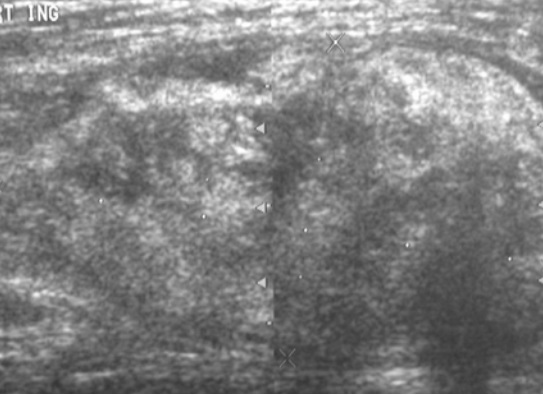
Characteristics and subtypes
Liposarcomas are heterogeneous. Pathologists distinguish several major subtypes with different behavior and prognosis: well-differentiated and dedifferentiated liposarcoma, myxoid (including round cell) liposarcoma, and pleomorphic liposarcoma. Well-differentiated tumors tend to grow locally and resemble benign fat tissue, whereas dedifferentiated and pleomorphic forms are more aggressive and more likely to metastasize. Myxoid patterns have distinctive gelatinous (myxoid) stroma and a variable clinical course.
Diagnosis
Clinical evaluation begins with history and physical exam followed by imaging. Magnetic resonance imaging (MRI) and computed tomography (CT) define size, relationship to nearby structures and suggest subtype features; retroperitoneal tumors are often better seen on CT. Definitive diagnosis requires tissue sampling by core needle biopsy or excision and microscopic examination. Ancillary molecular tests, such as detection of MDM2 amplification, help distinguish well-differentiated or dedifferentiated liposarcoma from benign lipoma.
Management
Surgery aiming for complete removal with clear margins is the primary treatment for localized disease. Radiation therapy is used before or after surgery in certain presentations to reduce local recurrence. Chemotherapy may be offered for high-grade, metastatic, or unresectable tumors and is chosen according to subtype and patient factors. Retroperitoneal liposarcomas often present late and are more challenging to manage because of proximity to vital organs and a high risk of local recurrence.
Prognosis and notable distinctions
Prognosis varies widely by subtype, size, location and completeness of resection. Well-differentiated lesions have a lower metastatic risk but recur locally; pleomorphic and dedifferentiated tumors carry a worse prognosis. Distinguishing liposarcoma from a benign lipoma is critical for treatment planning, and specialized multidisciplinary sarcoma centers improve diagnostic accuracy and outcomes. Ongoing research and clinical trials continue to refine systemic and targeted therapies.
Further information
- Definitions and general tumor information: malignant tumor resources
- Cellular origin and fat-tissue biology: fat cells
- Typical anatomic examples and imaging: thigh and retroperitoneal involvement
- Context within sarcomas and specialist care: sarcomas
Related articles
Author
AlegsaOnline.com Liposarcoma: overview, types, diagnosis, and management Leandro Alegsa
URL: https://en.alegsaonline.com/art/58361
Sources
- linkinghub.elsevier.com : "Liposarcoma: new entities and evolving concepts"
- doi.org : 10.1053/adpa.2000.8133
- pubmed.ncbi.nlm.nih.gov : 10982304
- sarcomahelp.org : "The Importance of Treatment at a Specialty Center for Sarcomas"