
Lilith: Origins, Legends, and Cultural Influence
Lilith is a complex figure in Jewish folklore and wider myth: a night-associated spirit with roots in ancient Near Eastern traditions, reinterpreted through medieval texts and modern culture.
Overview
Lilith is a figure appearing in Jewish folklore, demonology and later popular culture. Descriptions vary: she is often portrayed as a night-associated spirit, sometimes dangerous to infants and mothers, sometimes an independent woman who resists subordination. Interpretations range from a demonic being to a symbol of autonomy and female power.
Image gallery
10 Images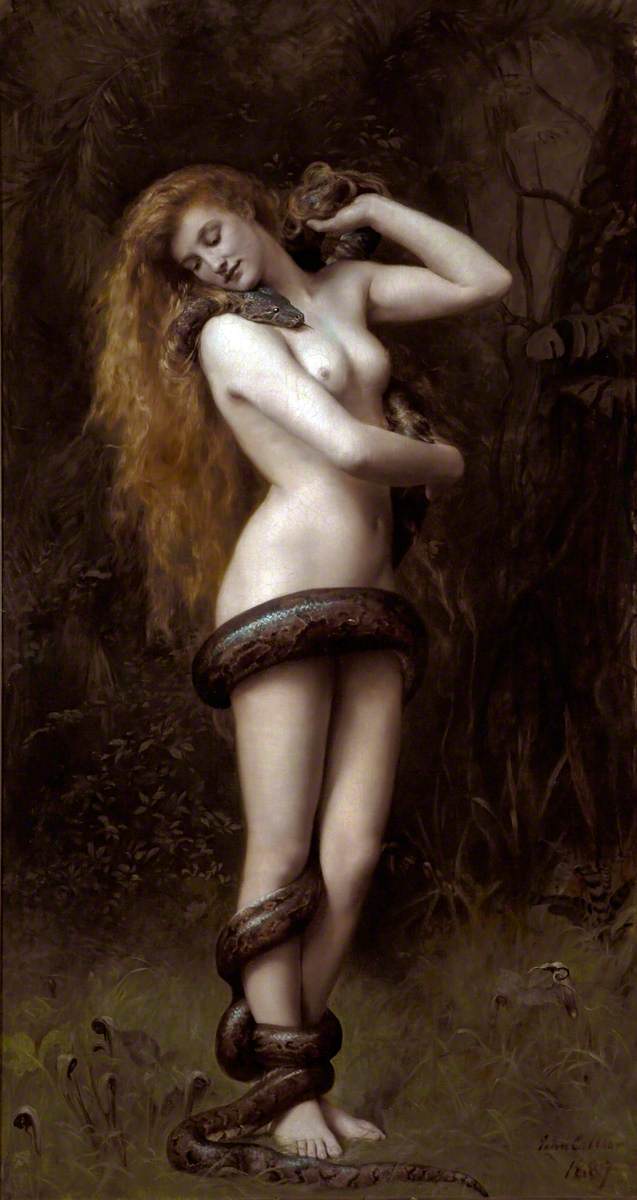


Origins and textual sources
The name and concept of Lilith draw on multiple strands of ancient tradition. A Hebrew word often vocalized as lilith appears in biblical and post‑biblical literature and has been associated with night creatures in some translations. Early extra‑biblical references include fragments from the Dead Sea Scrolls and later rabbinic and medieval writings. Scholars also note affinities with Mesopotamian night spirits variously called lili or lilitu, and with other ancient Near Eastern motifs.
Characteristics and iconography
Accounts differ widely. In some sources Lilith is a nocturnal demon blamed for infant mortality and illness; in others she is cast as Adam’s first companion who left Eden rather than be subordinate. Medieval texts expand these themes with vivid imagery—wings, nocturnal flight, and seductive or predatory behavior—while liturgical and magical texts sometimes present protective formulas to ward her off. Visual depictions have varied from horrifying demonic forms to stylized female figures in modern art.
Key texts and traditions
- Hebrew Bible references rendered as night creatures or night-hag in certain translations — sometimes linked to Isaiah and poetic passages.
- Early Jewish sources and the Jewish folkloric tradition that elaborate on her nature and actions.
- Medieval works such as the Alphabet of Ben‑Sira, which offers one of the most influential stories in which Lilith appears as Adam’s first partner; this narrative influenced many later retellings.
- Ancient Mesopotamian parallels (see lili) and Near Eastern demonologies.
Cultural influence and modern interpretations
From the nineteenth century onward, Lilith was rediscovered in literature, art, and scholarship. In modern times she has been reclaimed by some as a feminist icon—an emblem of refusal to submit to patriarchal authority—while occult and popular traditions sometimes present her as a queen of demons or a consort of fallen angels. Claims that she is explicitly "Lucifer’s wife" or the "Queen of Hell" are more typical of later folklore and modern fiction than of early classical texts.
Notable distinctions and facts
Because the figure evolved across cultures and eras, it resists a single definition. Academic discussion distinguishes between the linguistic term (the Hebrew root and its poetic uses), ancient Near Eastern parallels (see Mesopotamian spirits), and later folkloric elaborations. Popular references to Lilith appear across media, and scholarly treatment emphasizes careful separation of late mythmaking from earlier textual layers. For further reading see general introductions and specialized studies in folklore and religious history; introductory online resources can be found via portals such as demonology surveys and Hebrew language studies. More on cultural reception is available through overviews of night-associated mythology and comparative work linking Near Eastern sources and ancient manuscripts.
Related articles
Author
AlegsaOnline.com Lilith: Origins, Legends, and Cultural Influence Leandro Alegsa
URL: https://en.alegsaonline.com/art/58028