
Level crossing (rail–road intersection)
Where a railway and a road meet at the same level. Overview of components, protections, history, types, safety technology and reasons for grade separation.
A level crossing is a location where a railway line and a road or path meet on the same horizontal plane rather than being separated by an overpass or underpass. The term is used in many English-speaking regions; related names include grade crossing, railroad crossing and railway crossing. Level crossings range from simple, unprotected crossings at quiet country lanes to complex installations with automatic barriers, signals and interlocking with rail traffic control.
Image gallery
10 Images



Characteristics and components
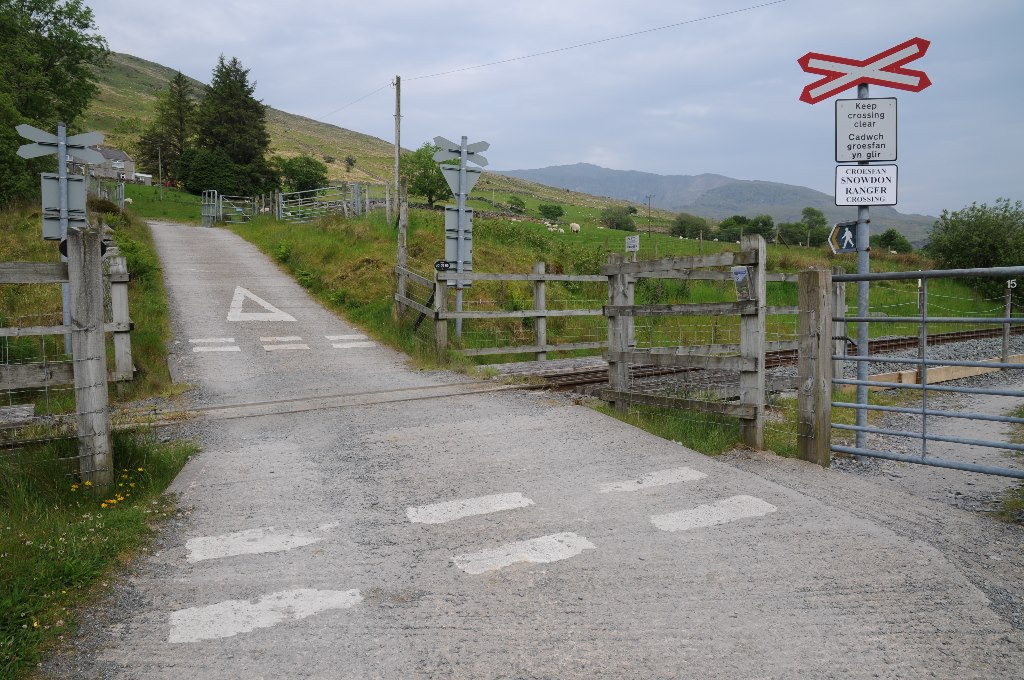
Typical elements of a level crossing include the rail alignment, the roadway or footway surface that spans the track, warning signs and road markings. Many crossings also incorporate active devices such as flashing lights, bells and mechanical gates. Other common features are sightline clearances, approach signage to warn drivers and pedestrians, guide fencing to channel users to designated crossing points, and devices to protect the flangeway where wheels pass through the surface.
- Passive items: signs, road markings, crossbucks and tactile paving for pedestrians.
- Active items: flashing lamps, audible warnings, boom barriers and train-activated gates.
- Structural alternatives: grade separation using a bridge or a tunnel removes the intersection entirely.
Safety measures and modern technology
Provisions at crossings are graded to the level of use and risk. Low-traffic rural crossings may be unstaffed and rely on signs only, while busier sites use automated lights and barriers. Advanced systems include obstacle detection, CCTV monitoring, four-quadrant gates that prevent vehicles from entering the crossing, and electronic interlocks that integrate with signalling to hold trains or provide additional time at complex locations. Audible warnings and mandatory horn use remain common where sightlines are restricted.
High-speed railway lines frequently require elimination of level crossings because train stopping distances and speeds make at-grade interactions unsafe; in such contexts authorities often prefer permanent grade separation or closure of the crossing entirely for safety.
History and development
As railways spread in the 19th century, crossings were initially managed by flagmen or simple gates. With motor vehicle growth and rising traffic volumes, rail and road authorities introduced standardized signs, automated warning devices and laws governing user behaviour. In recent decades many jurisdictions have run sustained programs to remove dangerous crossings, improving safety and traffic flow by building overpasses, underpasses or rerouting local roads.
Types and legal distinctions
Crossings vary by use and ownership: public highway crossings handle vehicle and pedestrian traffic; private crossings serve farms or industrial sites and may be governed by different liabilities and maintenance responsibilities. Pedestrian-only crossings are designed with tactile guidance and shorter spans. Multiple-track crossings require additional protections because a train on one track can obscure another, and staggered sightlines may increase risk.
Importance, challenges and mitigation
Level crossings are critical nodes where rail and road networks interact, but they are also locations of concentrated risk. Effective management combines engineering measures, clear signage, enforcement and public education. Removal programs prioritize crossings with high traffic, poor visibility or frequent incidents, while lower-risk sites can be managed by improved signage, lighting and active warnings. Authorities and communities weigh the cost of grade separation against transport needs and local access when planning long-term solutions related guidance.
Related articles
Author
AlegsaOnline.com Level crossing (rail–road intersection) Leandro Alegsa
URL: https://en.alegsaonline.com/art/57552