
Armenian Kingdom of Cilicia
Medieval Armenian state (late 11th–14th centuries) on the southeastern coast of Asia Minor; a maritime and Crusader‑era polity that preserved Armenian sovereignty and fostered East–West contacts.
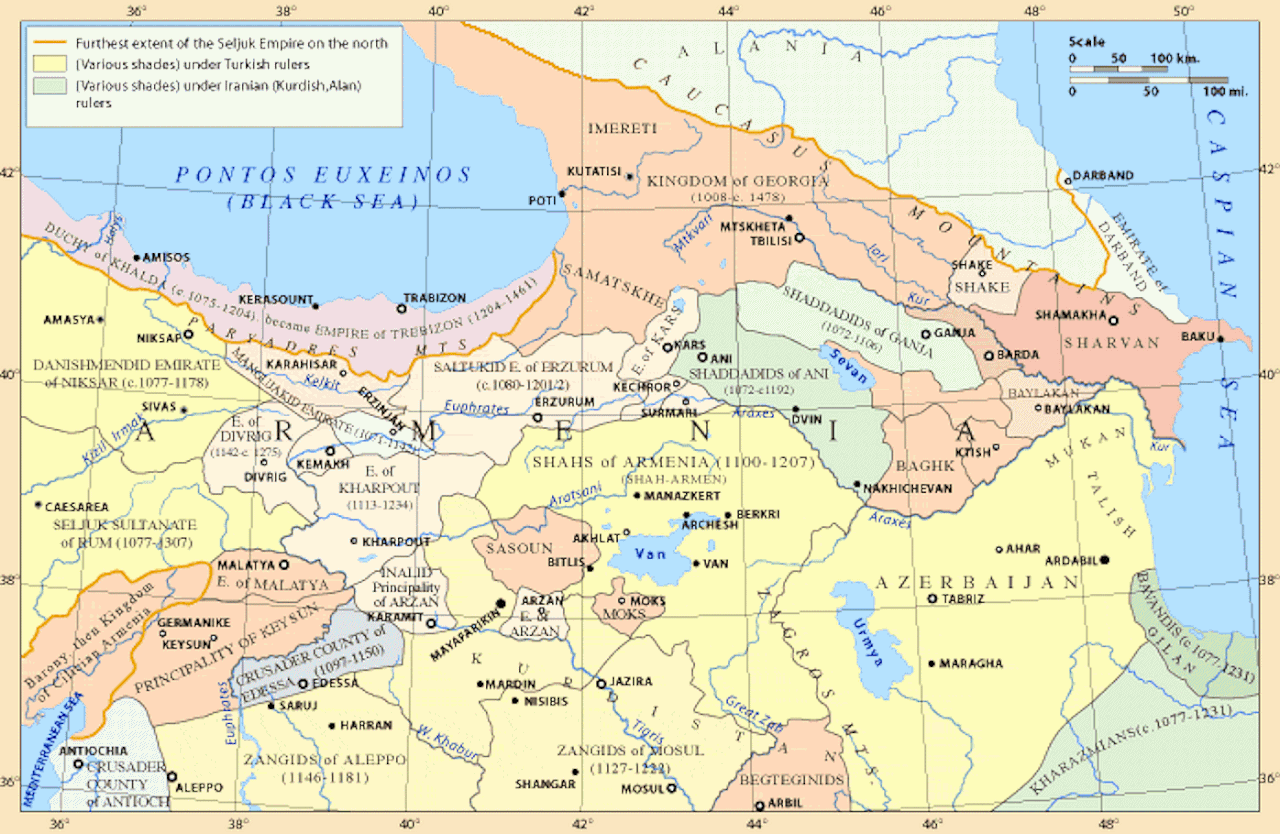
The Armenian Kingdom of Cilicia was a medieval Armenian state located on the southeastern coast of Asia Minor (modern southern Turkey). Formed by Armenian nobles and refugees fleeing the Seljuk advance in the Armenian highlands, the polity grew from local principalities in the late 11th century into a kingdom that lasted until the 14th century.
Image gallery
10 Images





Origins and rulers
The early ruling families, notably the Rubenids, consolidated control of fortified sites in the rugged interior and developed prosperous coastal towns. At the end of the 12th century the state was elevated to a kingdom under Levon (Leo) I, who sought recognition from both Western rulers and Byzantium. In the 13th century power passed to the Hethumid dynasty, which pursued diplomacy and military cooperation with the Mongol Empire as a strategic counterweight to Muslim neighbours. Later periods saw closer ties with Crusader and Cypriot dynasties.
Politics and foreign relations
Cilicia occupied a strategic position between the Eastern Mediterranean and the Anatolian interior. Its rulers forged alliances and marriages with Crusader states, the Papacy and Western maritime republics, while also negotiating with Byzantium, the Mongols and Muslim powers. Repeated wars with the Mamluk sultanate of Egypt and changing regional fortunes ultimately weakened the kingdom and led to its fall in 1375.
Society, economy and culture
The kingdom blended native Armenian institutions with Western feudal practices. Its economy combined agriculture, caravan traffic and active maritime trade with Venetian and Genoese merchants. Urban centers hosted artisans, metalworkers and manuscript workshops; Cilician churches and monasteries became important centers of learning and religious life. The Armenian Apostolic Church retained an influential role, and contacts with the Latin Church brought occasional theological and diplomatic exchanges.
Architecture and material legacy
Cilicia left a visible legacy in fortified towns, hilltop castles, churches and distinctive carved tombs. Surviving architectural remains reflect a fusion of Armenian, Byzantine and Crusader influences, with robust defensive works adapted to the mountainous terrain and coastal strongholds that protected trade routes.
Historical significance
As a surviving Armenian polity in the High Middle Ages, the Kingdom of Cilicia preserved Armenian statehood and culture at a time when the Armenian plateau was under foreign domination. It served as a bridge between East and West, influenced Mediterranean politics during the Crusading era, and has an important place in Armenian collective memory and historiography.
Related articles
Author
AlegsaOnline.com Armenian Kingdom of Cilicia Leandro Alegsa
URL: https://en.alegsaonline.com/art/5711