
Assyrian genocide (Sayfo) — mass violence against Assyrians in the early 20th century
The Assyrian genocide, known as the Sayfo, was mass violence and forced displacement of Assyrian Christians in the late Ottoman period. Estimates and recognition remain contested; memory endures in the diaspora.
Overview
The term Assyrian genocide refers to the widescale killings, deportations and destruction of Assyrian communities that took place in the Ottoman Empire and adjacent areas during and after the First World War. In the Assyrian language the event is commonly called the Sayfo, meaning "sword." The violence targeted people who identified as Assyrian, many of whom were members of various Eastern Christian churches and spoke Neo-Aramaic dialects.
Image gallery
10 Images


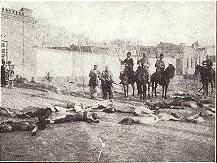


Historical background
Assyrian communities had lived for centuries in parts of what are now southeastern Turkey, northern Iraq, northwestern Iran and northeastern Syria. By the late 19th and early 20th centuries they were a minority within multiethnic Ottoman provinces. The collapse and militarization of the Ottoman state during World War I, together with rising ethno-religious tensions and local rivalries, created conditions in which mass violence against Christian minorities increased across the region.
Events and methods
Mass killings of Assyrians occurred in a series of attacks, forced marches, and localized massacres often carried out by Ottoman military units, irregular militia, and local armed groups. Methods documented in contemporary accounts and later studies include summary executions, village burnings, forced deportations, and coerced conversions. Many survivors were displaced, and large numbers sought refuge in neighboring countries or were absorbed into the growing Assyrian diaspora.
Consequences and estimates
Estimates of the number of Assyrians killed vary and are subject to scholarly debate; figures proposed by researchers and community historians range from tens of thousands to several hundred thousand. The massacres resulted in a dramatic reduction of Assyrian populations in their historic homelands and the destruction of many churches, villages, and cultural institutions. Survivors often lost property and traditional ways of life, contributing to long-term dispersion.
Memory, recognition and legacy
The events of 1914–1920 remain a central element of Assyrian historical memory. Commemorations take place within Assyrian communities worldwide, and advocacy for official recognition has led to declarations by some national and local governments. Debates continue among historians and politicians about terminology, numbers, and responsibility, as well as about how these events relate to contemporaneous mass violence against other Christian minorities, such as Armenians and Greeks.
Further reading and context
- For introductions to the topic and archival material, see academic surveys and community histories — for general background consult overviews.
- Comparative studies that place the Assyrian experience alongside other wartime massacres are available through several scholarly sources: comparative analyses.
- To explore survivor testimonies, community projects and memorial initiatives, visit curated collections and oral history projects: testimony collections.
- Information on contemporary Assyrian communities, language and culture can be found through educational and cultural organizations: community resources.
Notable facts: The Assyrian term Sayfo emphasizes the perception of a sudden, sword‑like onslaught. The events profoundly reshaped the demography and cultural geography of the Middle East and remain an active subject of research, commemoration and political discussion.
Questions and answers
Q: What is the Assyrian genocide?
A: The Assyrian genocide was a genocide by the Ottoman Empire in which over 300,000 Assyrians were killed during raids.
Q: What do the Assyrians call it?
A: The Assyrians call it the Sayfo, which is an Aramaic word for "sword".
Q: Why were many of them massacred?
A: Many Assyrians were considered unpure by the Turks and were massacred for not giving up Christianity and becoming Muslims.
Q: Who did they lose their homes and possessions to?
A: They lost their homes and possessions to Sultan Adulhamed the Red.
Q: How long have they been persecuted?
A: Since ancient times, when they were conquered by the Babylonians, they have been persecuted and forced to pay high taxes.
Q: Do they still have their own nation today?
A: No, since ancient times they have not had their own nation. Their diaspora has spread over to many different countries.
Q: How do those who survived keep their common unity?
A: Those who have survived keep their common unity through their deep Christian faith.
Related articles
Author
AlegsaOnline.com Assyrian genocide (Sayfo) — mass violence against Assyrians in the early 20th century Leandro Alegsa
URL: https://en.alegsaonline.com/art/6776
Sources
- books.google.com : Islam and Dhimmitude: Where Civilizations Collide
- worldcat.org : 47054791