
Law enforcement in Cuba: structure, history, and responsibilities
Overview of Cuba's law enforcement system, its main agencies, historical origins after 1959, primary duties and organization under the Ministry of the Interior, and relevant distinctions and issues.
Law enforcement in Cuba is principally carried out by the national police force and other security agencies operating under the central government. The principal uniformed body is the Policía Nacional Revolucionaria (PNR), which is responsible for routine policing tasks such as public order, criminal investigations, traffic control and community patrols. Oversight and coordination of internal security, policing and related services are exercised by the Ministry of the Interior.
Image gallery
2 Images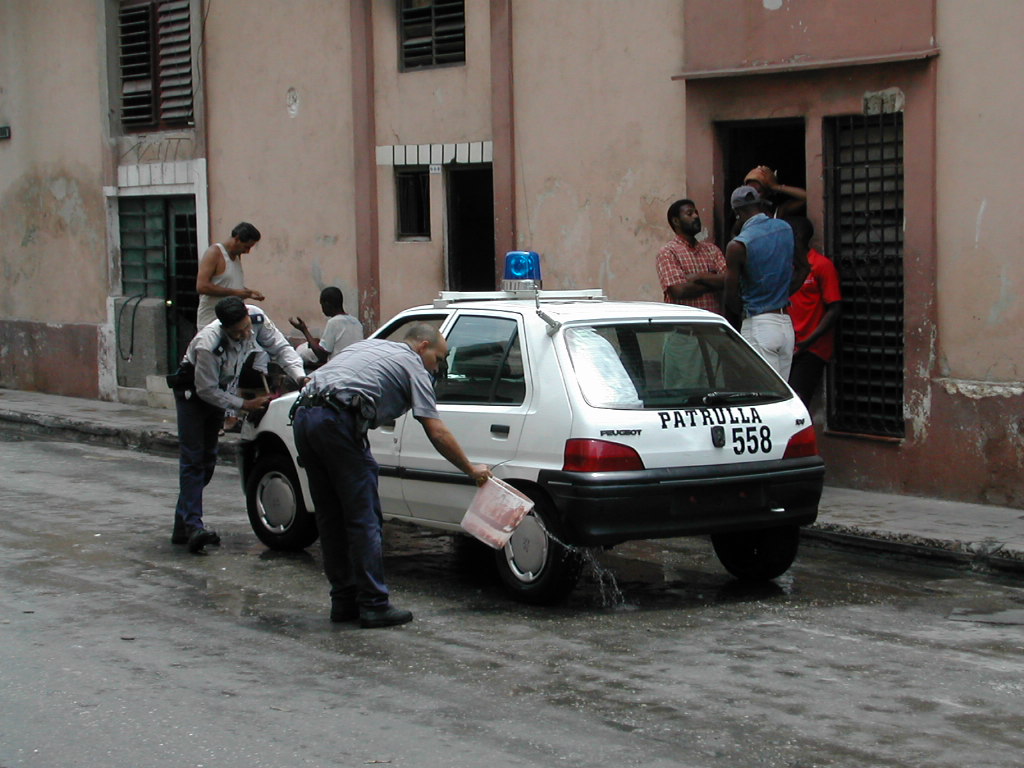

Organization and main functions
The Cuban security apparatus combines civilian police duties with institutions oriented to state security and public administration. Common responsibilities include:
- Maintaining public order and responding to crime and emergencies.
- Investigating criminal offenses and enforcing traffic and administrative laws.
- Border and migration control, customs enforcement and protection of critical infrastructure.
- Collaboration with community organizations for neighborhood surveillance and crime prevention.
Historical background
Modern Cuban law enforcement was reshaped after the 1959 revolution when previous police structures were replaced or reorganized to reflect the new government's priorities. The post‑revolutionary period established centralized control of police functions and integrated public safety with broader political and social institutions.
Operations, methods and community links
Policing in Cuba often emphasizes visible patrols, administrative controls and coordination with local committees that act as neighborhood reporting networks. Investigative work follows the country's legal and judicial framework, and many units use a rank and command system similar to military structures.
Context, distinctions and international perspectives
Cuban law enforcement differs from models in liberal democracies by its close relationship with state political institutions and the prominence of agencies tasked with protecting national security. International observers and human rights organizations frequently note the political context of policing in Cuba, pointing to restrictions on assembly, expression and movement as factors shaping law enforcement practices. At the same time, Cuban authorities emphasize public order, social stability and crime prevention as core aims.
Understanding law enforcement in Cuba therefore requires attention to both its institutional makeup and the wider political and legal environment in which it operates.
Related articles
Author
AlegsaOnline.com Law enforcement in Cuba: structure, history, and responsibilities Leandro Alegsa
URL: https://en.alegsaonline.com/art/56401