
Land mine
A land mine is an explosive device placed on or under the ground that detonates when triggered by people or vehicles. It raises military, humanitarian, legal and technical issues and can contaminate areas long after conflict.
Overview
A land mine is an explosive device placed on or just beneath the surface of the ground and designed to detonate when disturbed or when a person or vehicle passes over or near it. The term distinguishes these devices from a naval mine and places them within the broader category of explosive weapons. Mines are used to deny terrain, slow or channel movement, protect positions and create psychological and logistical obstacles. Because many are deliberately concealed, they often remain hazardous long after active hostilities have ended.
Image gallery
10 Images




Characteristics and types
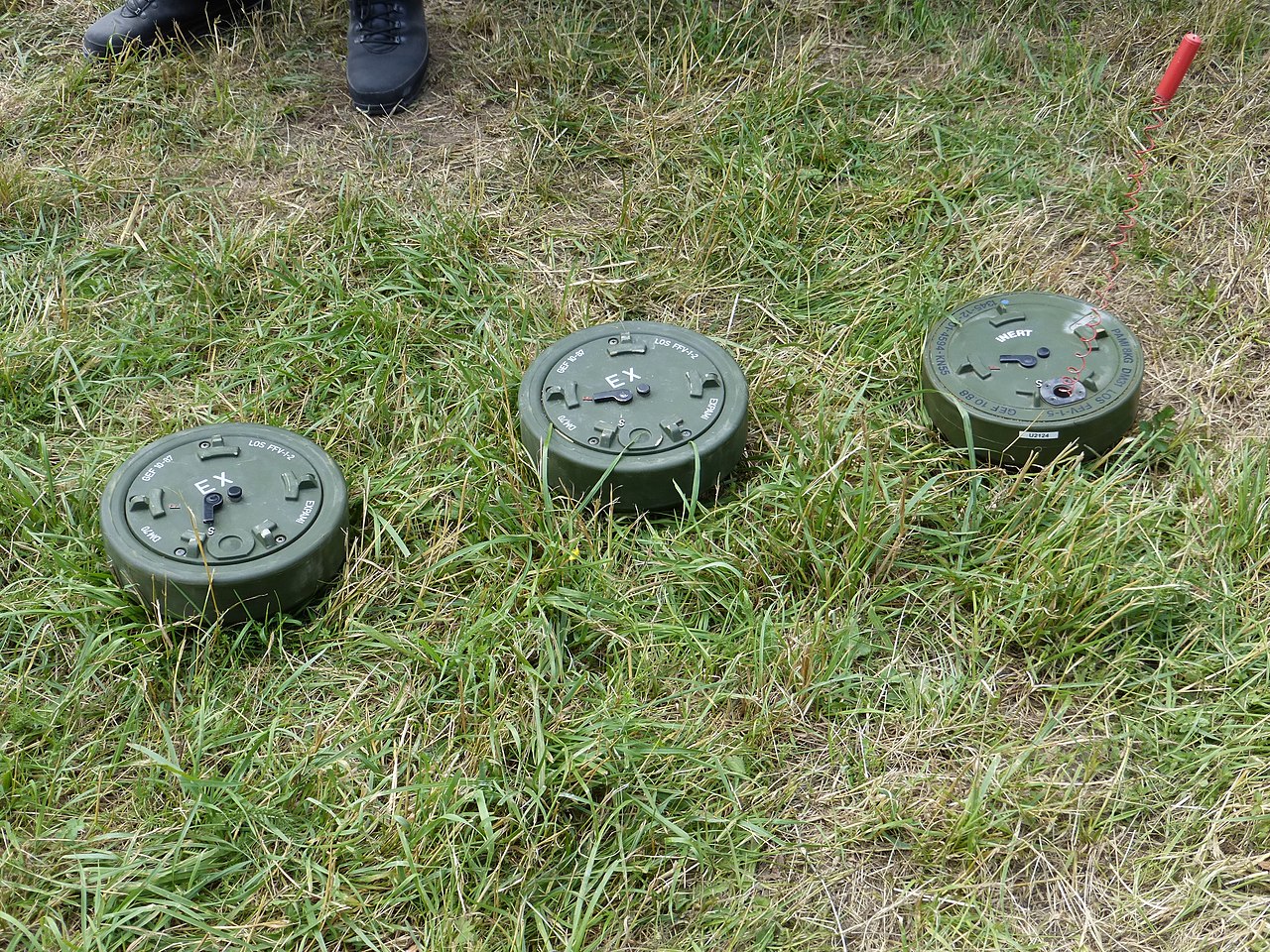
Mines vary in size, construction, triggering method and intended effect. Two principal categories are anti‑personnel mines, designed to injure or kill foot soldiers, and anti‑vehicle mines, intended to damage or destroy wheeled or tracked vehicles. Designs range from simple pressure‑activated casings to fuses that respond to magnetic, seismic or tilt signatures. Some mines are factory manufactured and standardized, while others are improvised from available materials.
- Activation methods include pressure plates, pull or tripwire triggers, magnetic influence fuzes, tilt rods and command detonation.
- Effects include blast, fragmentation and mine types that propel a charge or bounding element to increase lethality.
- Anti‑handling devices are fitted to some mines to impede safe removal, increasing risk to deminers and civilians.
Mechanism and design considerations
Most mines contain a casing, a main explosive charge and a fuze or detonator. The fuze translates a mechanical, magnetic or electrical stimulus into a firing action. Designers may include materials intended to reduce detectability (low metal content), or features to extend shelf life and environmental resistance. Tactical choices — size of charge, sensitivity of fuze, and booby‑trap features — reflect intended use and the resources of the user.
Tactical use and military considerations
Mines are used to shape the battlefield: protecting flanks, channeling enemy movement into kill zones, denying access to roads or fields, and protecting static positions. They are a form of area denial and force multiplier, enabling smaller forces to resist larger ones or to delay advances. Because mines may affect civilians and noncombatant infrastructure, their tactical employment is weighed against political, legal and humanitarian consequences.
Humanitarian impact
The humanitarian consequences of land mines are severe and long lasting. Civilians, including children, are frequently victims; survivors often suffer limb loss, chronic disability and psychological trauma. Contamination restricts agricultural use of land, impedes reconstruction and economic recovery, and can force population displacement. The long persistence of some devices means that risks continue for years or decades after a conflict has ended.
Detection, clearance and mitigation
Clearing mined areas, commonly referred to as demining, is complex and hazardous. Standard tasks include survey and mapping, marking hazardous areas, risk education for local populations, and technical clearance. Techniques combine manual detection and clearance by trained deminers, mechanical clearance using flails or rollers, and detection technologies such as metal detectors, ground‑penetrating radar and trained animals. Post‑clearance verification and community liaison are essential to confirm safety and restore land for civilian use.
- Initial survey and risk assessment
- Demarcation, marking and community risk education
- Technical clearance and destruction of devices
- Verification and handover for safe civilian use
Legal, policy and international response
Because of their indiscriminate effects, anti‑personnel mines have been the focus of international law and humanitarian advocacy. The Mine Ban Treaty (Ottawa Treaty) prohibits the use, stockpiling, production and transfer of anti‑personnel mines for states party to it and has shaped national policies, clearance priorities and victim assistance programs. Other legal instruments and customary law address related weapons and responsibilities for remediation after war.
Victim assistance and community measures
Responses to mine contamination include medical care and long‑term rehabilitation for survivors, psychosocial support, economic reintegration and social services. Community‑based risk education helps reduce accidents by informing residents which areas are hazardous and how to respond if a suspicious object is found. Local and international organizations work together to provide assistance, prioritize clearance and support recovery of affected communities.
Research, technology and future directions
Research continues into safer and more effective detection and clearance technologies, including robotics, sensor fusion, improved protective equipment and training methods. Programs that reduce the humanitarian footprint — such as removal of stockpiles, design changes to reduce long‑term danger, and stronger compliance with international norms — are central to reducing casualties. Military engineers and specialist units, such as combat sappers and pioneers, play a key role in both deploying and later clearing mines; historically their work echoes the mining techniques used by civilian miners.
For contextual information on related protection measures and military doctrine, consult sources addressing civilian protection and countermeasures, including materials on civilian protection, infantry tactics and mine awareness (infantry countermeasures), and broader analyses of explosive weapons and post‑conflict remediation (explosive weapons, vehicles and mobility impact).
Related articles
Author
AlegsaOnline.com Land mine Leandro Alegsa
URL: https://en.alegsaonline.com/art/55786