
Lambda (Greek letter Λ, λ) — forms, history and common uses
Lambda (Λ, λ) is the 11th Greek letter. It denotes the 'l' sound, has numeric value 30, and appears across mathematics, physics, computing, and typography.
Lambda (uppercase Λ, lowercase λ) is the eleventh letter of the Greek alphabet. It represents the lateral consonant sound traditionally written as "l" in both Ancient and Modern Greek and carries the numeric value 30 in the system of Greek numerals. For an introduction to the Greek alphabet and its order see Greek alphabet, and for historical pronunciation references see Ancient Greek. Its numeric role is discussed in sources on Greek numerals.
Image gallery
1 Image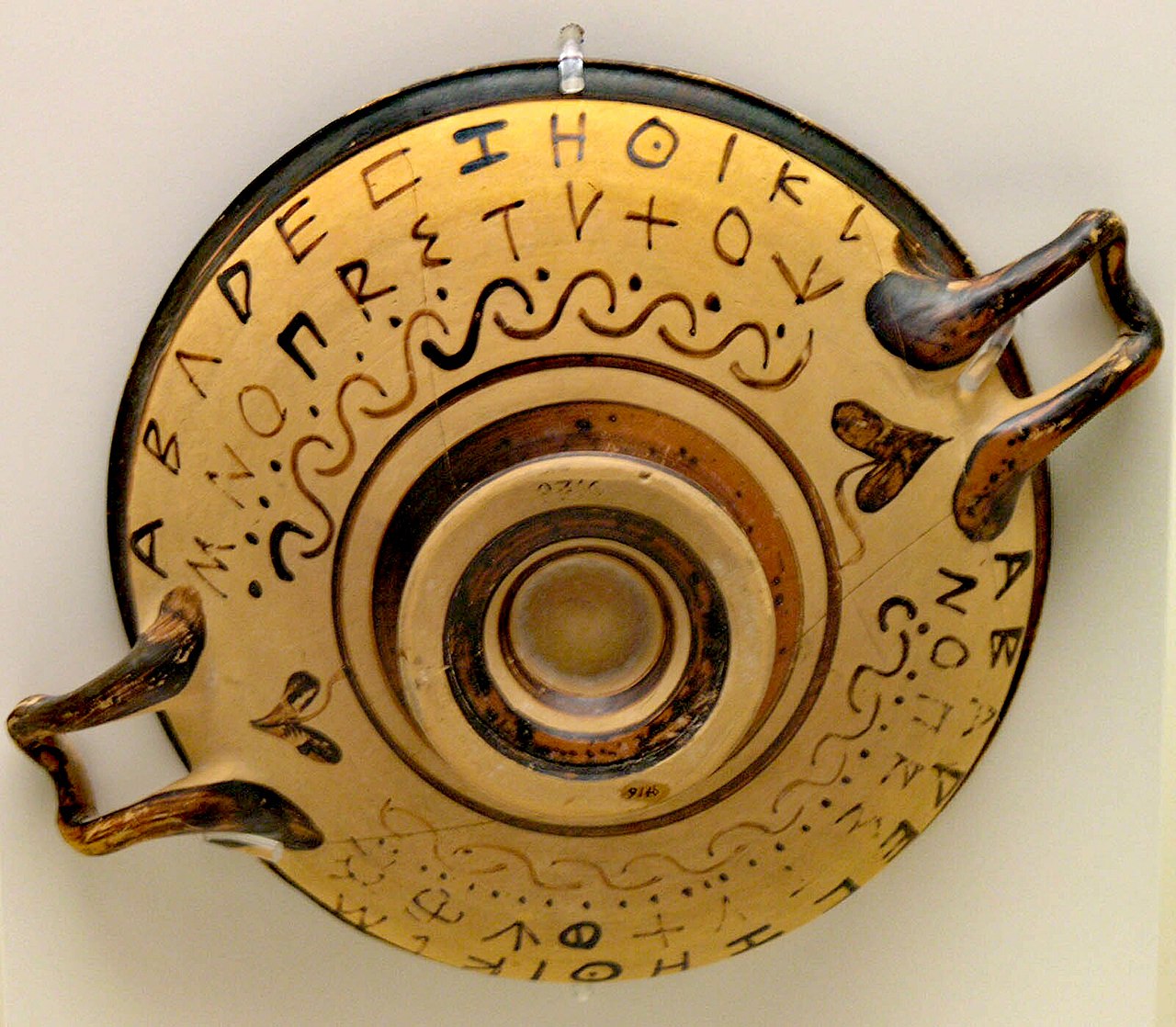
Origin and descendants
The letter lambda originated from the Phoenician letter lamed. Over centuries its shape and sound were adapted into other writing systems. The Latin letter L derives from the same ancestor, and the Cyrillic letter Л is likewise related. The angular uppercase Λ and the looped lowercase λ developed distinct typographic traditions that persist in printed and digital fonts.
Mathematics and statistics
In mathematics the lowercase λ is widely used as a symbolic variable. It commonly denotes eigenvalues in linear algebra; see eigenvalues and their role in linear algebra. λ also appears as a parameter in probability and statistics: it denotes the rate or scale parameter in the exponential distribution and the average rate in the Poisson distribution. More generally, λ is used whenever a compact, single-letter parameter is convenient (parameter).
Physics, computing and engineering
In physics the symbol λ typically stands for wavelength in optics and wave mechanics; see basic references on physics and on wavelength. Other fields reuse the symbol for related quantities: decay constants in radioactivity, linear density or conductivity in engineering contexts, and the cosmological constant (often denoted by a capital Λ) in cosmology. In computer science λ names the lambda calculus and, by extension, anonymous functions or "lambda expressions" in many programming languages, where it marks a function with no given identifier.
Forms, typography and notable facts
- Forms: uppercase Λ is triangular; lowercase λ has a distinctive looped or hook tail in most fonts.
- Typography: designers vary the terminal and stroke to harmonize λ with surrounding letters.
- Notable uses: eigenvalues in mathematics, wavelength in physics, anonymous functions in programming, and the cosmological constant (Λ) in cosmology.
For additional context, background and specialized discussions consult materials on the mathematical use of Greek letters and the other linked topics above. These sources provide entry points into the many places where a single small symbol connects language, number systems and technical notation.
Related articles
Author
AlegsaOnline.com Lambda (Greek letter Λ, λ) — forms, history and common uses Leandro Alegsa
URL: https://en.alegsaonline.com/art/55669