
Eigenvalues and Eigenvectors
Core linear-algebra concepts describing vectors that retain direction under a linear map and the scalars by which they are stretched; includes definitions, properties, history, computation, and applications.
Overview
In linear algebra, an eigenvector of a linear transformation is a nonzero vector that does not change its direction when the transformation is applied, although its length may be scaled or it may be reversed. The scale factor associated with an eigenvector is called an eigenvalue (commonly denoted by the Greek letter λ). Formally, for a linear operator represented by a matrix A, an eigenvector v and eigenvalue λ satisfy a relation of the form A v = λ v. Eigenpairs (λ, v) summarize how a transformation acts on special directions in the space.
Image gallery
9 Images





Key properties
Eigenvalues and eigenvectors capture structural features of matrices and linear maps. Important points include:
- Direction invariance: eigenvectors maintain their line through the origin under the map, possibly reversing orientation when λ is negative.
- Zero eigenvalue: λ = 0 indicates the transformation maps the eigenvector to the zero or null vector, and signals non-invertibility of the operator.
- Multiplicity: an eigenvalue can have an algebraic multiplicity (root multiplicity of a characteristic equation) and a geometric multiplicity (dimension of its eigenspace); these may differ.
- Complex values: even for real matrices, eigenvalues and eigenvectors can be complex, reflecting rotations and combinations of stretching.
History and terminology
The adjective "eigen" comes from German, meaning "own", "intrinsic", or "characteristic". The concepts emerged during 19th-century studies of quadratic forms, vibrations, and differential equations, where identifying natural modes and frequencies required analysis of special vectors and scalars associated with linear operators.
Computation and examples
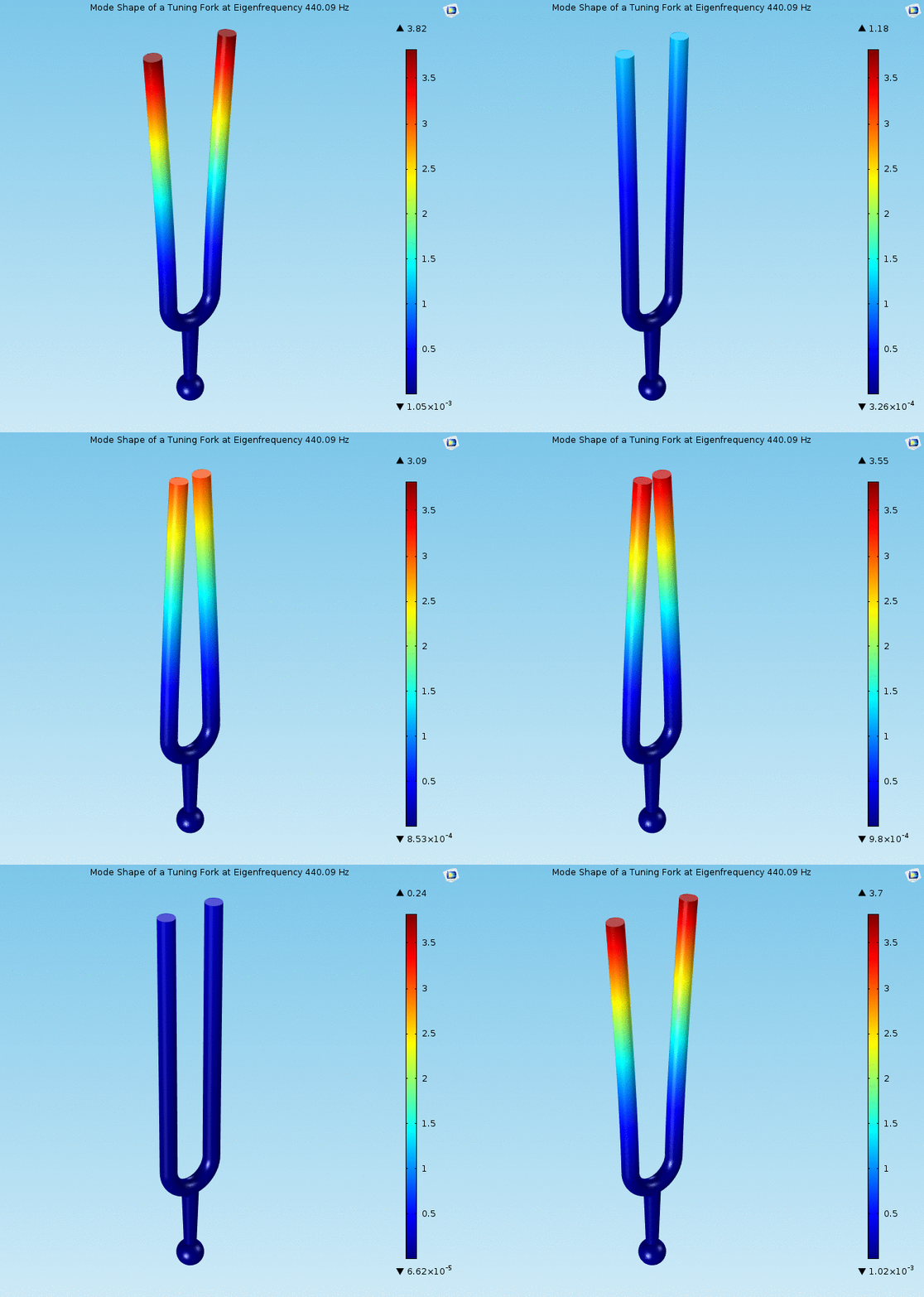
Analytically, eigenvalues are found by solving the characteristic equation det(A − λI) = 0; corresponding eigenvectors lie in the nullspace of A − λI. For small matrices this can be done by hand; for larger matrices numerical algorithms are used. Common methods include the power method for dominant eigenvalues and more robust procedures such as the QR algorithm. In practice, eigenvectors of a covariance matrix give principal components in statistics, while eigenmodes describe natural vibration shapes in mechanics.
Applications and distinctions
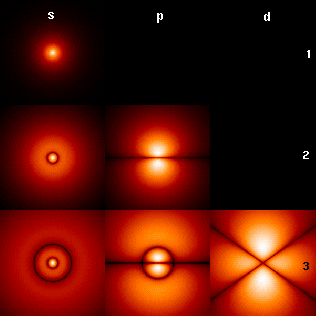
Eigenanalysis appears across mathematics, science and engineering: stability analysis of dynamical systems, principal component analysis in data science, quantum mechanics where operators have eigenstates and eigenvalues, and graph theory where eigenvalues of adjacency or Laplacian matrices encode connectivity properties. It is useful to contrast eigenvectors with singular vectors from the singular value decomposition (SVD): singular vectors relate to orthogonal decompositions and nonnegative singular values, while eigenvectors arise directly from square operators and can involve complex values. For further background on linear maps and function types see related topics.
For a concise introduction that balances theory and computation, consult standard linear algebra texts or reliable online resources. Practical computation typically relies on established numerical libraries that implement the algorithms described above.
Questions and answers
Q: What is linear algebra?
A: Linear algebra is a branch of mathematics that deals with the study of vector spaces and linear transformation.
Q: What is an eigenvector?
A: An eigenvector is a vector that does not change direction after undergoing a transformation, except in the case when the transformation turns it to the opposite direction.
Q: What does the term "null vector" mean?
A: A null vector is a vector of zero length or magnitude.
Q: What is an eigenvalue?
A: An eigenvalue is the value of the change in length of an eigenvector after undergoing a transformation.
Q: What is the significance of the eigenvalue in linear algebra?
A: The eigenvalue plays a crucial role in linear algebra since it helps in determining the properties of the transformation.
Q: What is the origin of the word "eigen"?
A: The word "eigen" comes from the German language, which means "own" or "typical."
Q: Can an eigenvector become a null vector after a transformation?
A: Yes, an eigenvector may become a null vector after undergoing a transformation.
Related articles
Author
AlegsaOnline.com Eigenvalues and Eigenvectors Leandro Alegsa
URL: https://en.alegsaonline.com/art/30447
Sources
- jeff560.tripod.com : "Eigenvalue, eigenfunction, eigenvector, and related terms"
- doi.org : 10.1016/0315-0860(75)90032-4
- doi.org : 10.1016/S0377-0427(00)00413-1
- ceee.rice.edu : Linear Algebra: An Introduction to Linear Algebra for Pre-Calculus Students
- joshua.smcvt.edu : Linear Algebra
- math.byu.edu : An introduction to linear algebra
- linear.ups.edu : A first course in linear algebra
- arxiv.org : math/0405323