
Lakshmi Puja: Festival of the Goddess of Wealth
Lakshmi Puja is a Hindu observance honoring the goddess Lakshmi, marked by house-cleaning, lamps, offerings and rituals for prosperity during Deepawali and related regional festivals.
Overview
Lakshmi Puja (also spelled Lakshmi Pooja) is an annual Hindu observance dedicated to the goddess Lakshmi, who is widely regarded as the deity of wealth, prosperity and good fortune. In many parts of the Indian subcontinent the ritual is central to the autumn festival of lights, broadly associated with Deepawali, and in Nepal it is a principal rite of the multi-day festival Tihar. The timing follows the lunisolar calendar: traditionally the ceremony is performed on the new moon (Amavasya) of the dark fortnight (Krishna Paksha) in the months corresponding to Ashwin–Kartik in the Vikram Samvat reckoning.
Image gallery
9 Images

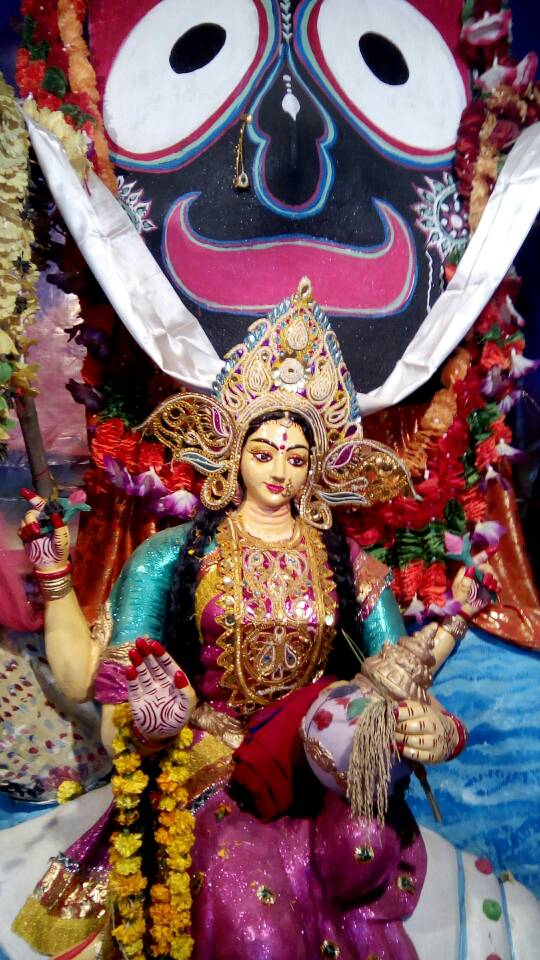


Common elements and procedures
The core act of the observance is the puja—a ritual invocation and worship of Lakshmi. Typical preparations include thorough cleaning of homes and places of business, lighting oil lamps and candles to dispel darkness, and arranging images or icons of the goddess, often alongside Ganesha. Devotees prepare food, sweets and symbolic tokens as offerings, lay out rangoli or decorative patterns at doorways, and sometimes draw or place symbolic footprints to welcome the deity. Business communities commonly perform additional rites seeking prosperity for the coming year.
Ritual steps (typical)
- House cleaning and decoration with lights and floral motifs.
- Setting up an altar with an image or representation of Lakshmi and often invoking Vishnu as her consort.
- Offerings of sweets, fruit, incense and coins; chanting of mantras and recitation of stotras.
- Community or family feasts, exchange of gifts and distribution of charity.
History and regional variations
The worship of Lakshmi has ancient roots in South Asian religious traditions and is attested in classical Hindu texts and devotional literature. Over centuries the observance has developed regionally: in North and West India Lakshmi Puja is often performed on the main evening of Diwali; in eastern India other Lakshmi observances such as Kojagari Lakshmi Puja or separate autumnal celebrations may be emphasized; in the south there are related rites like Varalakshmi Vrata that share themes of prosperity and well-being. In Nepal, Lakshmi Puja is a formalized day within the Tihar sequence, with unique local customs for animals and neighborhoods.
Significance and contemporary practice
For many households the festival is both religious and social: it marks a moment to seek blessings for material and spiritual welfare, to settle accounts, to open new ledgers in trading communities, and to strengthen family and neighborhood ties. Modern practice blends traditional ritual with contemporary expressions—electric lights and public events have extended the reach of the celebration while core acts of worship, charity and hospitality remain central. The festival continues to be a prominent expression of devotion within Hinduism, reflecting long-standing cultural values around abundance, righteousness and communal life.
Although specific customs vary by community, the underlying motif is welcoming prosperity and expressing gratitude—principles that keep Lakshmi Puja a widely observed and culturally significant ceremony across diverse regions.
Questions and answers
Q: What is Lakshmi Pooja?
A: Lakshmi Pooja is a Hindu religious festival that is celebrated once a year.
Q: When is Lakshmi Pooja celebrated?
A: Lakshmi Pooja is celebrated on the Amavasya (new moon day) of Krishna Paksha (Dark fortnight). In the Vikram Samvat Hindu calendar, it is celebrated in the month of Ashwin or Kartik.
Q: What is the significance of Lakshmi Pooja?
A: Lakshmi Pooja is considered as the main event of Deepawali, and it is believed that on this day, goddess Lakshmi visits her followers to give them gifts and blessings.
Q: Who is goddess Lakshmi?
A: In Hinduism, Lakshmi is the goddess of wealth and lord Vishnu's wife.
Q: What do people do to welcome the goddess on Lakshmi Pooja?
A: To welcome the goddess on Lakshmi Pooja, people clean their houses and make it bright with lights. They also prepare good food and sweets for offerings.
Q: When is the puja performed in Tihar?
A: The puja is done on the third day of Tihar.
Q: What is the purpose of Lakshmi Pooja?
A: The purpose of Lakshmi Pooja is to invoke the blessings of goddess Lakshmi and seek her abundance and prosperity in life.
Related articles
Author
AlegsaOnline.com Lakshmi Puja: Festival of the Goddess of Wealth Leandro Alegsa
URL: https://en.alegsaonline.com/art/55624