
Lakshmi — Hindu goddess of wealth, fortune, and prosperity
Lakshmi is a principal Hindu goddess associated with wealth, prosperity, good fortune and auspiciousness; consort of Vishnu and widely worshipped during Diwali and household rites.
Overview: Lakshmi is a central figure in Hindu religious life, venerated as the goddess of wealth, prosperity, fortune and auspiciousness. She is closely connected with the preservation aspect of the divine, typically regarded as the consort of the god Vishnu. Devotees invoke her for material well‑being, success in business and domestic harmony, as well as for spiritual abundance.
Image gallery
10 Images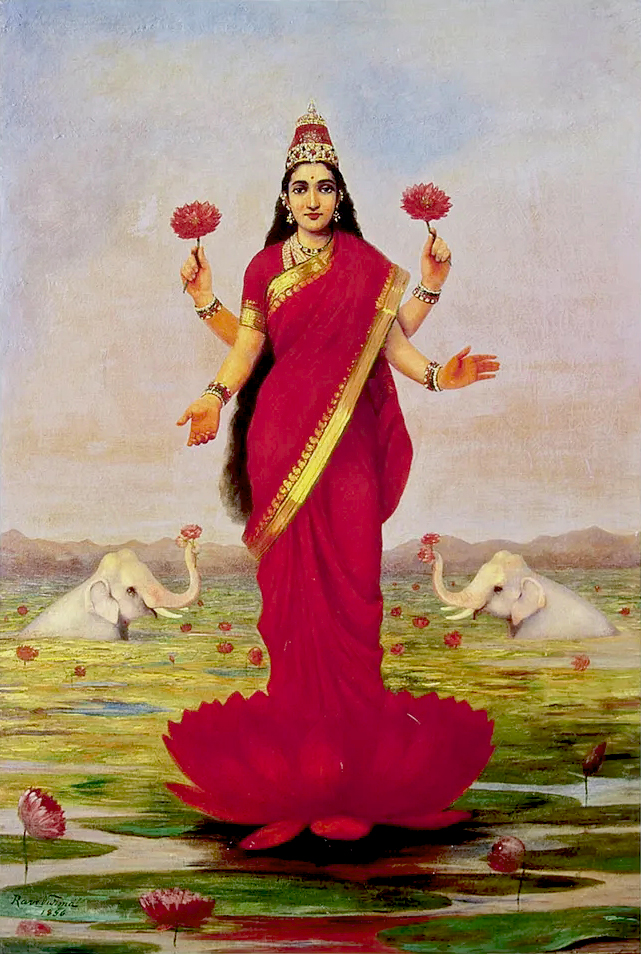


Iconography and symbols
Lakshmi is usually depicted as a graceful woman with four arms seated or standing on a lotus. Her imagery emphasizes beauty and abundance: she often wears rich jewellery, holds lotuses and sometimes gold coins that flow from her hands. Elephants commonly flank her in festival art, while an owl is identified as her traditional mount. The lotus she sits on is a symbol of purity and spiritual emergence; the four arms are interpreted to represent the four aims of human life in Hindu thought: duty, wealth, desire and liberation.
Origins and development
The figure of Lakshmi has roots in ancient South Asian religious literature. Early Vedic texts contain the word "Śrī," an epithet associated with prosperity and good fortune, which later became personified as the goddess. Over centuries she evolved into a major deity within Vaishnavism and broader popular devotion, often linked inseparably with the ideals and narratives surrounding Hinduism and the preservation functions of the divine.
Worship, festivals and practices
Lakshmi is invoked in households and marketplaces: many business owners perform rituals seeking her favor before starting enterprises. The most widely observed festival associated with her is Diwali, when lamps are lit and homes are cleaned to welcome prosperity. Regional observances like Varalakshmi vrata and other lunar‑based rites honor her as a giver of boons and guardianship over family welfare. Pilgrims also visit temples dedicated to her and participate in communal pujas.
Avatars, relationships and cultural role
In many narratives Lakshmi takes multiple manifestations or is identified with goddesses who accompany Vishnu in his incarnations; for example, figures such as Sita and Rukmini are commonly regarded as her earthly forms. These manifestations emphasize the theological link between divine grace and right action. Artistic, literary and popular culture continue to draw on Lakshmi's imagery as a motif of abundance, ethical prosperity and auspicious beginnings.
Key attributes and notable facts
- Divine role: regarded as the principal goddess of wealth and auspiciousness.
- Money and material prosperity: often represented with coins or other signs of abundance.
- Wisdom: associated in some traditions with insight and right conduct, complementing material well‑being.
- Good luck: invoked to bring favorable circumstances and protection from misfortune.
- Popular across India and throughout the South Asian diaspora, featuring in festivals, household rites and commercial rituals.
- She is often shown seated on a lotus, reflecting purity amid worldly conditions.
- Her manifold avatars underscore a close bond with the incarnations of Vishnu.
Lakshmi's presence in religious practice blends the practical concerns of daily life with symbolic ideals of prosperity and spiritual well‑being. Whether invoked during festivals or daily prayers, she remains one of the most widely recognized and enduring deities in Hindu tradition.
Questions and answers
Q: Who is Lakshmi?
A: Lakshmi is the goddess of money, wisdom, and good luck in Hinduism.
Q: When do Hindus pray to Lakshmi?
A: Hindus pray to Lakshmi on Diwali, which is a festival in India.
Q: Who is Lakshmi's Meitei counterpart?
A: Lakshmi's Meitei counterpart is Emoinu.
Q: What are some physical characteristics of Lakshmi?
A: Lakshmi has four arms, fair skin, sits on a lotus flower, and is normally surrounded by elephants. She is also covered in jewellery.
Q: Does Lakshmi have any avatars?
A: Yes, Lakshmi has several avatars which means a god coming to the earth in the form of a human being or in any other form.
Q: Who is Lakshmi's husband?
A: Lakshmi's husband is the Hindu god Vishnu.
Q: Who are usually married to Vishnu's avatars?
A: Lakshmi's other avatars are usually married to Vishnu's avatars.
Related articles
Author
AlegsaOnline.com Lakshmi — Hindu goddess of wealth, fortune, and prosperity Leandro Alegsa
URL: https://en.alegsaonline.com/art/55625
Sources
- faculty.washington.edu : lakṣmī