
Aries (constellation)
Aries is a small zodiac constellation in the northern sky, traditionally depicted as a ram. It contains a few bright stars (Hamal, Sheratan), features in Babylonian and Greek myth, and was noted by Ptolemy.
Overview
Aries is one of the twelve constellations of the zodiac, positioned along the plane of the ecliptic between Pisces and Taurus. It lies in the northern sky and has been associated with a ram since antiquity. The constellation's Latin name reflects this: Aries literally means "ram". The conventional glyph for the constellation, representing a ram's horns, is commonly shown as the symbol ♈ and is illustrated here:

Image gallery
7 Images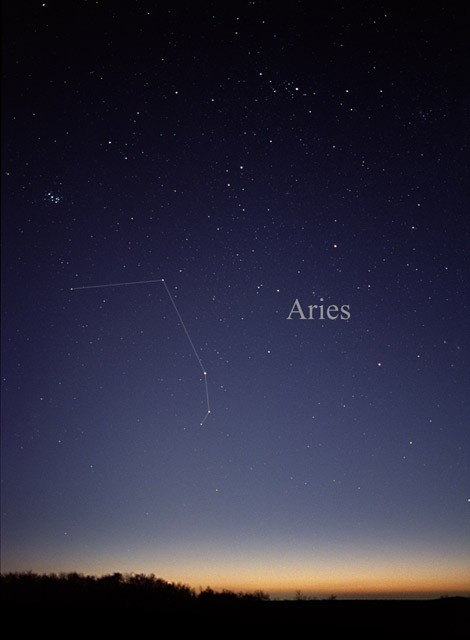




Stars and notable features
Aries is relatively small compared with many zodiacal constellations but contains a handful of stars useful for identification. The most prominent are:
- Hamal (Alpha Arietis) — the brightest star, often an orange giant used as a guidepost in star charts.
- Sheratan (Beta Arietis) — a white star close to Hamal that helps form the characteristic line of the pattern.
- Mesarthim (Gamma Arietis) — a binary star notable to small telescopes.
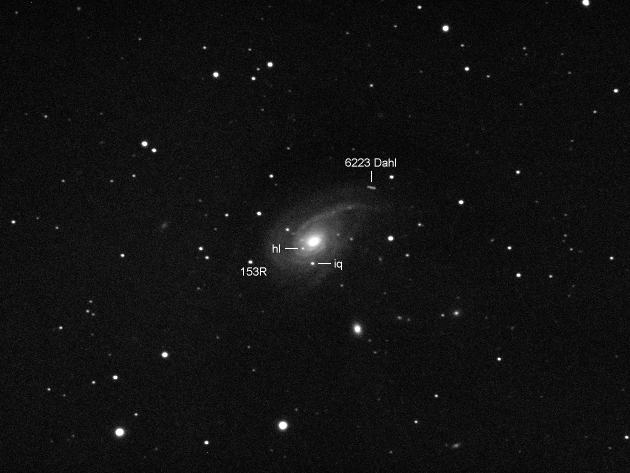
The area contains a number of faint galaxies and deep-sky objects rather than any prominent Messier objects; modern constellation boundaries were standardized in the 20th century by organizations responsible for astronomical nomenclature (IAU-defined boundaries).
History and mythology
Records show the region of sky now called Aries was identified with a ram by Mesopotamian astronomers more than three millennia ago; Babylonian star lists associated similar imagery with this part of the heavens (Babylonia). In Greek mythology, Aries is linked to the golden-fleeced ram whose story involves Phrixus, Helle and the famous Golden Fleece. The constellation also appears in classical star catalogues: the second-century astronomer Ptolemy included Aries among his list of 48 principal constellations.
Cultural and astronomical significance
Beyond its place in myth, Aries has played roles in calendar, navigation and astrology. Historically the vernal equinox fell in Aries, a fact reflected in the older astronomical term the "First Point of Aries," though slow precession of Earth's axis has shifted that point into Pisces over millennia. In modern astrology Aries is regarded as the first sign of the zodiac (approximately late March to mid-April in tropical astrology), and the constellation continues to be an identifiable marker for observers learning the night sky.
Related articles
Author
AlegsaOnline.com Aries (constellation) Leandro Alegsa
URL: https://en.alegsaonline.com/art/5543
Sources
- stars.astro.illinois.edu : "THE CONSTELLATIONS"
- constellation-guide.com : "Aries Constellation"