
Artemis 1: Uncrewed Test Flight of SLS and Orion
Artemis 1 was the first integrated uncrewed test of NASA's Space Launch System and Orion spacecraft, demonstrating deep-space operations, heat-shield performance, and systems needed for future crewed lunar missions.
Artemis 1 was the inaugural integrated flight of NASA's Space Launch System and the Orion crew spacecraft. Launched as an uncrewed test, its primary purpose was to validate hardware, avionics, and operations that will support future crewed missions to the Moon. The mission helped demonstrate vehicle performance in the cislunar environment and provided data on reentry, heat shielding and spacecraft systems.
Image gallery
10 Images




Vehicle and major components
The flight combined two key platforms: the heavy-lift rocket known as the Space Launch System and the Orion Multi-Purpose Crew Vehicle, referred to in mission documentation as Orion. Major elements included:
- The SLS core stage with liquid hydrogen and liquid oxygen propellant and RS-25 engines.
- Two solid rocket boosters to provide the initial thrust at liftoff.
- An upper stage to send Orion toward the Moon.
- Orion itself, comprised of a crew module, service module (providing propulsion and power) and a launch-abort and adapter assembly.
Mission profile and objectives
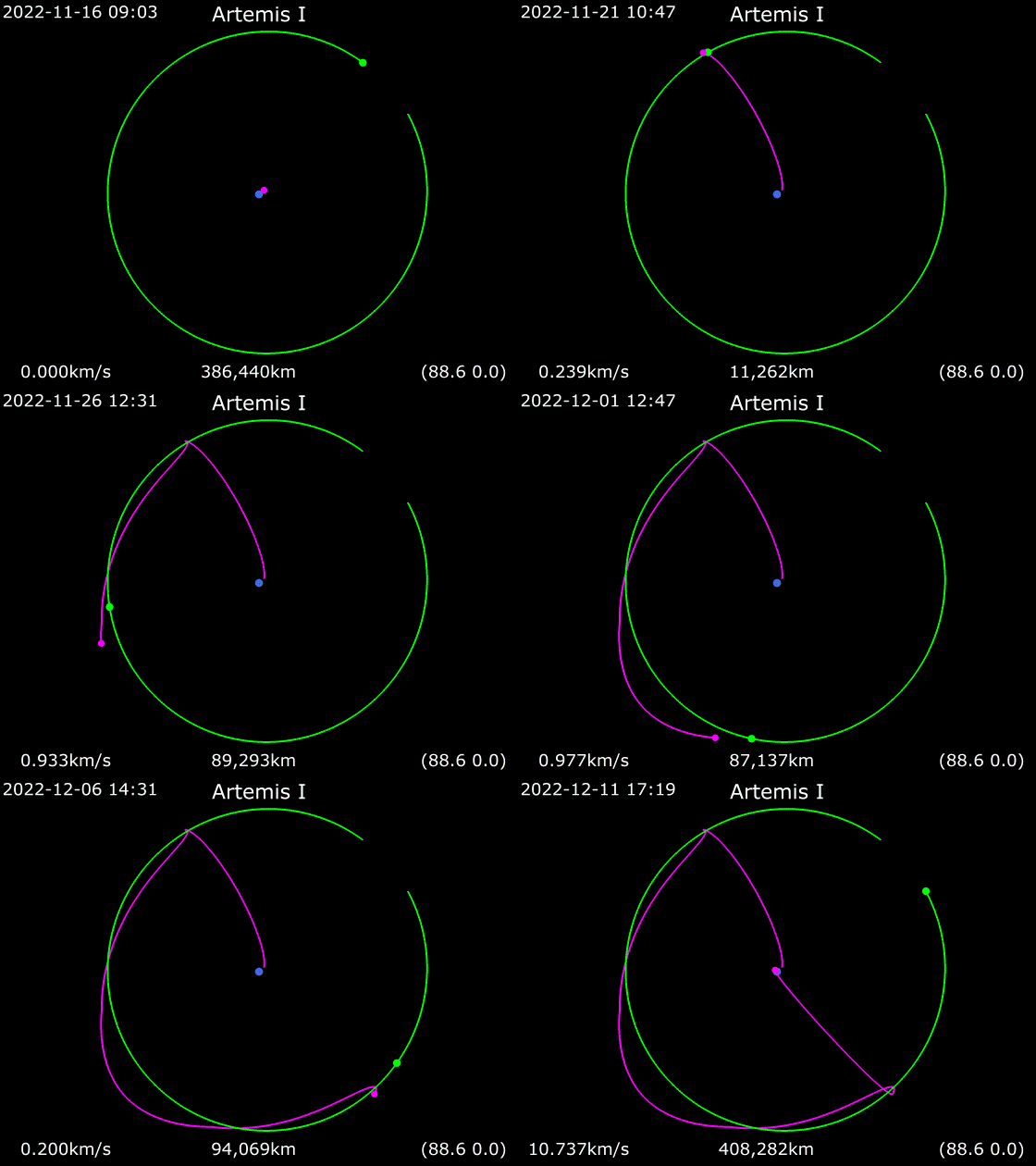
The uncrewed spacecraft flew beyond low Earth orbit into a distant lunar trajectory to exercise navigation and communication systems, expose avionics and materials to deep-space conditions, and return through a high-speed reentry to test the heat shield. Secondary objectives included releasing small science and technology payloads and collecting extensive telemetry for engineering analysis.
History and significance
Artemis 1 followed earlier development and test campaigns for both the rocket and the capsule, and it marked a major step in the Artemis program — NASA's initiative to establish a sustainable human presence at the Moon and to prepare for future missions to Mars. The data and lessons from this flight are intended to inform the planning and safety assessments for the next missions, including the first crewed Artemis flight.
Notable outcomes and legacy
Results from the mission improved understanding of integrated vehicle behavior, validated ground-to-space procedures, and demonstrated technologies needed for long-duration lunar operations. The flight also supported international partnerships and technology demonstrations that will influence lunar exploration architecture in the coming years.
Tags
Related articles
Author
AlegsaOnline.com Artemis 1: Uncrewed Test Flight of SLS and Orion Leandro Alegsa
URL: https://en.alegsaonline.com/art/6237
Sources
- nasa.gov : "Around the Moon with NASA's First Launch of SLS with Orion"
- spaceflightnow.com : "NASA expects first Space Launch System flight to slip into 2020"
- nasaspaceflight.com : "Acronyms to Ascent – SLS managers create development milestone roadmap"
- nasa.gov : "Exploration Systems Development Status"
- nasaspaceflight.com : "NASA teams evaluating ISS-built Exploration Platform roadmap"
- theverge.com : "NASA administrator on new Moon plan: 'We're doing this in a way that's never been done before'"