
Kunene Region, Namibia
Kunene is a large, sparsely populated northwestern region of Namibia. Its capital is Opuwo; the Kunene River forms the northern border with Angola and the region reaches the Atlantic coast to the west.
Overview
The Kunene Region occupies a broad swath of northwestern Namibia. Its administrative centre is Opuwo, which serves as the main town for government services, trade and transport. The region takes its name from the Kunene River, which forms a long stretch of the international boundary with Angola and marks much of the northern edge.
Image gallery
4 Images


Geography and environment
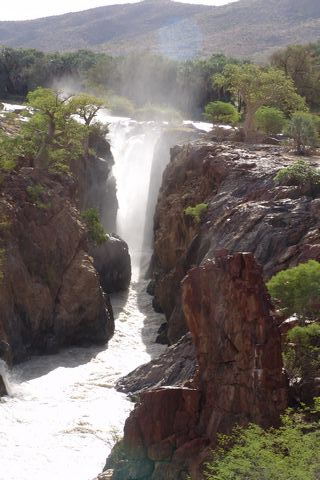
Kunene stretches from the highlands and rocky plateaus in the interior westwards to the coast of the Atlantic Ocean. The landscape includes arid plains, inselbergs, dry river valleys and rugged canyons. Rainfall is scarce and highly variable, producing mostly semi‑arid to desert conditions. The Kunene River and a few perennial springs create important riparian habitats and support local communities and wildlife.
People and culture
The region is sparsely populated and home to several indigenous groups, notably the Himba and Herero peoples, whose pastoralist lifestyles and traditional dress are prominent cultural features. Settlements are scattered; many residents practise extensive livestock herding (cattle, goats and sheep) adapted to arid conditions.
Administration and economy
Kunene is administered as a regional authority divided into constituencies for local governance and representation. Economic activity is dominated by subsistence and commercial pastoralism, small‑scale trade centred on Opuwo, and growing tourism. Infrastructure is limited in many parts, with long distances between towns and few paved roads.
Nature, tourism and conservation
The region attracts visitors for its dramatic scenery and cultural tourism. Notable natural features include Epupa Falls on the Kunene River and the coastal and desert landscapes of the northern Namib. Wildlife adapted to arid conditions, traditional Himba villages and opportunities for guided cultural visits and nature excursions are key tourist draws. Conservation efforts focus on balancing pastoral livelihoods with habitat protection and sustainable tourism.
- Main characteristics: arid climate, low population density, pastoralism and cultural heritage.
- Popular experiences: river‑side waterfalls, guided cultural visits, scenic desert drives and wildlife observation.
- Practical note: travel in Kunene often requires planning for remote conditions and limited services.
Related articles
Author
AlegsaOnline.com Kunene Region, Namibia Leandro Alegsa
URL: https://en.alegsaonline.com/art/54607
Sources
- newera.com.na : "Kaujova re-elected as Kunene chairperson"
- cms2.my.na : "Kunene 2011 Census Regional Profile"
- commons.wikimedia.org : Kunene
- en.wikivoyage.org : Kunene
- tools.wmflabs.org : 18°03′20″S 13°50′26″E / 18.05556°S 13.84056°E / -18.05556; 13.84056