
Kundalini: the coiled spiritual energy in Hindu and Tantric traditions
Kundalini is a concept of latent spiritual energy located at the base of the spine in Hindu and Tantric thought. Practices such as yoga, breathwork and meditation aim to awaken and channel it upward through the chakras.
Overview
Kundalini is a term from Sanskrit that is often translated as "coiled one" and refers to a form of latent spiritual energy believed to reside close to the base of the spine within classical Hindu and Tantric teachings. Within these traditions, awakening this energy is said to produce transformative shifts in perception and vitality as it travels upward through a sequence of energy centers. The idea of kundalini sits within a broader system of chakras and subtle channels that shape many South Asian spiritual practices and cosmologies. For background on the religious context see Hindu tradition, and for anatomical metaphors refer to the lower spine area in some texts via the base of the spine and the first chakra at the muladhara via the root chakra.
Image gallery
4 Images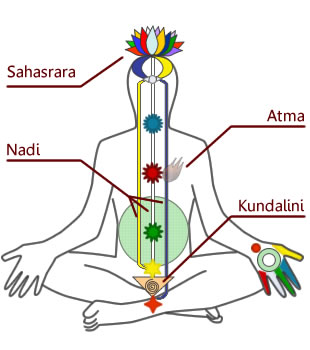


Characteristics and traditional anatomy
Traditional accounts describe kundalini as coiled energy positioned near the root of the spine. When it is dormant it is often pictured as a serpent; when it rises it moves along a central channel (the sushumna) and intersects a series of principal chakras. Classical systems mention two lateral channels (ida and pingala) whose balancing is part of the practices that influence kundalini movement. Descriptions emphasize both physiological metaphors and symbolic psychological changes: heightened awareness, shifts in emotion, altered states of consciousness and vivid imagery are commonly reported.
Practices and methods
Several disciplines aim to influence or awaken kundalini. These include breath control (pranayama), specific postures (asanas), mantra and sound practices, meditative concentration, and ritual techniques found in various Tantric lineages. Modern approaches often package these elements into what is called kundalini yoga; many traditions also emphasize direct transmission or initiation such as shaktipat, where an experienced practitioner is said to help catalyze an awakening. For general practice types see meditation and common movement or posture systems like yoga.
History and sources
References to kundalini and the subtle body appear in a range of classical Indian sources, particularly within Tantra and later yogic literature. Hatha yoga and certain Upanishadic and Tantric texts treat techniques and symbols associated with the rising of inner energy. Over the last two centuries these ideas were transmitted outside South Asia and adapted by a variety of modern spiritual movements; scholarly study has traced multiple layers of development, interpretation and reinvention as the teachings traveled across cultures.
Experiences, benefits and cautions
Accounts of kundalini experiences vary widely. Practitioners report benefits such as expanded states of awareness, increased creativity, emotional release and changes in somatic sensation. At the same time many teachers and commentators warn that intense awakenings can be disorienting or destabilizing if approached without grounding, guidance and appropriate preparatory practices. Contemporary guides commonly recommend gradual training, ethical preparation and supervision by experienced teachers when working with powerful energetic techniques.
Related concepts and cross-cultural parallels
Ideas similar to kundalini appear in other spiritual and healing traditions, though they are not identical in doctrine or practice. Comparative writers note parallels with concepts of life force or vitality such as qi/chi in East Asian thought, and some interpret certain mystical, charismatic or kabbalistic images as analogous metaphors for inner power. Such parallels can illuminate shared human concerns about energy, transformation and embodiment, but direct equivalence should not be assumed: each tradition frames its practices and meanings in distinct historical and cultural terms.
Practical notes
- Common preparatory practices: breathwork, ethical discipline, physical postures and guided meditation.
- Signs often attributed to awakening: changes in breathing, spontaneous movement, vivid imagery, altered sleep and mood states.
- Precautions: seek experienced instruction, progress gradually, attend to physical and mental health.
Related articles
Author
AlegsaOnline.com Kundalini: the coiled spiritual energy in Hindu and Tantric traditions Leandro Alegsa
URL: https://en.alegsaonline.com/art/54601
Sources
- books.google.com.au : "Kundalini Demystified"