
Kowtow: Traditional East Asian Prostration and Its Cultural Roles
Kowtow is a traditional East Asian act of deep respect—kneeling and touching the forehead to the ground—used historically in family, religious, and imperial contexts and now preserved in some rituals.
Overview
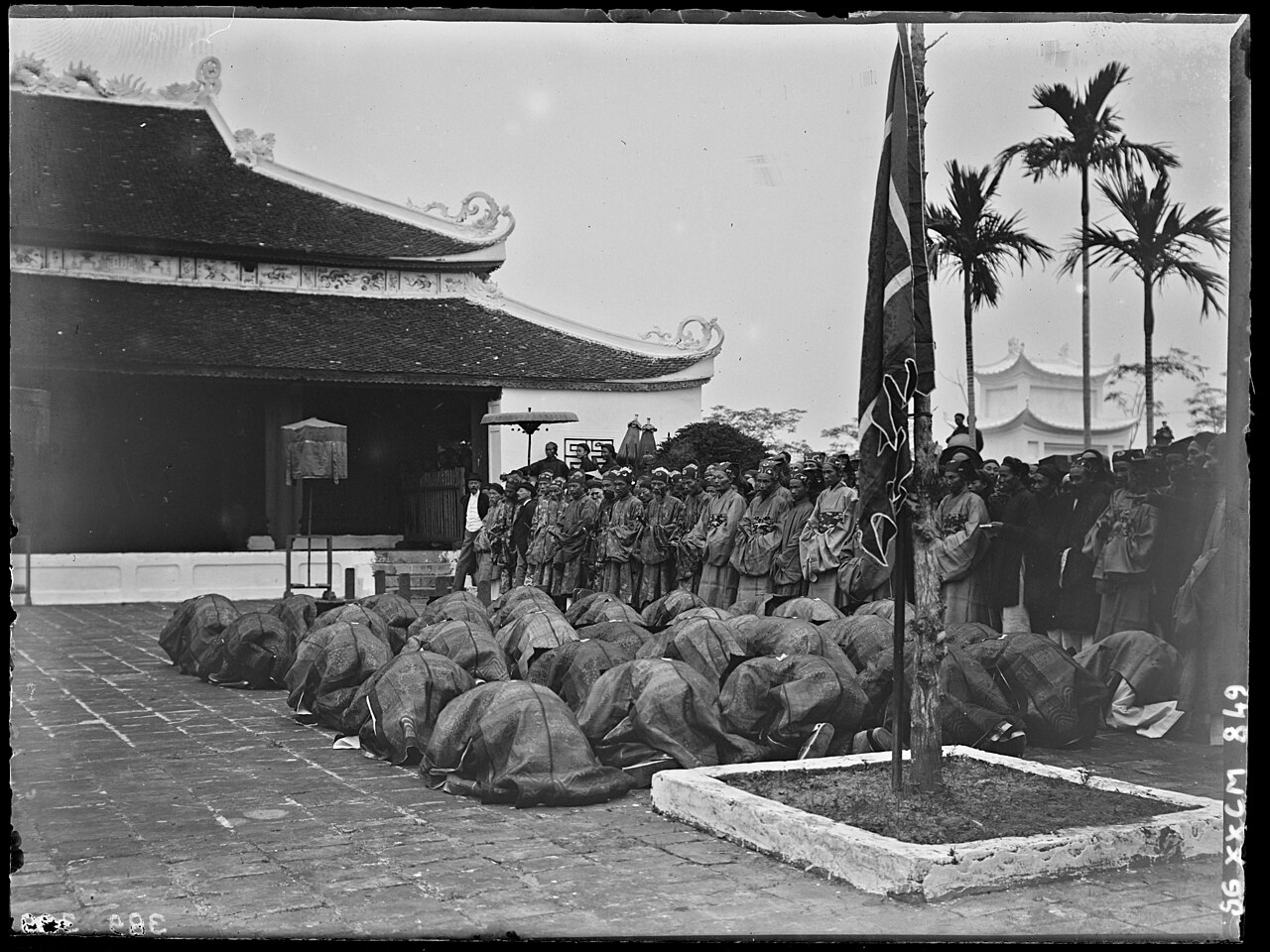
The term kowtow refers to a formal act of prostration originating in East Asia in which a person kneels and bows so that the forehead touches the ground. The English word comes from the Mandarin phrase kòutóu, literally meaning "knock or touch the head," and has been used in English since the 18th century to describe both the physical act and, figuratively, servile deference. As a bodily gesture it expresses respect, submission, penitence, or veneration across religious, familial, and political contexts.
Image gallery
7 Images



Characteristics and forms
Kowtow is not a single fixed posture but a family of actions that combine kneeling, bending, and touching the forehead to the floor. In some traditions a single full prostration is performed; in others a sequence of multiple bows or head touches is required. Variants occur across regions: similar gestures appear in Chinese, Korean, Vietnamese and other East Asian rites, often shaped by local etiquette and religious practice. In modern, everyday interactions these deep prostrations have largely been replaced by standing bows or nods.
Historical and cultural background
Historically, kowtow was embedded in systems of hierarchy and ritual. In imperial China it functioned as a visible sign of loyalty and submission to the emperor; envoys or officeholders might be expected to perform deep bows as part of court ritual. The practice is associated with Confucian ideals of filial piety and respect for elders and ancestors, and it also appears in Buddhist and Daoist devotional contexts. For more on traditional uses and court ritual see imperial practices and court etiquette.
Uses, examples, and modern status
Kowtow has been used in family, religious and state settings: children might prostrate before parents or ancestors to show filial respect; devotees may perform prostrations at temples; historically, subjects prostrated before emperors or local magistrates. Today, full kowtowing is less common in daily life but survives in ceremonial contexts. Some wedding ceremonies preserve a form of ancestor veneration in which a couple may kneel before parents, and at certain schools or ritual occasions a formal bow or head-touch is still practiced. See examples of familial and educational contexts at family rites and school ceremonies.
Ritual steps and variations
- Preparation: one approaches with hands placed respectfully and may kneel on both knees.
- Bowing: the torso inclines and the forehead is brought toward the ground.
- Contact: the forehead (or sometimes the hands as well) briefly touches the floor.
- Recovery: the person rises with care and returns to a respectful posture.
Distinctions and notable facts
While kowtow carries connotations of deep humility, in English usage it is also used metaphorically to criticize excessive or servile deference. Regional and historical differences are important: practices that resemble kowtow have distinct names, rules, and meanings in different communities. Contemporary attitudes vary—some view the gesture as an important cultural tradition, others see it as an anachronism, and many modern ceremonies adapt the form into a standing bow. For further cultural and regional discussion consult sources on bowing and prostration, wedding customs, educational rites, and practices in places such as Taiwan.
Kowtow remains a vivid example of how embodied gestures communicate respect and social order. Whether encountered in temples, family altars, formal ceremonies, or historical accounts, it offers insight into the ways ritual, hierarchy, and devotion have been expressed through the body in East Asian cultures. For a concise glossary or further reading use language resources and curated cultural summaries at historical overviews.
Related articles
Author
AlegsaOnline.com Kowtow: Traditional East Asian Prostration and Its Cultural Roles Leandro Alegsa
URL: https://en.alegsaonline.com/art/54381