
Kitchen Debate (1959) — Nixon and Khrushchev at the American National Exhibition
A summary of the 1959 informal exchanges between U.S. Vice President Richard Nixon and Soviet Premier Nikita Khrushchev at the model American kitchen in Moscow, their themes, context, and legacy.
Overview
The term "Kitchen Debate" refers to a series of impromptu exchanges between U.S. Vice President Richard Nixon and Soviet Premier Nikita Khrushchev on July 24, 1959. The encounter took place at the American National Exhibition set up in Moscow. The two men spoke in front of a model suburban home and its modern kitchen, using the display as a stage to contrast the economic and technological achievements of their respective systems during the Cold War. The event was conducted with interpreters and was recorded and widely reported, turning a staged exhibit into a memorable Cold War moment.
Image gallery
4 Images
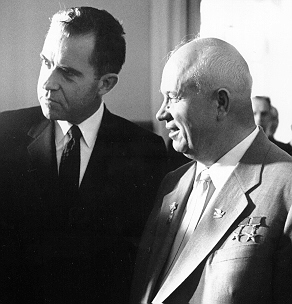
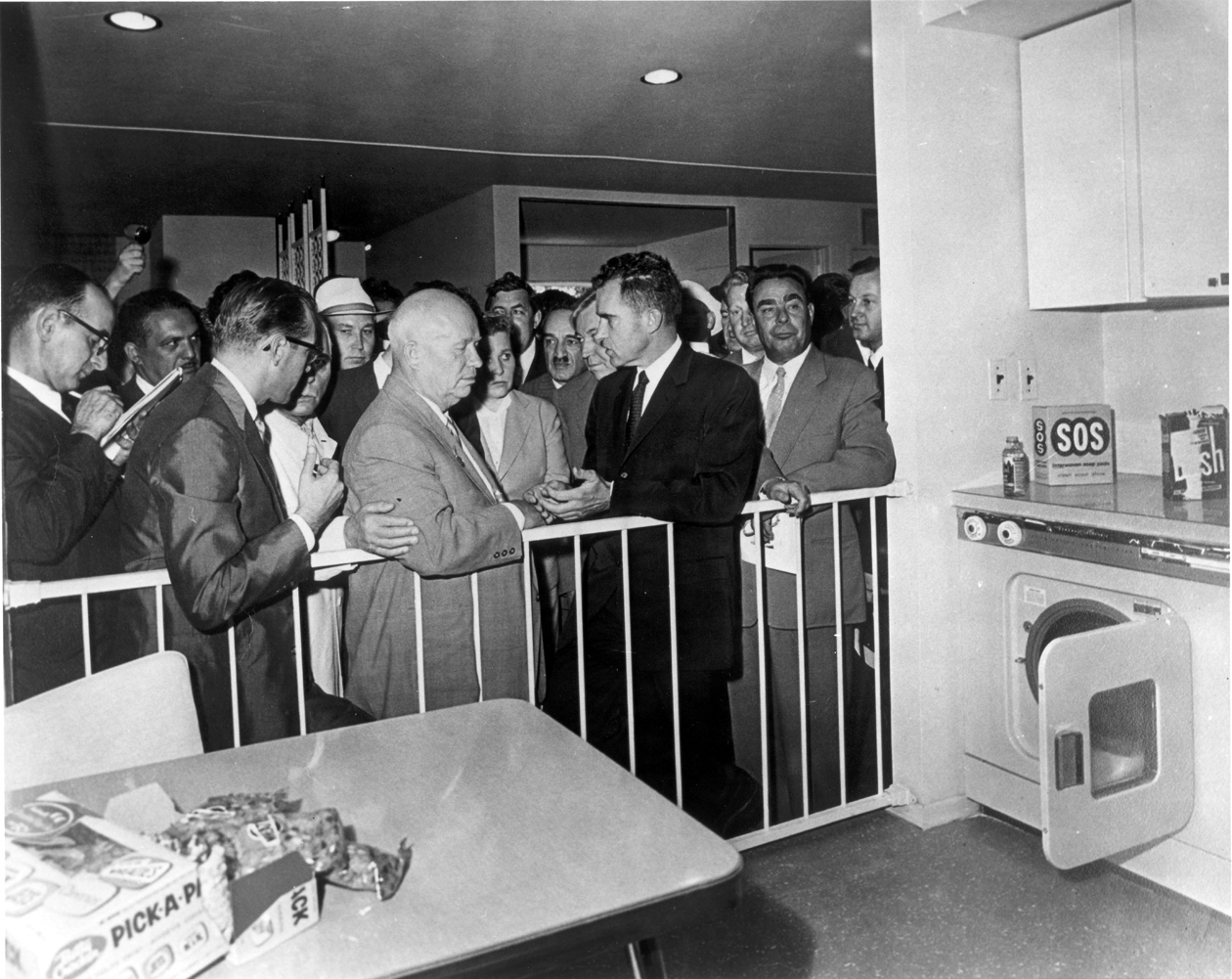

Setting and participants
The American National Exhibition was part of a broader cultural exchange designed to expose Soviet citizens to displays of U.S. consumer products and lifestyle. The exhibit included a fully equipped model house with the latest domestic appliances, intended to demonstrate how consumer goods could raise living standards. The juxtaposition of a kitchen filled with modern conveniences against the backdrop of Soviet industrial accomplishments set the scene for a direct comparison between material abundance and scientific-military achievements.
What was debated
Rather than a formal debate on policy, the Kitchen Debate consisted of rapid exchanges about which political-economic system better delivered progress. Nixon emphasized consumer choice, rising household standards, and technological comfort—television, washing machines and other appliances—as tangible benefits of American capitalism. Khrushchev countered by pointing to Soviet achievements in heavy industry and space exploration—most notably the launch of Sputnik—to argue that communism produced powerful national accomplishments. Interpreters relayed short, pointed remarks in English and Russian as the two leaders walked through the exhibit.
Key themes and examples
- Consumer goods vs. state-led technological projects (e.g., household appliances contrasted with rockets and satellites).
- Standards of living: visible material comfort as a measure of social progress.
- Propaganda and public diplomacy: how exhibitions and public encounters shaped international perceptions.
- Media and public reaction: newsreels, newspapers and radio amplified the encounter for domestic and foreign audiences.
Historical context and significance
The Kitchen Debate occurred during a period of cautious engagement between the United States and the Soviet Union. It was part of cultural diplomacy intended to reduce tensions while still allowing each side to showcase its model of society. Although the exchange did not resolve ideological differences, it became symbolic of the Cold War competition for hearts and minds. The widely circulated recordings and transcripts shaped popular impressions of both leaders and illustrated how technological and consumer symbols were enlisted in political argument.
Aftermath and legacy
In the short term, the encounter boosted media attention on both leaders and underscored the role of public diplomacy in the superpower rivalry. Over time the Kitchen Debate has been studied as an example of how informal, media-visible moments can encapsulate larger political conflicts. Scholars and commentators reference the event when discussing cultural competition, propaganda, and the everyday aspects of ideological struggle. For further reading on the participants and the broader conflict, see links to profiles of Nixon and Khrushchev, material about Moscow, and summaries of the Cold War.
Related articles
Author
AlegsaOnline.com Kitchen Debate (1959) — Nixon and Khrushchev at the American National Exhibition Leandro Alegsa
URL: https://en.alegsaonline.com/art/53845