
Kojiki — Japan’s Earliest Chronicle of Myths, Genealogies and Early History
Kojiki (Records of Ancient Matters), compiled in 712 CE for Empress Gemmei, is Japan’s oldest surviving chronicle of Shinto myths, imperial genealogy and early court history; vital for religion, literature and linguistics.
Kojiki (often translated as the Records of Ancient Matters) is the oldest extant chronicle compiled in Japan. Completed in 712 CE under the order of Empress Gemmei, the work records a mixture of cosmogony, deity myths, clan legends, songs and genealogies that were used to articulate the origins and authority of the ruling house. Tradition assigns the compilation to the courtier Ō no Yasumaro, who is said to have put into writing material recited from memory by an expert performer; this combination of oral and written sources is central to the text’s character.
Image gallery
10 Images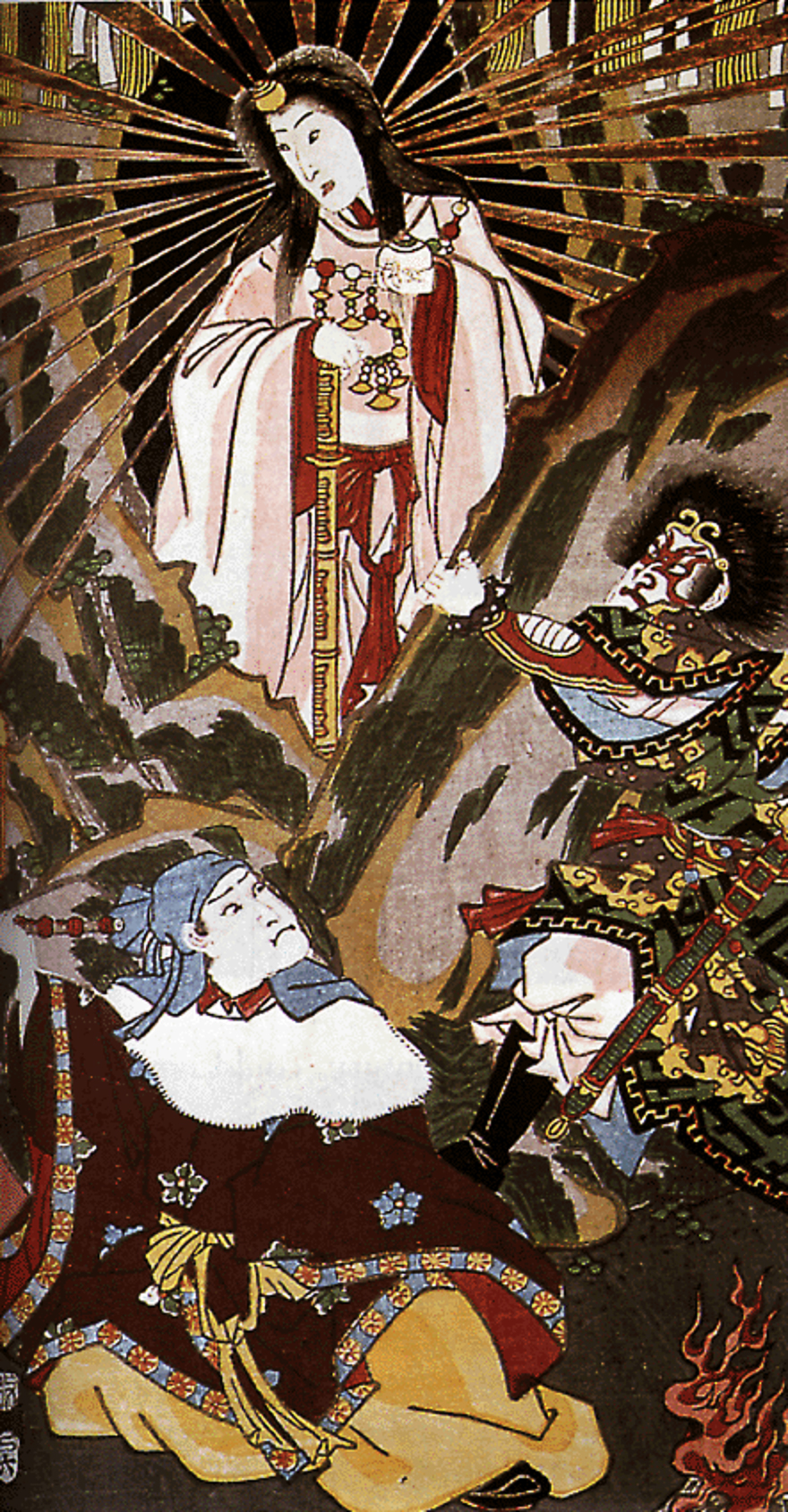





Scope and structure
The Kojiki is conventionally divided into three sections. The first (Kamitsumaki) narrates the age of the gods, creation myths and the deeds of principal deities such as Amaterasu, the sun goddess. The middle book (Nakatsumaki) traces the descent of divine lineages into the human realm and recounts the exploits of early legendary rulers. The final book (Shimotsumaki) contains accounts of later rulers and court events, bringing the narrative into the early seventh century. Interwoven with the stories are genealogical lists and ritual material intended to legitimize the imperial line, including the tradition that the emperors descend from the heavenly deities.
Composition and language
The Kojiki was compiled by adapting Japanese language materials to a writing system based on classical Chinese characters. Scribes used characters for both their meanings and their sounds to record Japanese words and names, an approach that predates kana syllabaries and makes the text an essential source for the study of Old Japanese phonology and early literacy. Because the characters often represent Japanese readings rather than Chinese meanings, the Kojiki cannot be read as ordinary Classical Chinese without knowledge of early Japanese.
Manuscript tradition and transmission
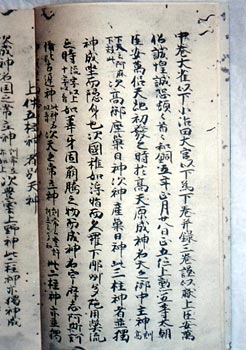
No autograph manuscript of the Kojiki survives; what scholars read today derives from copies made in later centuries. The text circulated in court and religious contexts and was edited and annotated repeatedly. From the medieval period onwards, commentaries and variant editions accumulated, and during the early modern era philologists and national scholars produced influential readings and annotations that shaped modern understanding.
Reception and cultural importance
Across Japanese history the Kojiki has been drawn upon for religious, literary and political purposes. It is a foundational text for the native religious tradition commonly called Shinto, supplying myths used in ritual contexts. From the Edo period, scholars of national learning studied the Kojiki to recover presumed ancient traditions; notable commentators produced extensive exegesis that influenced modern intellectual history. In the modern era, the text has also been cited in debates about national origins and identity, and it continues to inspire literature, theater, visual art and popular retellings.
Comparison with other chronicles
The Kojiki is often read alongside the Nihon Shoki, a later chronicle compiled with a more formal historiographic intent and greater use of Chinese-style composition. While both works share many episodes and genealogies, they differ in language, emphasis and source choice: the Kojiki preserves uniquely archaic readings and oral material, whereas the other chronicle presents variant accounts and a more explicit chronological framework.
Scholarly value
Researchers in religious studies, folklore, literary history and historical linguistics use the Kojiki as a primary source. It preserves old poetic forms and ritual fragments, and its orthographic practice provides evidence for reconstructing Old Japanese sounds and grammar. Historians treat the narrative cautiously: sections mix mythic elements with memories of early state formation, so distinguishing symbolic or cultic material from historical developments requires careful interdisciplinary analysis.
Notable themes and topics
- Cosmogony and the role of central deities, including the political implications of divine descent.
- Genealogies and the legitimizing function of recorded lineages for the imperial house and important clans (early imperial genealogy).
- Oral performance genres: songs, invocations and formulaic passages that reflect an oral tradition (oral traditions).
- Linguistic evidence for early Japanese writing practices and phonology (philology).
- Use in comparative studies of myths, ritual and national chronicles (legend studies).
For readers seeking introductions and translations, modern editions combine annotated texts with commentary and critical apparatus; academic bibliographies and specialized studies present further analysis of its language, ritual contexts and reception history. General accounts and resources on the Kojiki and related topics are available in surveys of early Japanese literature and religion, and through collections that address its continuing cultural significance (primary text, court archives, Shinto studies, mythic traditions, comparative chronicles).
Questions and answers
Q: What is Kojiki?
A: Kojiki or Furukotofumi is the oldest book known in Japan, written in 712 CE, and dedicated to Empress Gemmei. It is a book about Japanese mythology (Shinto), legends, songs, genealogies, oral traditions, and semi-historical accounts down to 641 BCE.
Q: What is the content of the Kojiki?
A: Kojiki covers varied topics such as Japanese mythology (Shinto), legends, songs, genealogies, oral traditions, and semi-historical accounts.
Q: Who is the Kojiki dedicated to?
A: Kojiki is dedicated to Empress Gemmei.
Q: Who are the emperors of Japan descended from according to the legend in the Kojiki?
A: According to legend, all the emperors of Japan are descended from Amaterasu, the sun goddess.
Q: Is it difficult to distinguish the real parts from the legends in the Kojiki?
A: Yes, it is difficult to know which parts of the Kojiki are real and which parts are legend.
Q: What language is Kojiki written in?
A: Kojiki is written in Chinese, but the way the Japanese wrote it is by using the pronunciation of the Chinese characters and not the meanings of them.
Q: Can a person who can read Chinese read Kojiki?
A: No, a person who can read Chinese cannot read Kojiki unless they also know how to speak Japanese because Kojiki includes many Japanese names and some phrases.
Related articles
Author
AlegsaOnline.com Kojiki — Japan’s Earliest Chronicle of Myths, Genealogies and Early History Leandro Alegsa
URL: https://en.alegsaonline.com/art/54145
Sources
- books.google.com : "Nihon Shoki"
- rekishi.jkn21.com : "Kojiki"
- worldcat.org : 56431036