
King Fahd Causeway — road link between Saudi Arabia and Bahrain
A 1986-opened cross-sea causeway connecting Saudi Arabia and Bahrain, used for vehicle traffic, trade and commuting; notable for its engineering, border facilities and regional economic impact.
The King Fahd Causeway is a major cross-sea roadway that links the eastern coast of Saudi Arabia to the island nation of Bahrain. Designed to improve transport, commerce and personal travel between the two countries, the causeway is a combination of embankments and bridges built across the Gulf waters. It provides a direct land route that shortens journeys which previously required longer sea or air travel and is managed as an international road crossing with border and customs controls.
Image gallery
4 Images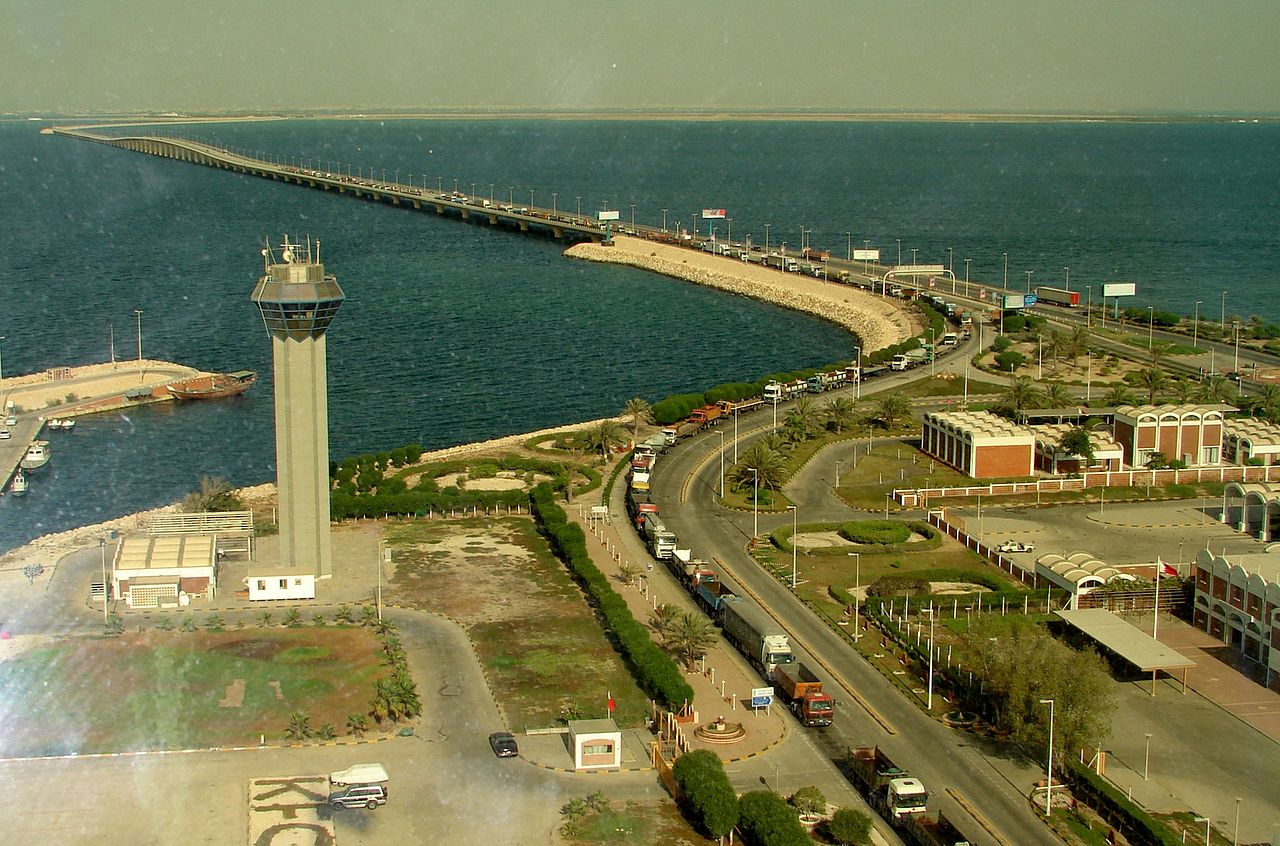


Structure and features
The crossing is composed of a sequence of artificial embankments and bridges, with service and toll facilities located at each end. The road carries passenger vehicles, buses and commercial traffic and is equipped with immigration and customs centers to process people and goods. Support infrastructure includes rest areas, inspection zones and maintenance access. These elements together enable the link to function both as a transportation corridor and as an official international border.
- Crossing elements: bridges, causeways and service islands
- Border facilities: immigration, customs and vehicle inspection
- Operational management: maintenance, tolling and traffic control
History and development
Plans for a fixed link were studied decades before construction. Initial surveying and feasibility work began in the late 1960s, when engineers examined alignments and marine conditions to determine a suitable route and design (surveying reference). Formal construction work commenced in the early 1980s (construction reference) and the completed route was opened to traffic in 1986. The project was named for King Fahd and represented a major engineering undertaking for the region when it was built.
Uses, traffic and importance
Since opening, the causeway has carried a mix of daily commuters, visitors and freight, serving as a principal overland link between the two economies. Traffic figures have varied by year and season; for example, studies cited that in 2008 the crossing saw an average of roughly 48,600 passengers per day. The link supports tourism, retail trade, labor movement and bilateral commerce, and it has helped integrate supply chains and cross-border business activity.
Notable facts and considerations
The causeway is one of the longer cross-water links in the region and required careful engineering to address marine conditions and shoreline effects. Its operation involves coordination between Saudi and Bahraini authorities on security, customs and transport policy (Saudi context, Bahrain context). Environmental monitoring has been part of ongoing management because causeways can alter tidal flow and local habitats. The structure continues to be significant for Gulf connectivity and regional mobility (causeway overview).
Related articles
Author
AlegsaOnline.com King Fahd Causeway — road link between Saudi Arabia and Bahrain Leandro Alegsa
URL: https://en.alegsaonline.com/art/53537
Sources
- kfca.com.sa : King Fahd Causeway Authority: History
- arabnews.com : $5m expansion for King Fahd Causeway set