
Korea Train eXpress (KTX)
Korea Train eXpress (KTX) is South Korea’s high-speed rail service operated by Korail, linking major cities with trains that reach regular service speeds of about 305 km/h and advanced experimental trains above 400 km/h.
Overview
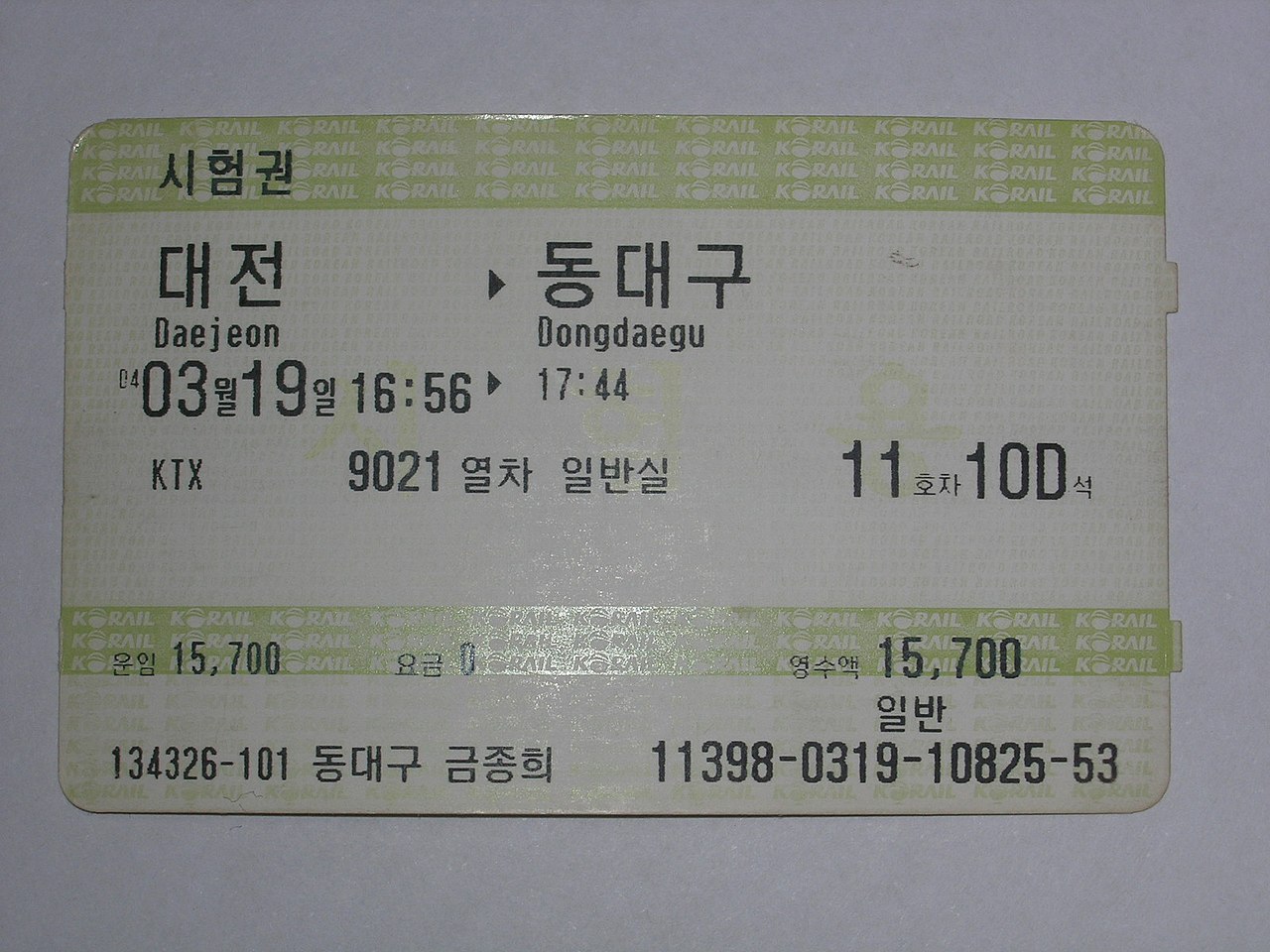
Korea Train eXpress, commonly abbreviated KTX, is the national high-speed rail service of South Korea. Launched in 2004, KTX provides fast intercity passenger service on purpose-built lines and upgraded conventional tracks. The system is managed by Korail and has become a backbone of long-distance transport within the country, connecting the capital region with major population and industrial centers.
Image gallery
10 Images



Characteristics and infrastructure
South Korea’s definition of a high-speed railway specifies lines and services that operate at 200 km/h or higher on major sections. KTX trains in regular commercial service typically operate at top speeds around 305 km/h (190 mph), though civil engineering standards for the network allow for higher design speeds up to 350 km/h (217 mph). The original mainline links the greater Seoul area with Busan, with principal intermediate stations such as Daejeon, Daegu, and Gyeongju, terminating at Busan.
Rolling stock and technological development
The earliest KTX trains were derived from the French TGV Réseau design and assembled in collaboration with foreign manufacturers and domestic industry. Subsequent generations introduced locally developed models. The KTX-Sancheon reflects domestic high-speed engineering derived from the HSR-350x research program. Experimental and research vehicles, most notably the HEMU-430X, have demonstrated much higher speeds—exceeding 420 km/h in test conditions—pushing technological capability for future services.
History and timeline
- 1992: Formal initiation of high-speed rail construction projects in South Korea.
- 2004: Commercial KTX passenger services began, marking the country's first regular high-speed operations.
- 2000s–2010s: Progressive introduction of domestically developed trains and incremental extensions and upgrades to lines and stations.
- 2013: Prototype trains achieved experimental speeds above 420 km/h, illustrating research progress in high-speed rail technology.
Routes, service patterns and uses
KTX primarily serves long-distance intercity travel, reducing journey times between the Seoul metropolitan area and southeastern regions. Typical service patterns include express runs that stop only at major hubs and all-station services that serve more intermediate cities. The network has eased road and air congestion on comparable corridors and is integrated with local transit at major stations, offering timed connections and through-ticketing in many cases.
Importance and notable facts
KTX has had broad economic and social impacts: it supports regional connectivity, stimulates tourism, and contributes to national transport resilience. The development program combined international collaboration with an emphasis on building domestic expertise in high-speed rail technology. Experimental achievements by Korean prototypes place the country among those with advanced high-speed rail research. Operational safety, schedule adherence, and passenger comfort remain central features emphasized in public reporting and planning.
Further reading and references
For operational details, rolling stock specifications and network maps consult operator and government sources: Korail, national transport agencies and technical reports. For station-level information and timetables, regional service pages and station guides provide practical travel information. See also official resources for regulations that define high-speed operation standards in South Korea.
Questions and answers
Q: What is Korea Train eXpress (KTX)?
A: Korea Train eXpress (KTX) is South Korea's high-speed railway system, operated by Korail.
Q: What speed defines a high-speed railway in South Korea?
A: According to "the Rules of High-Speed Railway Construction" in South Korea, high-speed railway is defined as a railway train that is traveling at a speed of 200 km/h or more in major section and it is designated and notified by Minister of Construction and Transportation.
Q: When did KTX services begin and what made South Korea the fifth country to develop high-speed trains?
A: KTX services were launched on April 1, 2004, making South Korea the world's fifth country after Japan, France, Germany, Spain, and China to develop a high-speed train running above 300 km/h.
Q: Which cities are linked by the KTX and what are some of the major stations along the way?
A: The KTX links Seoul and Pusan, and major stations along the way are Gwangmyeong, Cheonan, Asan, Daejeon, Daegu, Gyeongju, and Busan.
Q: What is the top speed for trains in regular service with the KTX?
A: The top speed for trains in regular service is currently 305 km/h (190 mph), though the infrastructure is designed for 350 km/h (217 mph).
Q: What was the initial rolling stock for KTX based on and what is the second type of high-speed trains now operated by Korail?
A: The initial rolling stock was based on Alstom's TGV Reseau, and was partly built in Korea. The domestically developed HSR-350x resulted in a second type of high-speed trains now operated by Korail, the KTX Sancheon.
Q: What is the next generation KTX train called and in which year did it achieve a speed of 421.4 km/h?
A: The next generation KTX train is called HEMU-430X. It achieved a speed of 421.4 km/h in 2013, making South Korea the world's fourth country after France, Japan and China to develop a high-speed train running on conventional rail above 420 km/h.
Related articles
Author
AlegsaOnline.com Korea Train eXpress (KTX) Leandro Alegsa
URL: https://en.alegsaonline.com/art/54269
Sources
- terms.naver.com : " rapid-transit railway"
- terms.naver.com : "KTX(Korea Train eXpress)"