
Kingsway Tramway Subway
A short cut-and-cover tunnel beneath central London that linked north and south tram networks, later partly reused as the Strand underpass; notable for its engineering, later adaptation and preserved remains.
Overview
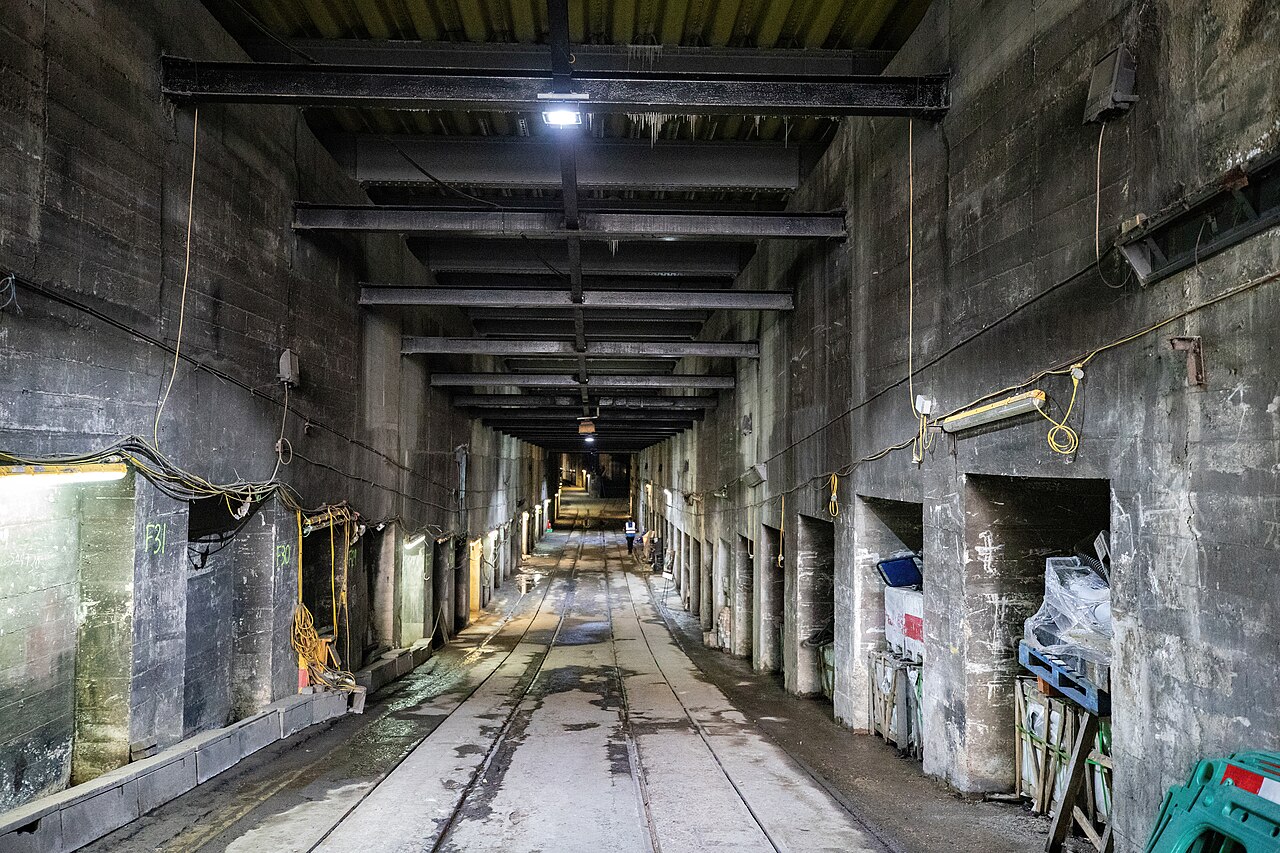
The Kingsway tramway subway is a cut-and-cover tunnel constructed beneath central London to connect separate tram systems on the north and south sides of the Thames. Built for the London County Council, it allowed trams to run through the dense city centre without using surface streets. The structure was intended originally for single-deck vehicles only and later modified to take larger trams. It was taken out of tram use in 1952 and parts of the tunnel survive largely intact.
Image gallery
9 Images



Design and construction
Engineered as a shallow, cut-and-cover tunnel, the subway runs beneath the Kingsway/Aldwych corridor and was designed to avoid the complications of deep tunnelling beneath existing foundations. The low roof clearance dictated early vehicle restrictions; initially only single-deck tramcars could pass through. The use of a cut-and-cover method is described in contemporary accounts of the project and is widely cited as a pragmatic solution for short urban tram routes (cut-and-cover technique).
Operation, upgrade and closure
When the subway opened in the early 20th century it linked two previously separate networks, often described as the "North Side" and "South Side" systems, permitting through-running of services across the city centre. Between 1928 and 1931 the tunnel was substantially rebuilt to increase headroom and strengthen the alignment so that double-deck trams could also use it. Despite that upgrade, changing transport policy and the post-war decline of tramways led to its closure to tram traffic in 1952.
Later uses and preservation
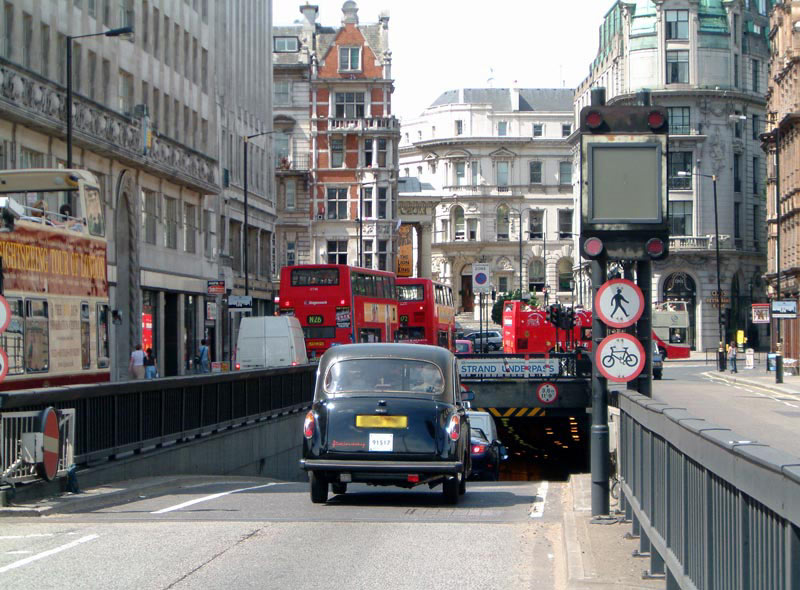
After closure, part of the former tunnel was adapted as the Strand underpass to carry motor traffic; other sections were left largely unaltered and retain original rails and fittings. Many of these surviving spaces have been noted by conservation bodies and the structure has received listed protection in recognition of its historic and engineering interest. The subway offers a rare surviving example of early 20th-century urban tram infrastructure in central London (central London).
Importance and notable facts
- The subway provided a physical link between separate tram networks, simplifying cross-city routes and timetabling.
- Its original restriction to single-deck cars reflected the constraints of shallow tunnelling beneath existing buildings.
- A major rebuilding in the late 1920s allowed larger vehicles to use the route, showing how infrastructure was adapted to evolving rolling stock.
- Only part of the tunnel became a road underpass; other sections remain as a preserved industrial archaeological feature.
The Kingsway tramway subway is frequently cited in studies of London's transport history as an example of early municipal engineering solutions to urban congestion. For further detail on the site's engineering and later conservation, consult specialist histories and archives held by local authorities and transport museums (single-deck tramcars, cut-and-cover, Strand underpass, central London, London County Council).
Questions and answers
Q: What is the Kingsway tramway subway?
A: The Kingsway tramway subway is a cut-and-cover tunnel in central London.
Q: Who was the subway built for?
A: The subway was built for The London County Council to join two tramway systems called the "North Side" and "South Side".
Q: Were both single and double deck trams used in the subway throughout its operation?
A: No, only single-deck tramcars were used in the subway, but an upgrade between 1928 and 1931 meant that double deck trams could use it.
Q: When was the subway closed?
A: The subway was closed in 1952.
Q: What is the Strand underpass?
A: The Strand underpass is a part of the Kingsway tramway subway that is still in use.
Q: Has the structure of the subway changed over the years?
A: Part of the subway is now the Strand underpass, but the rest has not been changed very much and still has tram tracks inside it.
Q: Is the Kingsway tramway subway a listed structure?
A: Yes, it is a Grade II Listed structure.
Related articles
Author
AlegsaOnline.com Kingsway Tramway Subway Leandro Alegsa
URL: https://en.alegsaonline.com/art/53678
Sources
- underground-history.co.uk : "Underground History: Kingsway Tramway Underpass"
- subbrit.org.uk : "Subterranea Britannica: Kingsway Tramway Subway visit"
- 20thcenturylondon.org.uk : "Aldwych and Kingsway Scheme"
- chodecircus.com : chodecircus.com/area51/
- britishtramsonline.co.uk : "British Trams Online "On This Day2"
- tools.wmflabs.org : 51°31′06.1″N 0°07′14.8″W / 51.518361°N 0.120778°W / 51.518361; -0.120778
- commons.wikimedia.org : Kingsway tramway subway