
Kicksled: a simple Scandinavian winter vehicle
A lightweight, runner-mounted sled pushed by the rider's foot and steered by handles; developed in 19th-century Scandinavia and used for transport, recreation, and sport on snow and ice.
Overview
The kicksled is a lightweight, human-powered vehicle designed for winter travel on compacted snow and ice. It consists of two long runners that glide across the surface and a frame with a standing or seated platform. Riders propel it by kicking the ground with one foot while holding the handles and balancing on the other foot, a motion that gives the device its English name. For a concise introduction to the concept see Kicksled overview.
Image gallery
4 Images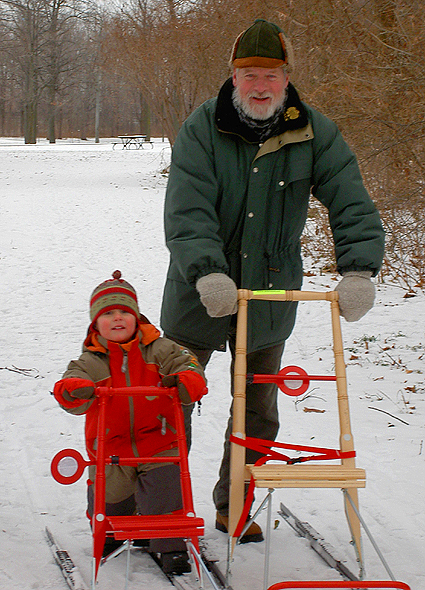



Structure and characteristics
A typical kicksled combines simple mechanical design with effective functionality. Main components include a pair of parallel runners, a crosswise seat or platform, upright handles for steering and control, and a frame that joins these parts. Materials range from traditional wood and steel to modern aluminum and composite plastics. Steering is achieved mainly by shifting body weight and applying small turns to the handlebars; some models include manual brakes or adjustable runner geometry for greater control.
History and origin
The kicksled developed in the 19th century in the Nordic countries as a practical way to travel locally during winter months. It is closely associated with Scandinavian culture, where regional names such as "spark" (Norwegian) and "sparkstötting" or "sparken" (Swedish) are used. While its exact inventor is not universally agreed upon, its emergence in Sweden and neighbouring regions during the 1800s is widely reported. For information about winter transport traditions that influenced its spread, consult winter travel resources.
Uses and modern practice
Kicksleds serve multiple purposes: short-distance commuting, carrying small loads, leisure rides, and competitive sport. Variants exist for children, adults, and cargo, and some are adapted for dog-assist or mixed snow conditions. In towns and rural areas across Scandinavia they remain a visible part of winter life. Modern enthusiasts also use them for fitness and guided tours where snow is compacted and safe.
Notable distinctions and safety
- Compared with a traditional sled or sleigh, the kicksled is steered and powered by the rider rather than by animals or gravity.
- It performs best on firm snow or iced surfaces and is less effective on fresh, loose, or very soft snow.
- Riders are advised to use appropriate winter footwear, consider helmets on fast or icy routes, and be mindful of thin ice when travelling over frozen waterways.
For more detailed historical notes and cultural context, particularly regarding its Swedish roots and 19th-century adoption, see regional historical references.
Related articles
Author
AlegsaOnline.com Kicksled: a simple Scandinavian winter vehicle Leandro Alegsa
URL: https://en.alegsaonline.com/art/53315