
Khawaja Nazimuddin — Pakistani Governor‑General and Prime Minister
Khawaja Nazimuddin (1894–1964) was a Bengali Muslim leader who served as Pakistan's second Governor‑General and later as its second Prime Minister, prominent in Bengal politics before and after 1947.
Khawaja Nazimuddin was a prominent Bengali Muslim statesman who played a central role in the politics of Bengal and the early years of Pakistan. Born in Dacca on 19 July 1894, he came from the Nawab family of the city and later held two of the highest offices in the new Dominion of Pakistan: Governor‑General and Prime Minister. His career bridged provincial leadership in British India and national government after partition, making him a notable figure in South Asian political history.
Image gallery
10 Images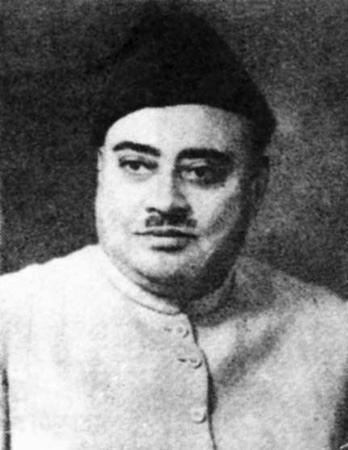



Early life and education
Nazimuddin was born in Dacca in the province of Bengal, then part of British India. The family's ancestry traced to migrants from Kashmir, and they were socially prominent as Nawabs in the city. He was educated partly in England at Dunstable Grammar School and later attended Aligarh Muslim University (Aligarh) before completing studies at Trinity Hall, Cambridge. His upbringing combined traditional landed influence with Western-style schooling, which shaped his conservative and administrative approach to politics.
Political rise in Bengal
Returning to Bengal, Nazimuddin entered provincial politics and served in ministerial posts, initially including responsibility for education. He became a leading figure in the Muslim League's organization in eastern India and eventually rose to be Chief Minister (Premier) of Bengal. During the 1930s and 1940s he cultivated links with both local elites and the League's central leadership, helping to articulate Bengali Muslim interests as the subcontinent moved toward partition.
Roles in Pakistan's founding era
After the creation of Pakistan in 1947, Nazimuddin was appointed Governor‑General following Muhammad Ali Jinnah's death and later succeeded Liaquat Ali Khan as Prime Minister after the latter's assassination. As Governor‑General and then Prime Minister he governed during a difficult period of state formation, mass migration, administrative shortages and communal tensions. Economic constraints and political conflicts, particularly between federal and provincial authorities, marked his time in office; his premiership ended in 1953 when he was dismissed by the Governor‑General Ghulam Muhammad amid mounting unrest and crises.
Offices and chronology
- Education and early ministry — provincial cabinet roles in Bengal
- Chief Minister (Premier) of Bengal — leader of the Muslim League in the east
- Governor‑General of Pakistan — succeeded Jinnah in the late 1940s (Pakistan)
- Prime Minister of Pakistan — led the civilian government in the early 1950s
Legacy and later years
Nazimuddin carried the honorific Sir and was a Knight Commander of the Order of the Indian Empire (KCIE). After his removal from the premiership he remained a respected figure within segments of Pakistan's political elite and among many in East Bengal (later East Pakistan, now Dhaka, Bangladesh). He died on 22 October 1964. Historians regard him as a cautious, administrator‑oriented leader whose tenure illustrates the challenges of governing a newly partitioned state and the political fragility of Pakistan's early constitutional arrangements.
For further reading on his life and offices see contemporary biographies and archival material on the Muslim League and early Pakistani governments (Bengali sources and English-language studies provide complementary perspectives).
Related articles
Author
AlegsaOnline.com Khawaja Nazimuddin — Pakistani Governor‑General and Prime Minister Leandro Alegsa
URL: https://en.alegsaonline.com/art/53218